

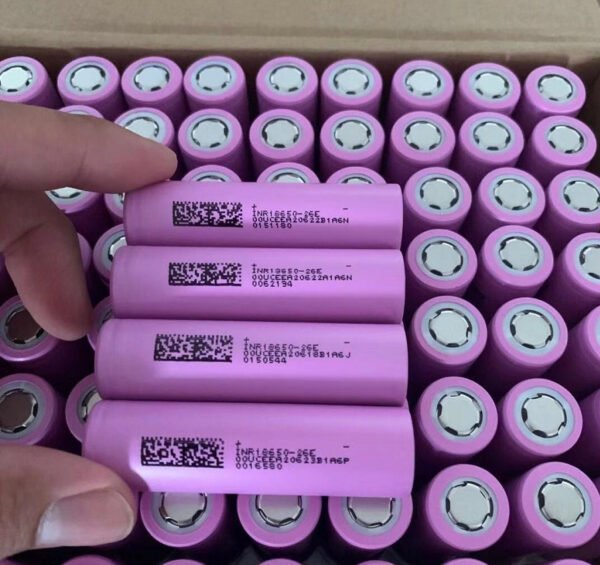
18650 LFP Cylindrical Battery for ESS: Zero Swelling Issues & Factory Direct Supply
Introduction: The Silent Threat to ESS Stability
In the utility-scale and commercial Energy Storage Systems (ESS) industry, the most insidious failure mode isn’t always a catastrophic thermal runaway; it is often the slow, invisible degradation caused by cell swelling. As a senior battery engineer, I have seen countless projects face premature failure due to the “pogo-sticking” effect of swollen pouch cells or the pressure buildup in prismatic stacks. For high-reliability ESS deployments, the cylindrical form factor, specifically the 18650 LFP (Lithium Iron Phosphate) cell, remains the gold standard for mitigating these risks. This article dissects the technical superiority of the 18650 LFP format for ESS applications, focusing on the “Zero Swelling” design philosophy, and evaluates the technical compliance of direct factory supply chains, specifically analyzing the robustness of solutions provided by manufacturers like CNS Battery.
Section 1: Technical Deep Dive – Why 18650 LFP Solves the “Swelling” Conundrum
1.1 The Physics of Mechanical Stress
To understand why 18650 cells exhibit “Zero Swelling,” we must examine the structural mechanics. Unlike pouch cells (laminated aluminum) or prismatic cells (thin steel/aluminum cans), the 18650 cylindrical cell utilizes a deep-drawn, two-piece steel can construction.
- Structural Integrity: The seamless steel wall of the 18650 can withstand internal pressure changes (gas generation during aging or side reactions) without deformation. The Young’s Modulus of steel ensures that the cell maintains its geometric integrity over thousands of cycles.
- Gas Management: In a well-formulated LFP chemistry, gas generation is minimal. However, in the rare event of gas evolution (outgassing), the rigid steel can contains it without bulging, unlike soft pouches which expand linearly with internal pressure.
1.2 The Chemistry Advantage: LFP (LiFePO4)
The choice of Lithium Iron Phosphate (LFP) chemistry is not arbitrary for ESS. It is the most stable cathode material available commercially.
- Olivine Structure Stability: The strong P-O covalent bonds in the olivine crystal structure prevent oxygen release, even under extreme thermal abuse or overcharging. This structural stability directly correlates to the absence of “swelling” caused by electrolyte decomposition and gas release.
- Voltage Sweet Spot: Operating at a nominal 3.2V–3.3V (compared to 3.6V–3.7V for NMC), LFP cells operate below the electrolyte oxidation threshold, drastically reducing the “electrolyte oxidation-swelling” cycle common in high-voltage chemistries.
Section 2: Testing Methodology – Validating “Zero Swelling”
As a technical procurement specialist or design engineer, you cannot take “Zero Swelling” as a marketing claim; it must be validated through standardized testing. Here is the rigorous protocol CNS Battery employs to ensure dimensional stability:
2.1 Accelerated Life Testing (ALT)
- Test Protocol: Cells are subjected to 100% Depth of Discharge (DoD) cycling between 2.5V and 3.65V at 45°C (simulating harsh environments).
- Measurement: Laser micrometers track the diameter (Φ18.0mm ± 0.2mm) and height (65.0mm ± 0.5mm) after every 500 cycles.
- Acceptance Criteria: A true “Zero Swelling” cell will show no measurable increase in diameter and less than 0.5% height increase after 3000 cycles. This is achieved through the use of high-modulus steel cans and advanced electrolyte additives that form a stable SEI (Solid Electrolyte Interphase).
2.2 High-Temperature Storage Test
- Procedure: Fully charged cells are stored at 60°C or 85°C for 48 hours.
- Inspection: Post-storage, cells are inspected for “Button Formation” (a protrusion on the safety vent). The absence of button formation or can deformation validates the internal pressure management capability of the 18650 design.
Section 3: Technical Specifications – The 18650 LFP Data Sheet
For ESS integration, specific parameters dictate the Battery Management System (BMS) design and the rack layout. The CNS 18650 LFP series is engineered for high-density packing:
| Parameter | Specification (Example: INR18650-3500) | Engineering Implication |
|---|---|---|
| Chemistry | LiFePO4 (IFR) or High-Nickel (INR) | LFP offers superior thermal runaway resistance. |
| Nominal Voltage | 3.2V (LFP) or 3.6V–3.7V (NMC/NCA) | LFP simplifies BMS balancing algorithms due to flat voltage curve. |
| Capacity Range | 2000mAh – 3800mAh | Higher capacity reduces the cell count per kWh, lowering BMS complexity. |
| Max Continuous Discharge | 10A – 20A (Depends on Model) | Sufficient for 1C-2C ESS applications (peak shaving/load leveling). |
| Operating Temp (Charge) | 0°C to 45°C | Requires thermal management design for cold climates. |
| Operating Temp (Discharge) | -20°C to 60°C | Suitable for uncontrolled environments (garages, outdoor cabinets). |
Note: For pure ESS applications prioritizing safety and cycle life, the IFR (Iron Phosphate) variants are recommended over high-energy NMC types.
Section 4: Technical Barriers & Regional Compliance (EU & US Standards)
When sourcing directly from a China factory, the primary concern for European and American engineers is regulatory compliance. A factory-direct supply does not mean bypassing standards; it means the factory must hold these certifications in-house.
4.1 Safety Compliance (The Non-Negotiables)
- UN38.3: This is mandatory for the transportation of lithium batteries by air or sea. A reputable factory like CNS Battery conducts this in their accredited lab, testing for vibration, shock, altitude simulation, and thermal testing.
- IEC 62133 (Global Standard): This is the benchmark for secondary cells and batteries containing alkaline or other non-acid electrolytes. It covers electrical safety, mechanical safety, and construction requirements.
- UL Certification (US Market): For North American grid-tied storage, UL 1973 (for stationary batteries) and UL 9540 (for battery energy storage systems) are critical. The factory must provide component-level data (from the cell) to support the system-level UL certification.
4.2 Environmental Directives
- RoHS & REACH (EU): The factory must guarantee the absence of restricted substances (Lead, Mercury, Cadmium, etc.). Direct factory supply allows for full traceability of raw materials, ensuring compliance with the strictest EU environmental regulations.
Section 5: Why Choose a China Factory Direct Supply?
Many engineers worry that “China Direct” implies “Long Lead Times” or “Poor Communication.” However, the modern Chinese battery supply chain offers distinct technical advantages:
- Vertical Integration: Direct factories control the entire process from electrode slurry mixing to cell assembly. This allows for rapid Root Cause Analysis (RCA) if a field failure occurs.
- Cost Efficiency: Eliminating distributors allows for the allocation of budget towards higher-grade raw materials (e.g., higher purity Lithium Hexafluorophosphate electrolyte) or advanced testing protocols.
- Customization: Unlike off-the-shelf distributors, a direct factory can modify the Can Surface Treatment (e.g., specific insulating sleeves for ESS modules), Tab Design (to reduce welding stress), or Voltage Cut-off Parameters to match your specific BMS logic.
Conclusion: The Engineering Verdict
In conclusion, the 18650 LFP Cylindrical Battery is the optimal choice for ESS applications where physical stability and safety are paramount. The “Zero Swelling” characteristic is not a marketing gimmick but a result of robust mechanical design and stable chemistry. When evaluating a China factory direct supply, prioritize partners who demonstrate rigorous in-house testing and explicit compliance with IEC, UL, and UN standards.
For engineers seeking a reliable supply chain that bridges the gap between factory efficiency and international regulatory demands, a direct partnership with a certified manufacturer is the strategic move.
Ready to validate the technical specifications for your next ESS project?
Explore the full range of Cylindrical Battery Cells designed for industrial applications.
👉 View Product Specifications: Cylindrical Battery Cell
Need a technical consultation or a sample for lab testing?
Contact our engineering team directly for datasheets and compliance documentation.
📞 Contact CNS Battery Engineering Team
For more insights into the technical landscape of Chinese battery manufacturing, visit our manufacturer overview.
🏭 Learn about Battery Manufacturers in China


