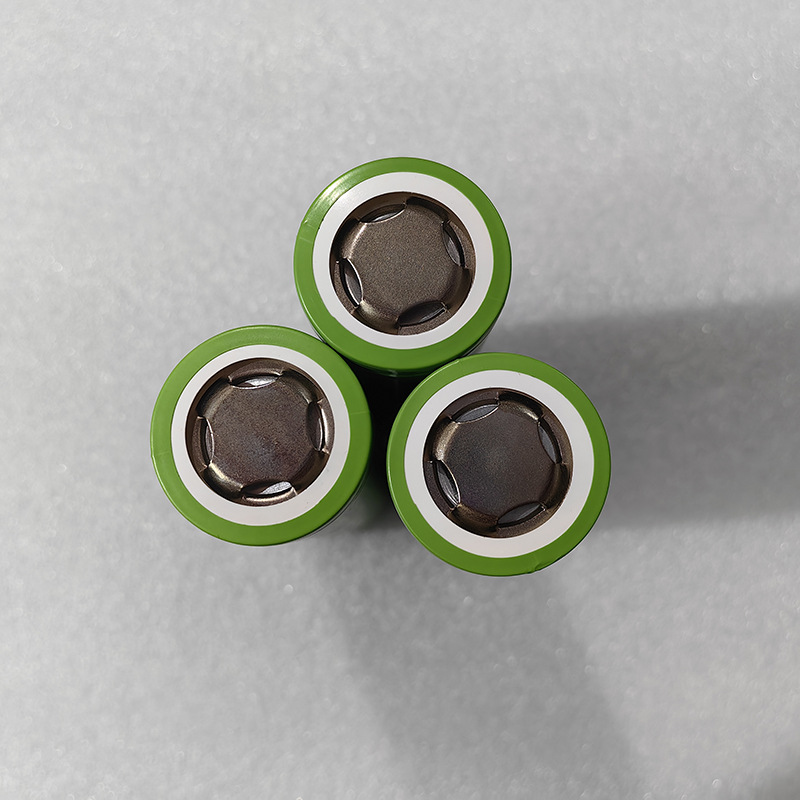
18650 LFP Cylindrical Battery for ESS – OEM Customization 2026 Buyer’s Guide
In the rapidly evolving landscape of energy storage, the demand for robust, safe, and cost-effective solutions has never been higher. For B2B buyers and OEMs navigating the market in 2026, the 18650 Lithium Iron Phosphate (LFP) Cylindrical Battery has emerged as the cornerstone for modern Energy Storage Systems (ESS). This guide cuts through the noise to provide a technical deep dive into why the 18650 form factor remains relevant, the distinct advantages of LFP chemistry for stationary storage, and how to leverage OEM customization to meet your specific project requirements.
Why the 18650 Form Factor Still Dominates Industrial ESS
While larger formats like the 21700 and 4680 gain traction in the EV sector, the 18650 cylindrical cell remains the workhorse of the industrial battery world. Its enduring dominance is rooted in physics and economics.
The 18650 cell (18mm diameter, 65mm height) was the first mass-produced lithium-ion format to achieve economies of scale. This maturity translates directly into reliability. For ESS applications, where safety and cycle life are paramount over raw energy density, the 18650 offers a critical advantage: thermal stability.
Smaller cells have a higher surface-area-to-volume ratio. This means heat dissipates more efficiently during charge and discharge cycles. In a large battery pack, managing thermal runaway is exponentially easier with thousands of small, isolated 18650 cells than with a few large-format prismatic cells. If one cell fails in a 18650 module, the impact on the entire pack is localized and contained.
The Shift to LFP (LiFePO4) Chemistry
While early 18650 cells were dominated by NMC (Nickel Manganese Cobalt) chemistry, the 2026 market is witnessing a decisive shift toward LFP (Lithium Iron Phosphate) for stationary storage.
Technical Comparison: NMC vs. LFP for ESS
| Feature | NMC (Nickel Manganese Cobalt) | LFP (Lithium Iron Phosphate) |
|---|---|---|
| Cycle Life | 1,000 – 2,000 cycles | 3,000 – 7,000+ cycles |
| Thermal Runaway | ~200°C (Higher risk) | >500°C (Inherently safer) |
| Raw Materials | Cobalt (Conflict minerals, price volatility) | Iron & Phosphate (Abundant, stable pricing) |
| Voltage | ~3.7V (Higher energy density) | ~3.2V (Lower energy density) |
For an ESS project, the LFP chemistry is the superior choice. The absence of cobalt not only reduces the environmental footprint but also eliminates the price volatility associated with rare earth metals. More importantly, the structural stability of the phosphate cathode makes these batteries virtually non-combustible, a critical factor for commercial and residential energy storage compliance.
Core Advantages of 18650 LFP for Energy Storage
When sourcing batteries for your 2026 projects, consider these specific benefits of the 18650 LFP format:
- Unmatched Longevity: LFP cells are renowned for their cycle life. A standard INR 18650-3500 (3.5Ah) LFP cell can routinely achieve over 3,000 cycles at 80% Depth of Discharge (DoD). This longevity drastically reduces the Total Cost of Ownership (TCO) over the lifespan of the ESS.
- Safety by Design: The Olivine crystal structure of the LFP cathode is extremely stable. Unlike NMC cells, which can release oxygen during thermal events (feeding a fire), LFP cells do not. This “walk-away safe” characteristic is often a regulatory requirement for indoor ESS installations.
- High Discharge Efficiency: Modern 18650 LFP cells can support high continuous discharge rates (often up to 1C or 2C). This makes them suitable not just for slow grid-tied storage but also for backup power systems and off-grid applications requiring instantaneous high current.
The OEM Customization Edge
One size does not fit all in the industrial battery sector. As a leading Battery Manufacturer in China, we understand that OEM partners require more than just cells; they require integrated solutions.
Customization is not a luxury; it is a necessity for differentiation. Here is how you can tailor 18650 LFP cells to your specific ESS needs:
- Capacity & Configuration: While the standard 18650 LFP capacity sits around 3.5Ah, OEMs can request specific sorting (binning) to ensure every cell in a batch matches the exact voltage curve required for your Battery Management System (BMS).
- Mechanical Adaptations: Need a specific tab configuration for your busbar design? Custom laser marking for brand traceability? Or a specific protective circuit module (PCM) welded directly to the cell? These are standard offerings for industrial partners.
- Performance Tuning: Depending on your application (e.g., high-temperature environments vs. sub-zero climates), the electrolyte formula can be adjusted to optimize performance at the specific operating temperature of your ESS.
How to Source in 2026: A Practical Guide
Sourcing high-quality 18650 LFP cells requires due diligence. As the supply chain matures, buyers must look beyond datasheets.
- Audit the Manufacturer: Do not just buy from a trading company. Look for manufacturers with vertical integration, from raw material processing to cell assembly. This ensures quality control at every step.
- Request Real-World Data: Ask for 3rd party testing reports, not just internal lab data. A reputable manufacturer will provide UN38.3 testing, IEC 62619 compliance certificates, and cycle life graphs.
- Evaluate Support: A good OEM partner provides more than cells; they provide engineering support. Can they help you design the Battery Management System (BMS) or the thermal management system for your rack?
Partnering with a Leading Manufacturer
Navigating the global battery market requires a partner with technical expertise and a commitment to quality. For businesses looking to integrate 18650 LFP technology into their 2026 product roadmaps, collaboration with an experienced manufacturer is key.
Whether you are developing a residential solar wall battery or a commercial UPS system, the right partner can guide you through the selection of the optimal Cylindrical Battery Cell for your specific energy density and power requirements. From the standard workhorse cells to fully customized solutions, the path to a successful ESS product starts with the right cell chemistry and form factor.
To consult with our engineering team about your specific project requirements or to request a sample of our latest 18650 LFP cells, please visit our contact page or explore our comprehensive product catalog.
Explore our Cylindrical Battery Cell Range
Learn more about partnering with a leading Battery Manufacturer in China