

18650 LFP Cylindrical Battery for ESS: The Ultimate Solution for Minimal Capacity Fade
In the rapidly evolving landscape of energy storage systems (ESS), reliability and longevity are non-negotiable. For engineers and technical procurement managers in the B2B sector, selecting the right battery chemistry and format is a critical decision that impacts the total cost of ownership (TCO) and system performance. Among the myriad of options available from Chinese battery manufacturers, the 18650 Lithium Iron Phosphate (LFP) Cylindrical Battery stands out as a superior choice for applications demanding minimal capacity fade and robust safety profiles.
This article delves into the technical rationale behind choosing 18650 LFP cells for your ESS projects, highlighting their structural advantages, chemical stability, and long-term performance metrics.
The Structural Integrity of Cylindrical Design
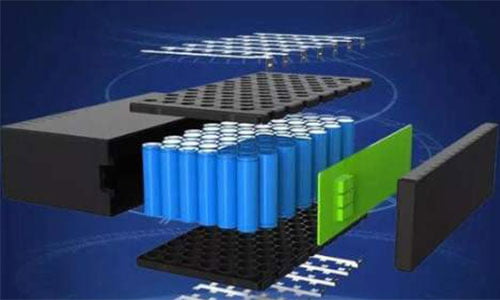
The 18650 form factor, measuring 18mm in diameter and 65mm in length, is renowned in the industry for its mechanical robustness. Unlike pouch or prismatic cells, cylindrical cells possess an inherent structural advantage. The “jelly roll” construction—where the anode, cathode, and separator are wound together—creates a self-supporting structure.
This design offers significant resistance to thermal expansion and contraction during charge and discharge cycles. For ESS applications, where thousands of cycles are expected, this structural integrity prevents electrode deformation, a primary cause of capacity degradation in other cell formats. Furthermore, the steel or aluminum casing provides excellent protection against external mechanical stress, ensuring the safety of the internal components.
Why LFP Chemistry Minimizes Capacity Fade
At the heart of our recommendation for ESS is the Lithium Iron Phosphate (LFP) chemistry. From a chemical engineering perspective, LFP batteries exhibit an “olivine” crystal structure that is remarkably stable compared to traditional NMC (Nickel Manganese Cobalt) chemistries.
The stability of the olivine structure means that the lattice does not collapse during lithium-ion extraction and insertion. This structural resilience directly translates to minimal capacity fade over time. While standard NMC cells might degrade to 80% of their original capacity after 1,000 to 2,000 cycles, high-quality 18650 LFP cells can maintain over 80% capacity after 3,000 to 5,000 cycles, or even more, depending on the depth of discharge (DoD) and operating temperature.
This longevity is not just a technical specification; it is a financial imperative. By choosing an LFP solution, you are effectively reducing the frequency of battery replacements, minimizing maintenance downtime, and significantly lowering the long-term operational costs of your energy storage infrastructure.
Thermal Management and Safety
Safety is paramount in large-scale energy storage. The 18650 cylindrical format facilitates superior thermal management. The small footprint of each cell means that the heat generated internally is dissipated more efficiently through the casing. Additionally, the steel can acts as a heat sink, preventing hotspots that can lead to thermal runaway.
In the context of LFP chemistry, the thermal runaway threshold is significantly higher than that of NMC cells. LFP cells are intrinsically safer because they do not release oxygen during thermal decomposition. This “oxygen-free” characteristic eliminates the risk of combustion, even under extreme conditions such as overcharging or physical damage.
For B2B clients, this translates to a reduced risk of catastrophic failure and a lower requirement for complex, expensive active cooling systems in your ESS design. Passive cooling is often sufficient for 18650 LFP systems, further simplifying the engineering complexity.
Customization and Scalability
One of the key advantages of working with a specialized cylindrical battery manufacturer in China is the ability to customize solutions to meet specific project requirements. Whether you need a specific energy density, discharge rate, or operating temperature range, the modular nature of 18650 cells allows for flexible system design.
You can scale your ESS from small residential units to massive grid-scale installations by simply altering the number of cells in parallel and series configurations. This modularity ensures that your investment in battery technology remains future-proof and adaptable to changing energy demands.
Partnering with a Reliable Manufacturer
Selecting the right partner is crucial. As a leading battery manufacturer in China, CNS Battery provides comprehensive cylindrical battery cells and customizable solutions for the world. Our rigorous quality management systems ensure that every 18650 LFP cell meets the highest standards of performance and reliability.
We understand that every battery is a masterpiece of craftsmanship, and we are committed to providing our global customers with the technical support and product quality needed to succeed in the competitive ESS market.
If you are looking for a long-lasting, reliable energy solution for your devices or systems, explore our range of cylindrical battery cells. To consult or invite us for a technical discussion, please leave a message online or contact our customer consultation team directly.
Key Takeaways:
- 18650 LFP cells offer superior cycle life and minimal capacity fade.
- The cylindrical design ensures structural integrity and efficient thermal management.
- LFP chemistry provides intrinsic safety and stability.
- Modular scalability allows for flexible ESS design.
For more information on our product range and to discuss your specific requirements, visit our product center or contact us today.
Sources:
- Cylindrical Battery Cell Product Page: https://cnsbattery.com/products-3/cylindrical-battery-cell/
- Battery Manufacturer in China Overview: https://cnsbattery.com/battery-manufacturers-in-china/
- Contact Information: https://cnsbattery.com/contact-2/


