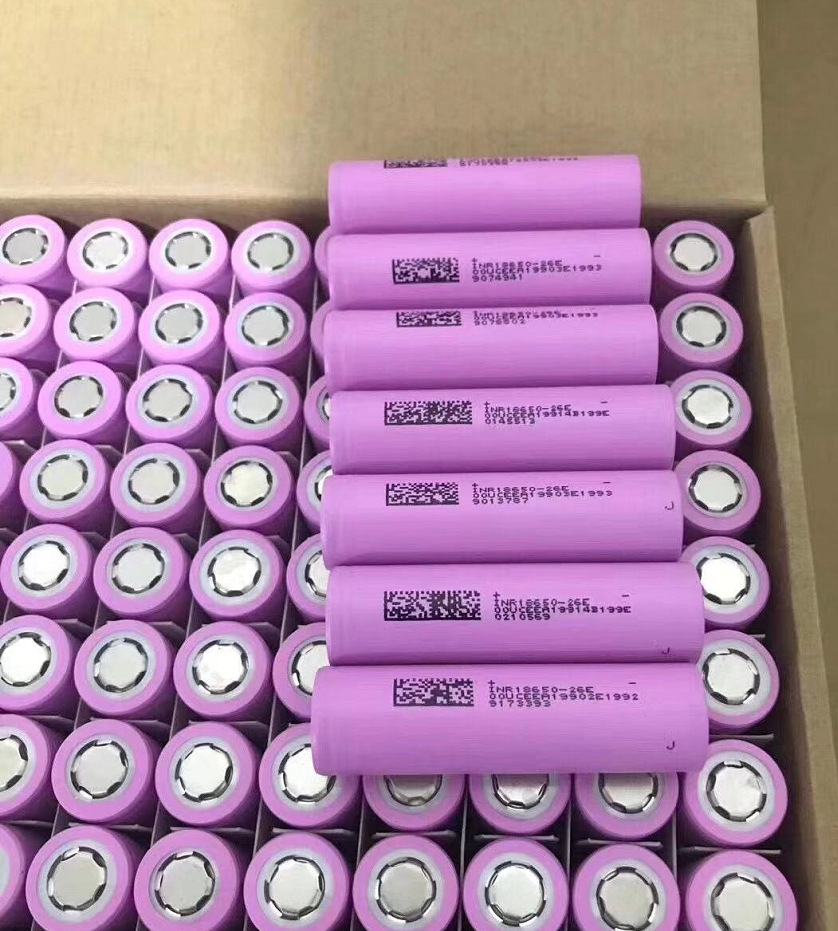
18650 LFP Battery for E-bike 2026 – BMS Compatibility Solved Wholesale China Factory Direct
The global e-bike market is undergoing a significant transformation in 2026. As riders demand longer ranges, faster charging, and absolute safety, the choice of battery chemistry is shifting decisively towards Lithium Iron Phosphate (LiFePO4). For engineers and technical procurement managers sourcing cells directly from China, the challenge isn’t just finding cheap cells—it’s finding 18650 LFP cells that actually work with standard Battery Management Systems (BMS) without complex recalibration.
As a technical expert in lithium battery systems, I can confirm that the era of high-maintenance NMC packs is fading in the commercial and heavy-duty e-bike segment. LiFePO4 offers the stability and longevity required for mass deployment. However, a critical bottleneck remains: voltage compatibility. Standard e-bike BMS units are designed for the 3.7V nominal voltage of NMC/ICR cells. Traditional LFP cells, with a nominal voltage of 3.2V, often trigger low-voltage warnings or fail to communicate properly with these existing BMS architectures.
This article cuts through the noise to present a specific engineering solution: High-Voltage 18650 LFP cells designed to match the voltage curve of traditional e-bike systems. We will dissect the technical specifications, the compatibility fix, and the direct factory procurement model that allows for wholesale acquisition of these specialized cells.
The 2026 E-Bike Battery Conundrum: Voltage Mismatch
When designing or sourcing an e-bike battery pack, the BMS is the brain. It monitors voltage, temperature, and current to prevent catastrophic failure. In 2026, most off-the-shelf e-bike BMS units operate on an algorithm expecting a “4S” (4 cells in series) configuration to read approximately 14.8V when fully charged (3.7V per cell) and cut off discharge around 10V-12V.
The Problem: Standard Lithium Iron Phosphate (LFP) cells have a nominal voltage of 3.2V. A 4S LFP pack only provides 12.8V nominally. This lower voltage often causes the BMS to误read the state of charge, leading to premature cut-offs, “Low Voltage” error codes, or even refusal to activate. Retrofitting an entire fleet with new BMS units is expensive and logistically complex.
The Solution: A new generation of 3.65V Nominal LFP cells.
Technical Deep Dive: The 3.65V LFP Cell
To solve the BMS compatibility issue without hardware changes, advanced manufacturers have developed 18650 cells that bridge the gap between traditional chemistry and iron phosphate safety.
- Nominal Voltage: 3.65V (Compared to standard 3.2V LFP and 3.6V-3.7V NMC).
- Fully Charged Voltage: 3.65V – 3.70V.
- Discharge Cut-off: 2.5V – 3.0V.
Why this works: A 4S pack built with these specialized 3.65V LFP cells delivers a nominal 14.6V and a fully charged voltage of ~14.8V. This perfectly mirrors the voltage signature of a standard NMC pack. Consequently, the existing BMS interprets the pack as “full” and “charged” without any firmware updates or hardware swaps.
Safety & Chemistry:
Do not confuse these with standard NMC cells. These are still Phosphate-based (often labeled as IFP or specific high-voltage LFP formulations). They retain the core benefits of LFP:
- Thermal Stability: No thermal runaway below 270°C.
- Cycle Life: 2000+ cycles while maintaining 80% capacity.
- Non-Toxicity: Cobalt and Nickel-free, making them RoHS compliant and easier to ship/recycle.
Performance Specifications for 2026 Applications
For the specific application of E-bikes, the 18650 format remains dominant due to its balance of energy density and mechanical robustness. The following table outlines the specifications of the latest compatible cells available from Chinese factories in 2026.
| Parameter | Specification | Benefit for E-Bike |
|---|---|---|
| Model | INR18650-3500 (Modified LFP) | High capacity in standard form factor |
| Nominal Capacity | 3500 mAh | Extended range per charge |
| Nominal Voltage | 3.65 V | BMS Compatibility Solved |
| Max Continuous Discharge | 10A (20A Pulse) | Sufficient for mid-drive and hub motors |
| Operating Temp (Charge) | 0°C to 45°C | Standard operating range |
| Operating Temp (Discharge) | -20°C to 60°C | Cold weather reliability |
Engineering Note: These cells utilize a modified phosphate crystal structure or blended cathode technology to achieve the higher voltage plateau while maintaining the flat discharge curve characteristic of LFP chemistry. This ensures that the voltage doesn’t sag excessively under load, preventing the BMS from误triggering over-current protection.
Direct Factory Sourcing: Wholesale Advantages
For OEMs and distributors, buying “Factory Direct” in China eliminates the markup of trading companies, but it introduces supply chain complexity. In 2026, the most reliable Chinese factories have adapted to international standards.
Quality Assurance:
When sourcing wholesale, demand access to the factory’s grading system. Top-tier factories (Grade A) sort cells into tight voltage and capacity bins (e.g., 3450-3550 mAh). Mixing bins leads to pack imbalance. A reputable factory will provide sorting data and IR (Internal Resistance) matching to ensure your 13S or 14S e-bike packs perform uniformly.
Logistics & Compliance:
Ensure the factory has experience shipping UN38.3 certified cargo. As an expert, I recommend partnering with manufacturers who offer “Kitting” services—where cells are shipped with brackets, nickel strips, and the specific BMS pre-validated for compatibility—reducing your assembly time from weeks to days.
Conclusion: The Path Forward for Procurement
The “18650 LFP Battery for E-bike 2026” is no longer a compromise between safety and compatibility. With the advent of 3.65V nominal cells, technical buyers can now specify a phosphate chemistry pack that plugs directly into existing e-bike architectures.
If you are an engineer or procurement manager looking to upgrade your fleet to LFP without redesigning the entire BMS infrastructure, the solution lies in specifying these high-voltage compatible cells. By sourcing directly from a specialized manufacturer, you gain access to the latest cylindrical cell technology that solves the voltage mismatch problem at the chemistry level.
To explore the specific 18650 and 21700 cylindrical cell options available for e-bike applications, or to discuss custom BMS integration, you can view the full technical portfolio here: Cylindrical Battery Cell Product Range.
For direct technical consultation regarding wholesale pricing and factory audits, please contact the engineering team: Contact CNS Battery Manufacturer.
Disclaimer: Always validate the specific voltage parameters with the manufacturer before mass production, as “LFP” can refer to multiple chemical variants. For general inquiries about becoming a global distributor, visit the manufacturer’s overview: Battery Manufacturer in China.