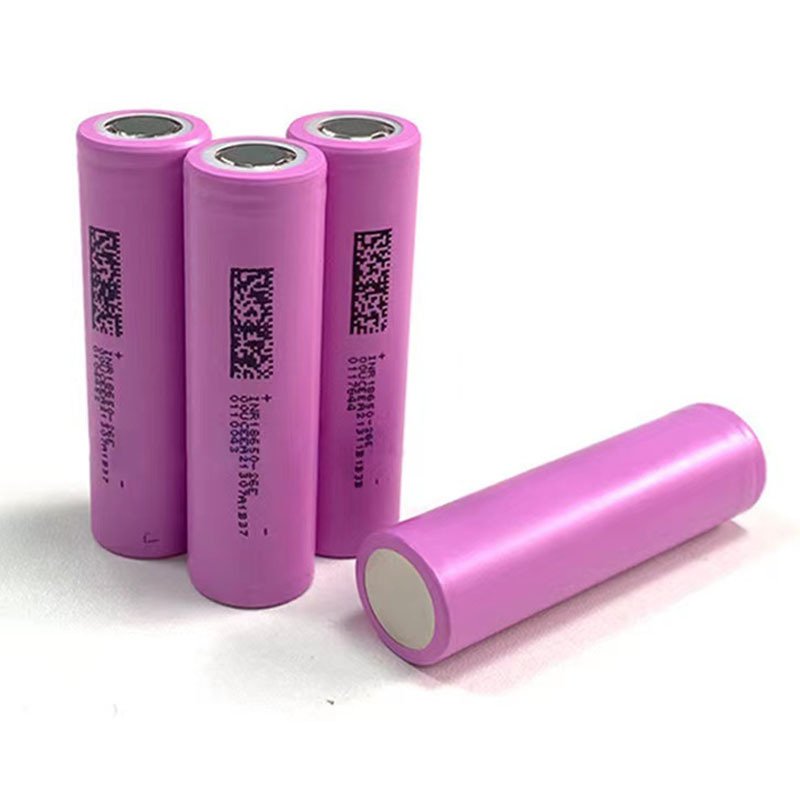
18650 High Rate Battery For Crop Spraying Drone | CNS BATTERY
Powering Precision Agriculture: Technical Deep Dive into High-Discharge 18650 Cells
The agricultural drone industry demands power solutions that balance energy density, discharge capability, and operational safety. For crop spraying applications, where payload capacity and flight time directly impact operational efficiency, the 18650 high-rate lithium battery has emerged as the industry-standard cylindrical cell format. This technical analysis examines the critical parameters, testing methodologies, and compliance frameworks that define performance excellence in agricultural UAV power systems.
Core Technical Parameters for Agricultural Drone Applications
Discharge Rate Specifications: Crop spraying drones require sustained high-current discharge during pump operation and flight maneuvers. Premium 18650 high-rate cells deliver continuous discharge rates of 15C-25C, with pulse discharge capabilities reaching 30C-40C for brief acceleration periods. This translates to 37.5A-62.5A continuous current from a 2500mAh cell, ensuring stable power delivery under variable load conditions.
Energy Density Optimization: Modern NCM (Nickel-Cobalt-Manganese) chemistry 18650 cells achieve 250-280 Wh/kg gravimetric energy density. For agricultural drones operating 10-15 liter spray tanks, this density directly correlates to extended flight cycles per charge, reducing operational downtime and increasing field coverage efficiency.
Internal Resistance Management: Low internal resistance (≤18mΩ per cell) minimizes voltage sag during high-current discharge, maintaining consistent motor RPM and pump pressure. This parameter is critical for spray uniformity, as voltage fluctuations directly affect nozzle flow rates and droplet distribution patterns.
Testing Methodologies and Quality Validation
Performance Testing Protocol: Comprehensive cell validation includes capacity testing at 0.5C discharge rate, high-rate discharge testing at 10C-20C intervals, and cycle life assessment over 500+ charge-discharge cycles at 80% depth of discharge. Temperature performance testing spans -20°C to 60°C operational ranges, ensuring reliability across diverse agricultural climates.
Safety Testing Framework: All cells undergo UN38.3 transportation safety testing, including altitude simulation (11.6 kPa for 6 hours), thermal cycling (-40°C to 75°C for 10 cycles), vibration testing (3 hours continuous), external short-circuit testing, and crush testing. These protocols validate cell integrity under extreme transport and operational conditions.
Quality Consistency Metrics: Cell-to-cell capacity variance should remain below 3%, with internal resistance variance under 5%. This consistency ensures balanced pack performance and extends overall battery system lifespan through reduced cell imbalance during charging cycles.
Regional Compliance and Technical Barriers
European Union Market Requirements: CNS BATTERY products meet CE marking requirements through comprehensive UN38.3 certification, RoHS compliance for hazardous substance restrictions, and REACH regulation adherence for chemical safety. European agricultural drone manufacturers require documented compliance with EN 62133 secondary cell safety standards and IEC 62619 industrial battery specifications.
United States Market Standards: US market entry requires UN38.3 certification for transportation, UL 1642 cell safety certification, and compliance with DOT hazardous materials transportation regulations. Agricultural operations in North America demand batteries certified for temperature extremes from -30°C Canadian winters to 50°C Southwest desert conditions.
Global Certification Framework: CNS BATTERY maintains manufacturing facilities with ISO 9001 quality management certification and ISO 14001 environmental management compliance. This infrastructure supports consistent production quality across export markets, with technical documentation available in multiple languages for regional distributors and integration partners.
Technical Integration Considerations
Battery Management System Compatibility: High-rate 18650 cells require BMS systems capable of monitoring individual cell voltage, temperature, and current flow. Advanced BMS implementations include cell balancing algorithms, over-current protection, and thermal management integration for optimal pack performance.
Thermal Management Design: Agricultural drone operations in direct sunlight require passive or active cooling systems to maintain cell temperatures below 45°C during continuous operation. Proper thermal design extends cycle life and maintains discharge performance throughout extended field operations.
For technical specifications, certification documentation, and engineering support, visit our cylindrical battery cell product page. Our engineering team provides application-specific consultation for agricultural drone manufacturers seeking optimized power solutions.
CNS BATTERY operates as a verified battery manufacturer in China with direct export capabilities to North American and European markets. Our production facilities maintain traceability documentation required for aerospace and agricultural equipment certification programs.
Conclusion
The 18650 high-rate battery represents the optimal balance of energy density, discharge capability, and manufacturing maturity for crop spraying drone applications. Success in global markets requires not only technical excellence but comprehensive compliance with regional safety and transportation standards. CNS BATTERY’s commitment to UN38.3 certification, regional standard compliance, and engineering support positions our cylindrical cell solutions for seamless integration into next-generation agricultural UAV platforms.
For partnership inquiries and technical consultation, contact our international sales team at CNS BATTERY Contact. We provide sample evaluation programs, custom pack configuration services, and ongoing technical support for agricultural drone manufacturers scaling production for global deployment.