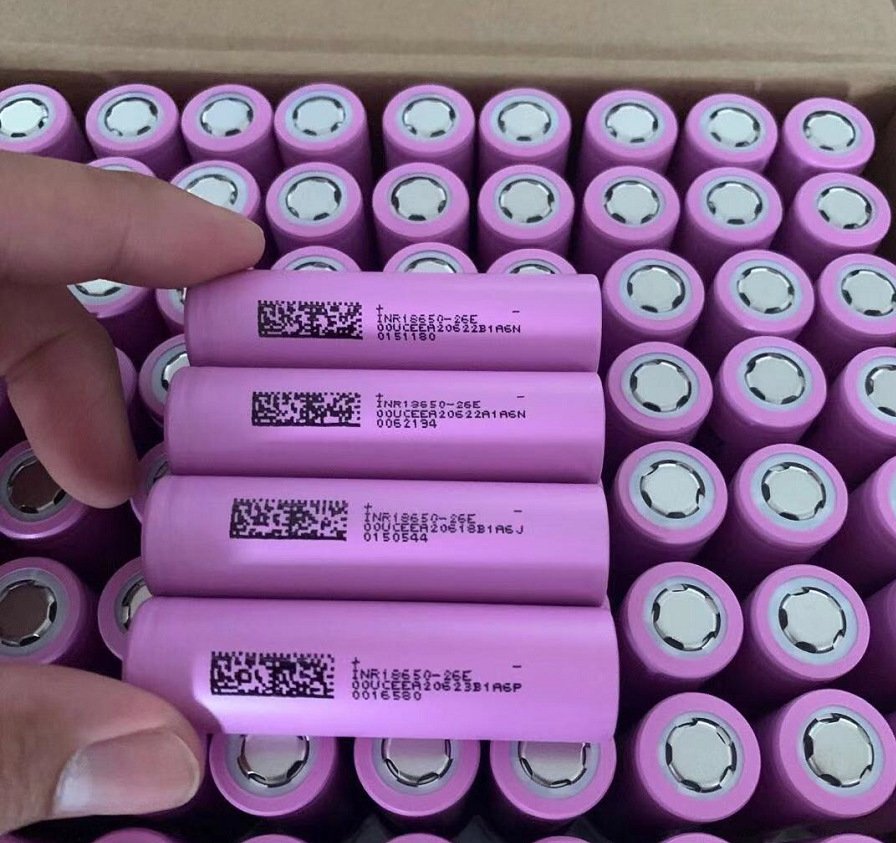
Zero-Swelling 18650 Cells: The Ultimate Solution for Solar Storage Reliability
In the rapidly expanding market of residential and commercial solar energy storage, one silent killer of battery lifespan is often overlooked: cell swelling. For engineers and technical procurement managers sourcing wholesale 18650 batteries, ensuring long-term structural integrity is not just a preference—it is a necessity. Swelling leads to casing deformation, safety hazards, and premature system failure, directly impacting the return on investment (ROI) for end-users.
As a senior lithium battery technician, I have dissected the failure modes of countless energy storage systems. The root cause often traces back to the electrolyte decomposition and gas generation within standard-grade cells under prolonged high-temperature cycling. This article serves as a deep technical dive into Zero-Swelling 18650 technology, analyzing the parameters that matter, testing methodologies, and how advanced manufacturing standards align with global geographical requirements.
Understanding the Physics of Swelling: Why Standard Cells Fail
To appreciate the “Zero-Swelling” claim, we must first understand the electrochemical reaction causing the problem.
When a standard Lithium Iron Phosphate (LFP) or NMC 18650 cell undergoes charge-discharge cycles, especially in high-temperature environments common in solar storage (frequently exceeding 45°C), the electrolyte can decompose. This decomposition produces gases such as CO2 and CO. In a sealed cylindrical can, this gas has nowhere to go, leading to increased internal pressure and outward physical deformation (swelling).
The Technical Threshold:
For a cell to be classified as “Zero-Swelling,” it must maintain a dimensional change of less than 0.5% over its entire rated cycle life (typically 2000-3000 cycles). This requires not just a robust shell but a fundamentally stable electrolyte formula.
Parameter Deep Dive: Selecting the Right Wholesale Cell
When evaluating cells for a solar storage project, do not get distracted by marketing hype. Focus strictly on these three technical pillars found in the datasheet:
1. Electrolyte Additive Package (The SEI Layer)
The Solid Electrolyte Interphase (SEI) layer on the anode must be exceptionally stable. Look for cells utilizing advanced overcharge protection additives and film-forming additives that suppress continuous electrolyte reduction at high voltages (above 3.65V for NMC).
2. High-Temperature Cycle Life
Solar storage systems often sit at full charge during the day, baking in the sun. The critical metric here is capacity retention at 45°C.
- Standard Cell: Retains ~60% capacity after 1000 cycles at 45°C.
- Zero-Swelling Cell: Retains >80% capacity after 2000 cycles at 45°C, with minimal gas generation.
3. Mechanical Strength of the Can
The 18650 steel can must have a yield strength capable of withstanding internal pressure without bulging. This is typically achieved through triple-layer steel plating (Nickel-Plated Steel) with a thickness tolerance of ±0.02mm.
Testing Methodology: How to Verify “Zero Swelling” in Your Lab
Before signing a wholesale purchase order, you must validate the manufacturer’s claims. Here is a rigorous test protocol you can replicate:
- Formation & Initial Measurement: Fully charge 10 sample cells and measure the initial diameter (should be 18.0mm ±0.1mm) and height (65.0mm ±0.5mm).
- Accelerated Life Test (ALT):
- Temperature: 45°C ±2°C (Simulating a hot rooftop environment).
- Cycling: 1C charge / 1C discharge, between 2.5V and 4.2V (for NMC).
- Duration: 1000 cycles.
- Rest Period: Allow cells to rest for 24 hours at room temperature.
- Final Measurement: Re-measure the diameter and height.
- Pass Criteria: No visible deformation. Dimensional increase must be less than 0.2mm in height and 0.1mm in diameter.
If the cells pass this test, you have a product suitable for solar storage. If they fail, reject them immediately to avoid field failures.
The Global Standard Barrier: Adapting to Geo-Specific Regulations
Sourcing “Zero-Swelling” cells is only half the battle. The other half is ensuring these cells meet the regional compliance standards of your target market. Different geographies have different tolerances for battery safety and performance.
1. European Union (EU) Compliance
The EU market is increasingly strict regarding chemical safety and performance consistency.
- REACH & RoHS: Ensure the cells are free from restricted substances like Cobalt (if possible) and heavy metals.
- UN38.3: Mandatory for transportation.
- Technical Adaptation: For EU solar storage, cells must have a very low self-discharge rate (<2% per month) to handle the long winter nights without significant voltage drop.
2. North American (US) Compliance
The US market focuses heavily on fire safety and thermal runaway prevention.
- UL 1642 / UL 2054: These standards test the cell’s response to crush, impact, and nail penetration.
- Technical Adaptation: Cells destined for the US grid-tied systems must have robust CID (Current Interrupt Device) and PTC (Positive Temperature Coefficient) mechanisms to handle potential voltage surges from the grid.
3. The Manufacturer’s Role in Geo-Adaptation
A reliable wholesale supplier must possess the R&D capability to tailor the cell chemistry to these regional standards. This is where the manufacturing location and quality control (QC) pedigree become critical.
Conclusion: The Value of Technical Sourcing
In the quest for the perfect solar storage solution, the “Zero-Swelling” 18650 battery represents the pinnacle of engineering for longevity and safety. By focusing on the electrolyte stability, high-temperature cycle life, and rigorous mechanical testing, you can eliminate one of the most common failure points in energy storage systems.
As a battery manufacturer in China with a global outlook, we understand that selling wholesale cells is not just about volume; it is about providing a technical solution that meets the specific geographical and regulatory demands of your market. Whether you are targeting the strict environmental regulations of Europe or the robust safety standards of North America, the right cell chemistry and manufacturing precision are paramount.
For engineers and procurement managers ready to upgrade their solar storage projects with reliable, high-performance cylindrical cells, we invite you to explore our comprehensive range.
Explore our Cylindrical Battery Cell product line to find the perfect fit for your energy storage needs:
Product Link: Cylindrical Battery Cell
Learn more about our manufacturing capabilities and how we ensure quality for global clients:
Learn More About Our Manufacturing
Contact our technical sales team for a consultation tailored to your specific regional requirements:
Contact Us