18650 Battery Price Trend 2026 – Wholesale Update
The global lithium-ion battery market is undergoing a seismic shift in 2026. As an industry insider, I’ve witnessed how the pricing landscape for cylindrical cells, specifically the ubiquitous 18650 format, has stabilized after years of volatility. For B2B buyers, engineers, and procurement managers, the current market is defined by a transition from “survival” to “optimization.” Raw material costs, particularly lithium carbonate, have settled into a predictable range, allowing manufacturers to offer more transparent pricing structures. However, the true value in 2026 isn’t just found in the lowest CPT (Carriage Paid To) price; it’s found in Total Cost of Ownership (TCO). This means evaluating cycle life, thermal management efficiency, and supply chain resilience.
This year, we are seeing a bifurcation in the market: a race to the bottom for low-grade consumer cells and a premium segment focused on high-density, long-life industrial applications. If you are sourcing batteries for Power Tools, E-Bikes, or Energy Storage Systems (ESS), understanding this 18650 Battery Price Trend 2026 is critical to avoiding obsolescence and ensuring your product remains competitive.
The Technical Foundation: Why 18650 Remains Relevant
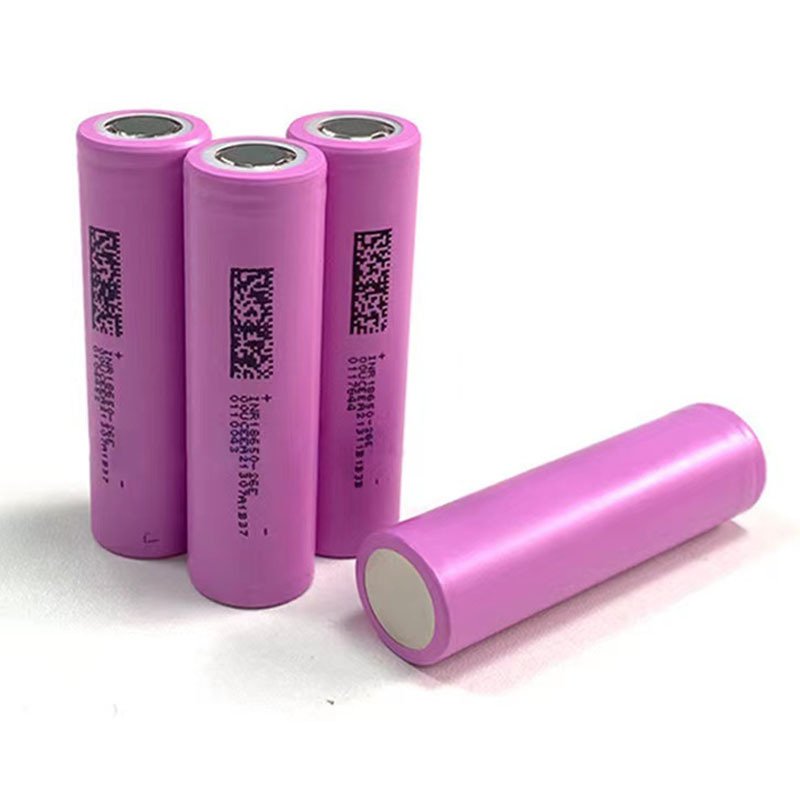
Before diving into the financials, let’s revisit the engineering that makes the 18650 the backbone of the portable power industry. The “18650” designation refers to the physical dimensions: 18mm in diameter and 65mm in length. Despite the rise of the 21700 format, the 18650 remains dominant due to its mature manufacturing ecosystem and high volumetric energy density.
From a chemistry perspective, the market is segmented into three primary categories, each with distinct pricing implications:
- IMR (LiMn2O4 / NMC): Manganese or Nickel-based. These are power-oriented cells, favored for high discharge rates (up to 20C-30C). They are the standard for Power Tools.
- INR (NMC / NCA): Nickel-based with added stability. These are balanced cells, offering a mix of energy and power. They are the workhorses for E-Bikes and consumer electronics.
- IFR (LiFePO4): Lithium Iron Phosphate. While less common in the 18650 format due to lower voltage (3.2V), they offer extreme cycle life and safety.
The price trend in 2026 is heavily influenced by the cathode chemistry. NMC (Nickel Manganese Cobalt) cells are seeing price reductions due to advancements in Nickel processing, while Cobalt-based formulations are becoming less common due to ethical sourcing concerns and cost.
Decoding the 2026 Wholesale Price Curve
In Q1 2026, the wholesale price range for standard 18650 cells sits between $0.65 and $1.10 per cell, depending on capacity and discharge specifications. However, this is a simplification. The market has stratified into distinct tiers:
- Tier-1 (High-End): $0.90 – $1.40+ | Capacity: 2500mAh – 3500mAh
- Target Market: Medical devices, Aerospace, Premium Power Tools.
- Trend: Prices are stable. These cells utilize advanced electrolytes and precision manufacturing to achieve high cycle life (>1000 cycles at 80% DoD).
- Tier-2 (Industrial Standard): $0.75 – $0.95 | Capacity: 2000mAh – 2600mAh
- Target Market: E-Bikes, Consumer Electronics, Mid-Range ESS.
- Trend: Slight deflation (-3% YoY). Increased competition from mid-sized Chinese manufacturers is driving margins down, but quality remains high.
- Tier-3 (Consumer Grade): $0.50 – $0.70 | Capacity: 800mAh – 2000mAh
- Target Market: Flashlights, Low-cost toys, Disposable Vapes.
- Trend: Rapid deflation. This segment is highly saturated, and prices are nearing the “cost of production” floor. Many manufacturers are exiting this segment.
The driving force behind these trends is the shift towards Automated Production. In 2026, manufacturers who have invested in Industry 4.0 standards (fully automated lines with AI-driven QC) can offer better pricing on high-spec cells because they eliminate human error and reduce scrap rates. This is why the price gap between “good” and “bad” cells is widening—automation favors quality at scale.
Supply Chain Dynamics and Geopolitical Factors
As a lithium-ion cylindrical battery manufacturer in China, I can attest that the supply chain has matured significantly. However, B2B buyers must look beyond the sticker price. In 2026, there are two critical factors adding “hidden costs” to procurement:
- Logistics Volatility: The Red Sea crisis and fluctuating container rates have made ocean freight a wildcard. Many buyers are now opting for “Near-shoring” or “Friend-shoring” strategies. While China remains the cost leader, buyers are increasingly valuing manufacturers with established partnerships with freight forwarders to lock in rates.
- Compliance Costs: The EU Battery Passport and CBAM (Carbon Border Adjustment Mechanism) are fully active. This means that the cheapest cell from an unverified supplier may incur significant carbon tariffs upon entry into Europe. In 2026, the “green premium” is no longer a niche concept; it is a regulatory requirement.
Strategic Sourcing Recommendations
For engineers and procurement officers navigating the 2026 market, here is my actionable advice:
- Don’t Buy Specs, Buy Data: In a market where datasheets can be easily faked, demand access to real-world test data. Ask for formation and grading reports. A reputable manufacturer will provide this transparency.
- Consider the 21700 Alternative: While this article focuses on 18650, it is unethical not to mention the 21700. If your design allows for a mechanical redesign, the 21700 offers a 40-50% higher energy density in a larger format. In 2026, the price premium for 21700 cells is narrowing, making them a cost-effective solution for reducing BMS complexity and pack size.
- Long-Term Contracts (LTA): Given the stability of raw material prices, locking in a 12-24 month LTA with a volume-based pricing model is the best strategy to hedge against future inflation.
Conclusion: Partnering for 2026 and Beyond
The 18650 battery market in 2026 is not about finding the cheapest component; it is about finding a reliable partner who can navigate the complexities of compliance, logistics, and technical performance. The price trends indicate a maturing industry where quality and sustainability are finally being priced correctly.
If you are looking for a partner who understands the nuances of high-density cylindrical cell manufacturing, we are here to help. Whether you need a standard INR18650-3500 for your new E-Bike design or a custom high-power solution for industrial automation, our team is ready to support your 2026 projects.
We provide comprehensive cylindrical battery cells and customizable solutions for the world.
Explore our full range of Cylindrical Battery Cells to find the perfect match for your technical requirements.
Ready to optimize your 2026 supply chain?
Contact our sales team today for a personalized quotation and technical consultation.