The 18650 Battery 2026 Standard: High Discharge Rate Power for Drone UAV Applications
In the rapidly evolving landscape of unmanned aerial vehicles (UAVs), the demand for reliable, high-energy-density power sources has never been greater. As drone technology advances toward longer flight times and heavier payloads, the limitations of standard consumer batteries become apparent. The industry standard for meeting these demands remains the 18650 lithium-ion battery.
For engineers and technical procurement managers sourcing cells for 2026 drone projects, the choice is clear: generic cells simply cannot compete with purpose-built, high-discharge-rate cylindrical batteries. This article delves into why the 18650 format remains the gold standard for UAVs and how to select the optimal high-rate cell for your specific application.
Why the 18650 Format Dominates Drone Technology
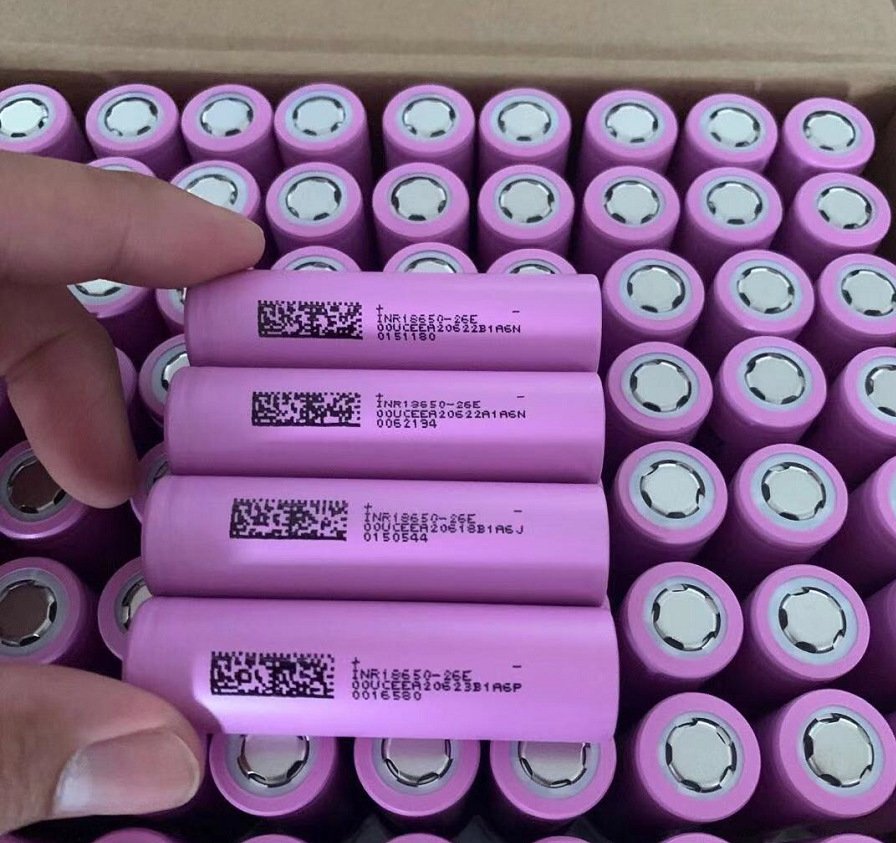
The 18650 cell—named for its dimensions (18mm diameter, 65mm length)—is not just a legacy format; it is an engineering triumph. For UAVs, the primary advantage lies in the energy-to-weight ratio.
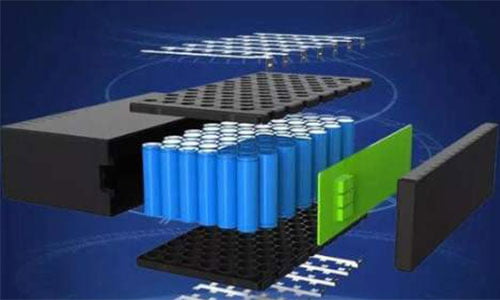
Unlike pouch or prismatic cells, the cylindrical steel (or aluminum) casing of the 18650 provides superior structural integrity. This rigidity is crucial during the high-vibration environments of flight and crash protection. Furthermore, the cylindrical geometry allows for efficient thermal management within the battery pack, a critical factor when cells are discharging at rates exceeding 20C.
From a chemistry standpoint, modern 18650s used in drones typically utilize NMC (Nickel Manganese Cobalt) or IMR (Manganese) chemistries. These formulations prioritize power output and thermal stability over pure energy density (mAh), ensuring the drone receives the burst current required for rapid ascent and maneuvering without the risk of thermal runaway.
Decoding “High Discharge Rate” for UAV Performance
When specifying batteries for a drone, capacity (measured in mAh) is only half the story. The Continuous Discharge Rate (measured in Amperes or “C”) is the defining metric for UAV performance.
A standard 18650 cell designed for laptops or flashlights might have a discharge rate of 5A to 10A. In contrast, a High Discharge Rate (HDR) cell suitable for a quadcopter or heavy-lift drone must often deliver 20A to 35A continuously.
- The Physics: Drones require high current to spin motors at thousands of RPM. Ohm’s Law ($V = I \times R$) dictates that to maintain voltage under high load (low resistance), the current ($I$) must be substantial.
- The Consequence: Using a low-discharge cell in a high-drain application causes a “voltage sag.” The battery voltage drops under load, triggering the drone’s low-voltage cutoff prematurely, resulting in a sudden loss of power and potential crash.
CNS Battery: Engineering 18650 Solutions for 2026 UAVs
At CNS Battery, we understand that drones are not just devices; they are complex aerial systems requiring precision power. Our Cylindrical Battery Cell lineup is specifically engineered to meet the rigorous demands of modern UAV technology.
We offer a comprehensive range of 18650 solutions, from high-energy density cells for long-endurance surveillance drones to our specialized High Discharge Rate (Power Series) cells designed for racing drones and heavy-lift cinematography rigs.
Our manufacturing process focuses on minimizing internal resistance, allowing our cells to deliver massive current without significant heat generation. This results in stable voltage output throughout the flight, maximizing your drone’s performance window.
Key Specifications: Selecting the Right Cell
To assist engineers in selecting the optimal component for their 2026 drone designs, we have curated a specification table highlighting our high-performance 18650 offerings. These cells are designed to balance capacity with the burst power necessary for agile flight.
| Model Number | Chemistry Type | Typical Capacity | Nominal Voltage | Max Continuous Discharge | Primary Feature |
|---|---|---|---|---|---|
| INR18650-2500 | NMC | 2.5 Ah | 3.7 V | 15C (37.5A) | High Power Density |
| INR18650-3000 | NMC | 3.0 Ah | 3.7 V | 20A | Balanced Power & Capacity |
| ISR18650-2200 | NCA | 2.2 Ah | 3.7 V | 11A | Ultra-High Discharge |
| INR18650-3500 | NMC | 3.5 Ah | 3.6 V | 7000mA | Maximum Endurance |
Note: For heavy-lift or high-speed racing drones, we recommend the INR18650-2500 or ISR18650-2200 models due to their superior thermal management and high current output.
Beyond the Spec Sheet: Safety and Reliability
While high discharge rates are critical, safety cannot be compromised. CNS Battery adheres to strict quality management protocols during the manufacturing of our 18650 cells. Every cell undergoes rigorous testing for internal defects, weld integrity, and electrolyte saturation.
Our cells feature advanced safety mechanisms, including:
- CID (Current Interrupt Device): Automatically disconnects the cell if internal pressure rises.
- PTC (Positive Temperature Coefficient) Device: Acts as a resettable fuse to prevent over-current.
These safeguards ensure that when your drone is pushing the limits, the battery is not the weak link.
Customization and Future-Proofing
The drone industry is moving towards more specialized applications, from agricultural spraying to autonomous delivery. Standard off-the-shelf batteries may not fit these unique thermal or spatial constraints.
As a leading Battery Manufacturer in China, CNS Battery offers OEM/ODM services. We work directly with R&D teams to customize:
- Tab configurations for specific PCB layouts.
- Form factors and protective circuits.
- Battery Management Systems (BMS) tailored for drone telemetry integration.
Conclusion: Powering the Future of Flight
Selecting the right 18650 battery is not merely a procurement decision; it is a fundamental engineering choice that dictates the safety, range, and capability of your UAV.
As we look toward 2026, the requirements for energy density and discharge performance will only increase. By choosing a partner with deep R&D capabilities and a commitment to quality, you ensure your drone technology remains at the cutting edge.
If you are ready to elevate your drone’s performance with a battery solution engineered for reliability and high discharge rates, we invite you to explore our technical specifications or speak with our engineering team.
Ready to optimize your UAV power system? Explore our full range of Cylindrical Battery Cells or contact our experts for a custom consultation.