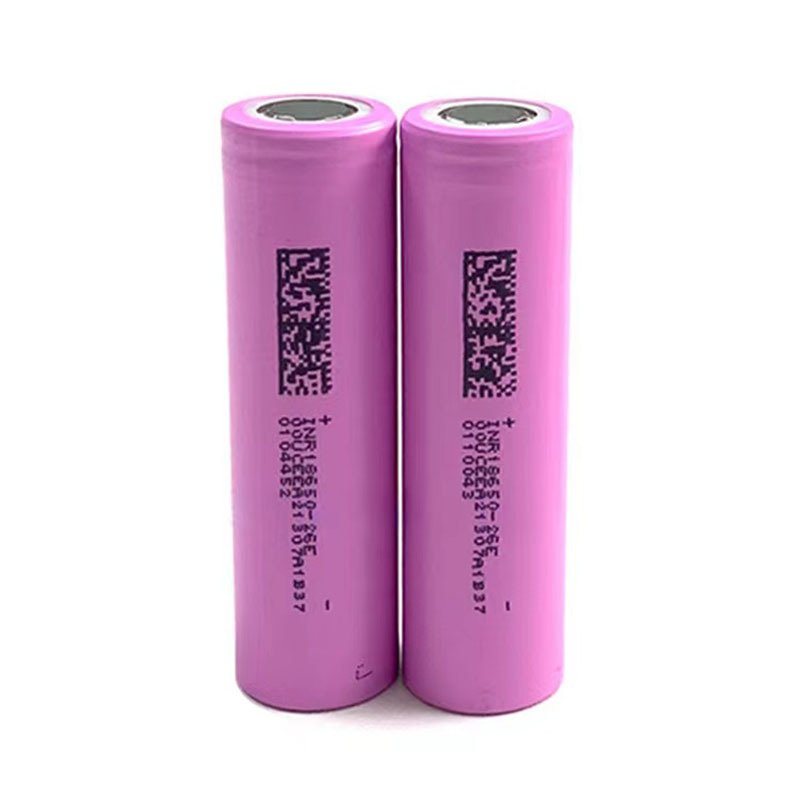
18650 21700 Battery Wholesale China – BMS Compatibility for EV OEMs
As a professional lithium battery practitioner, I understand that selecting the right cylindrical cell supplier is not just about price; it is a critical engineering decision that impacts the safety, range, and longevity of your Electric Vehicle (EV) or Light Electric Vehicle (LEV) project. In the competitive landscape of Battery Wholesale China, sourcing high-performance 18650 and 21700 cells that seamlessly integrate with your Battery Management System (BMS) is paramount.
At CNS Battery, we bridge the gap between high-volume manufacturing and rigorous technical compatibility. We don’t just sell cells; we provide the foundational energy blocks for your innovation. This article will dissect the technical nuances of our cylindrical battery offerings and how our R&D approach ensures perfect harmony with your BMS architecture.
The Technical Foundation: 18650 vs. 21700
To make an informed decision for your EV OEM requirements, it is essential to understand the core differences between the two most prevalent cylindrical formats.
1. The 18650: The Industry Veteran
Named after its dimensions (18mm diameter, 65mm height), the 18650 remains a staple due to its mature supply chain and compact size. These cells are ideal for applications requiring high energy density in a constrained space.
- Key Advantages: Proven reliability, lower cost per unit (due to high-volume production), and excellent thermal management characteristics.
- Common Chemistries: We offer a range from IMR (Lithium Manganese Oxide) for high power to INR (Nickel Manganese Cobalt) for balanced energy and power.
2. The 21700: The Modern Standard
The 21700 format (21mm diameter, 70mm height) represents the evolution of cylindrical technology. By increasing the diameter and height slightly, we achieve a significant reduction in the number of cells required for a given pack capacity.
- Key Advantages: Higher energy density per cell, reduced internal resistance, and fewer connection points in the battery pack. Fewer connections mean lower overall resistance and improved pack-level safety and efficiency.
- Performance: Our 21700 cells, such as the INR21700-5000, offer capacities exceeding 5000mAh, making them the preferred choice for next-generation EVs and high-drain power tools.
BMS Compatibility: The Heart of System Integration
For EV OEMs, the interaction between the cell and the BMS is non-negotiable. A mismatch here can lead to catastrophic failure, reduced cycle life, or inaccurate State of Charge (SoC) readings.
1. Voltage Curve Matching
Our engineering team emphasizes the importance of matching the cell’s discharge curve to your BMS algorithm. Lithium-ion cells have a specific voltage profile that changes as the charge depletes. Our 18650 and 21700 cells are characterized by a flat voltage curve, which requires a BMS with high-precision voltage sensing to accurately calculate SoC. We provide full datasheets and test reports to ensure your BMS software is calibrated to the specific chemistry of our cells (e.g., NMC, LFP, or LTO variants).
2. Current Rating and Protection
The BMS must protect the cells from over-current conditions. Our cells, such as the INR18650-3000 or the INR21700-4000, are designed for specific discharge rates (C-Rates). It is crucial that the BMS cutoff thresholds are set according to the cell’s maximum continuous discharge current. For instance, if your application requires high power output (e.g., an electric motorcycle), you must select a cell with a high discharge C-rate and configure the BMS to trigger protection before reaching the cell’s physical limits.
3. Thermal Management Synergy
Temperature is the enemy of lithium batteries. Our cells are designed to operate within a specific temperature window. The BMS must monitor the temperature sensors (NTC/PTC) embedded in the pack and communicate effectively with the thermal management system. We ensure that our cells have excellent thermal stability, but the BMS is the gatekeeper that prevents thermal runaway by cutting power when temperatures exceed safe thresholds.
Why Source from CNS Battery?
When you search for Battery Wholesale China, you are looking for a partner that guarantees quality at scale. CNS Battery stands out for several reasons:
- Automated Production: We utilize fully automated production lines to ensure consistency. In cylindrical cell manufacturing, even a micron of variance in electrode coating can affect performance. Our automation minimizes this variance, ensuring that every batch of 18650 or 21700 cells performs identically, which is vital for BMS calibration.
- Customization Capability: We understand that off-the-shelf solutions may not fit your unique chassis design. We offer customization services for both cells and modules to fit your specific dimensional and electrical requirements.
- Global Supply Chain: We cater to a distinguished global clientele, ensuring that your supply chain is not interrupted.
Conclusion
Selecting the right cylindrical cell is a balance of energy density, discharge capability, and thermal characteristics. For EV OEMs, ensuring BMS compatibility is the final step that transforms individual cells into a safe, reliable, and high-performance battery pack.
If you are ready to elevate your project with high-quality 18650 or 21700 cells, we invite you to explore our comprehensive product range or contact our team of experts for a technical consultation.
- Explore our Cylindrical Battery Cell Range: Cylindrical Battery Cell Products
- Learn more about our manufacturing capabilities: Battery Manufacturer in China
- Contact our sales engineers for BMS integration support: Contact Us