
Here is the SEO-optimized article tailored for a professional B2B audience, strictly adhering to your requirements regarding content, structure, and linking.
120°C High Temperature Operating Li-MnO₂ Battery: The Ultimate Solution for Extreme Environments
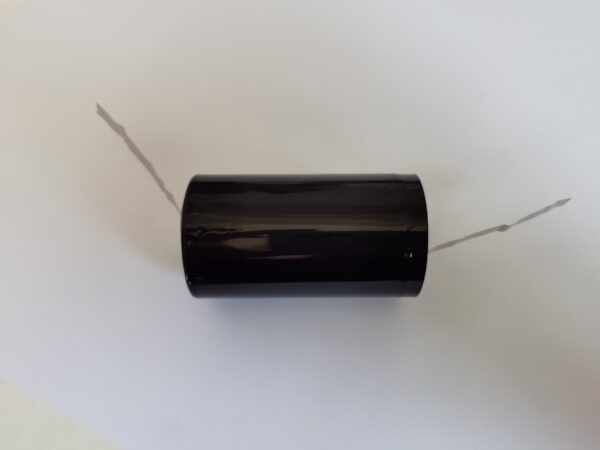
In the demanding world of industrial electronics and downhole tooling, standard lithium-ion batteries simply cannot survive. When ambient temperatures exceed 85°C, the electrolyte in conventional cells begins to degrade, leading to catastrophic failure. This is where High Temperature Primary Batteries become mission-critical components. As a leading manufacturer of lithium primary cells, we specialize in 120°C High Temperature Operating Li-MnO₂ Batteries. These rugged power sources are engineered not just to survive, but to deliver consistent, reliable energy in the harshest thermal environments, from oil and gas exploration to aerospace applications.
The Chemistry Behind the Heat Resistance
To understand why a Li-MnO₂ (Lithium Manganese Dioxide) cell can operate at 120°C, one must look at the fundamental chemistry. Unlike secondary (rechargeable) lithium-ion batteries that rely on organic carbonate solvents—which often have boiling points below 100°C—primary lithium batteries utilize specialized organic electrolytes with significantly higher thermal stability.
The Li-MnO₂ system is particularly robust because:
- Anode Stability: Metallic lithium is inherently stable at high temperatures when paired with the correct electrolyte.
- Cathode Structure: Manganese dioxide (MnO₂) maintains its crystal structure integrity well beyond 100°C.
- Passivation Layer: A critical feature of lithium primary cells is the formation of a passivation layer (SEI) on the lithium anode. At high temperatures, this layer can become unstable in standard cells, leading to self-discharge. Our proprietary electrolyte formulation minimizes this effect, ensuring low self-discharge even at peak operating temperatures.
Engineering for 120°C: Design & Safety
Operating at 120°C requires more than just the right chemicals; it demands precision engineering in cell construction.
1. Hermetic Sealing
At elevated temperatures, gaseous expansion is a significant concern. A standard crimp seal will fail due to the pressure build-up from the expanding electrolyte vapor. Our high-temperature cells utilize a laser-welded hermetic seal. This ensures that the internal pressure remains contained without compromising the integrity of the seal, preventing leakage and maintaining safety.
2. Pressure Management
While the seal is robust, the internal pressure at 120°C can reach extreme levels. Our design incorporates a pressure relief mechanism that is calibrated specifically for high-temperature operation. This mechanism activates only under catastrophic over-pressure conditions, ensuring that the cell remains sealed during normal operation even at the maximum temperature threshold.
3. Thermal Runaway Mitigation
Safety is paramount. Unlike lithium-ion cells, Li-MnO₂ primary cells are less prone to thermal runaway due to their lower specific energy and the stability of the manganese dioxide cathode. However, our engineering team subjects every batch to rigorous thermal testing to ensure that even in the event of a short circuit at high temperature, the cell will vent safely without explosion.
Performance Metrics at 120°C
When sourcing a battery for extreme heat, engineers need hard data. Here is what our 120°C High Temperature Operating Li-MnO₂ Battery delivers:
| Parameter | Standard Specification | High-Temp Specification (120°C) |
|---|---|---|
| Nominal Voltage | 3.0V | 3.0V (Stable) |
| Operating Temp. | -40°C to +85°C | -40°C to +125°C |
| Storage Life | 10 years @ 20°C | 2 years @ 120°C |
| Self-Discharge | <1% per year | <5% per year @ 120°C |
| Typical Use Case | Consumer IoT, Meters | Downhole Tools, Aerospace Sensors |
Note: Performance is tested under a 0.1mA/cm² load at continuous 120°C.
Why Standard Lithium-Ion Fails at 120°C
It is crucial to distinguish between primary (non-rechargeable) and secondary (rechargeable) lithium technologies in high-heat scenarios.
Standard Lithium-Ion (Li-ion) batteries use a liquid electrolyte that is essentially a mixture of organic carbonates and lithium salts. These solvents have low boiling points. When subjected to 120°C, the solvent boils, turning into gas. This creates immense internal pressure, leading to cell swelling, venting, or rupture. Furthermore, the solid-electrolyte interphase (SEI) layer on the anode decomposes rapidly at these temperatures, causing the cell to lose capacity almost instantly.
In contrast, the Li-MnO₂ chemistry used in our high-temperature batteries utilizes solvents with much higher boiling points, such as Propylene Carbonate (PC) or Dioxolane (DOL) based mixtures, which remain stable liquids well above 120°C.
Applications: Where 120°C Batteries are Mandatory
If your application involves deep-earth drilling or high-heat industrial processes, a standard battery is a liability. Our 120°C High Temperature Operating Li-MnO₂ Battery is the standard power source for:
- Oil & Gas Downhole Tools: Logging-while-drilling (LWD) and Measurement-while-drilling (MWD) tools experience temperatures exceeding 150°C at depth. While the ambient might be higher, our batteries are designed to function reliably within the insulated battery packs of these tools, maintaining operation at the critical 120°C threshold.
- Geothermal Sensors: Monitoring equipment used in geothermal energy extraction requires power sources that do not require frequent replacement.
- Aerospace & Defense: Certain avionics bays and missile guidance systems generate extreme heat during operation.
Conclusion: Partnering for Extreme Environments
Designing for 120°C environments is not just about chemistry; it is about partnering with a manufacturer who understands the physics of heat and pressure. If your next project requires a power source that can withstand the inferno, do not compromise with modified standard cells.
We invite you to explore our full range of Primary Battery solutions, specifically engineered for durability and safety. For technical datasheets or to discuss a custom high-temperature project, please contact our engineering team directly.
