
Here is the SEO-optimized article tailored for the target audience of engineers and technical procurement professionals.
Unleashing the Power of 10A Pulse Discharge Li-SOCl₂ Batteries for IoT Sensors
In the rapidly evolving landscape of the Industrial Internet of Things (IIoT), power efficiency and reliability are not just features; they are absolute necessities. As sensors become the “nervous system” of smart infrastructure, the demand for batteries capable of handling high-current pulses in remote, maintenance-free environments has skyrocketed.
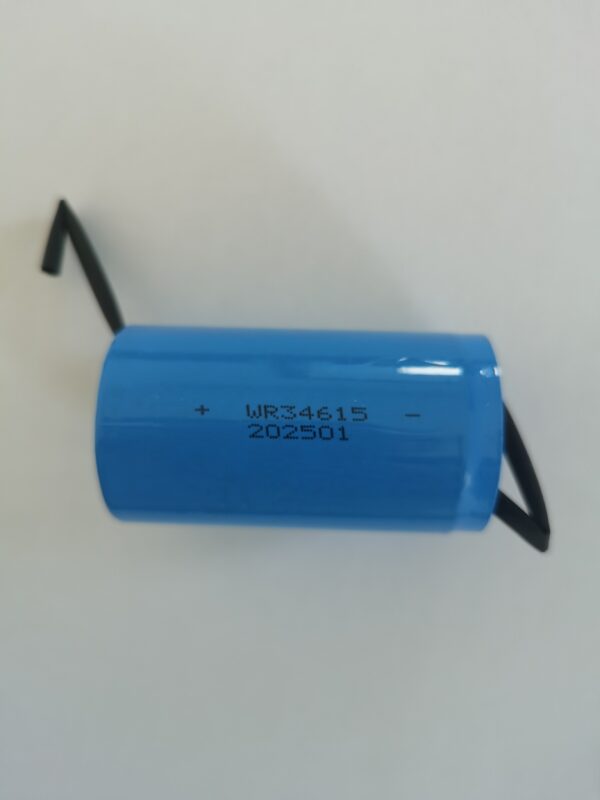
For engineers facing the challenge of powering devices that require intermittent bursts of high power—such as wireless transmitters in water meters, gas detection sensors, or remote telemetry units—the Lithium Thionyl Chloride (Li-SOCl₂) battery has long been the gold standard for longevity. However, standard Li-SOCl₂ cells are often limited to low-drain applications. The breakthrough lies in the 10A Pulse Discharge Li-SOCl₂ Battery.
This article delves into the technical architecture of these specialized cells, explaining how they bridge the gap between the high energy density of primary lithium batteries and the high power demands of modern IoT hardware.
The Core Technology: Hybrid Layer Capacitor (HLC) Design
The primary limitation of a standard bobbin-type Li-SOCl₂ cell is its high internal impedance. While chemically stable and capable of holding energy for decades, the chemical reaction inside a standard cell cannot physically keep up with the instantaneous current draw required by RF modules (LoRaWAN, NB-IoT, or LTE-M) that often require 1A to 2A peaks.
To achieve a 10A pulse discharge capability, manufacturers utilize a specific engineering solution known as the Hybrid Layer Capacitor (HLC) design, or sometimes referred to as a “Pulse” version of the cell.
How it Works:
Unlike a standard bobbin structure, the HLC design integrates a unique carbon electrode that acts similarly to a non-aqueous electrolytic capacitor. When the IoT sensor is in “sleep mode,” the lithium anode quietly supplies a small current to charge this internal hybrid layer. When the sensor wakes up to transmit data, this charged layer discharges instantly, providing the necessary high current (up to 10A) without causing a significant voltage drop.
This design allows the battery to maintain the high specific energy (up to 700 Wh/kg) of lithium-thionyl chloride chemistry while achieving a pulse capability that rivals some lithium-ion solutions, but without the need for recharging cycles or complex Battery Management Systems (BMS).
Applications Driving the 10A Demand
Why is the specific “10A” specification becoming a benchmark in the industry? It directly correlates with the power requirements of modern long-range wireless protocols.
Consider the following common IoT scenarios where a standard battery would fail, but a 10A Pulse Discharge battery excels:
- Smart Utility Meters (AMI): Modern Automatic Meter Reading (AMR) and Advanced Metering Infrastructure (AMI) systems often need to transmit data through dense concrete or metal structures. This requires the transmitter to operate at maximum power, drawing high current pulses.
- Asset Tracking & Telematics: GPS trackers used in cold chain logistics or fleet management require significant power to acquire satellites and upload data packets quickly before returning to sleep.
- Industrial Safety Sensors: Gas detectors and environmental monitors in hazardous locations often use mesh networks that require high-power bursts to relay data across long distances in noisy RF environments.
In these applications, the ability to deliver a 10A pulse ensures that the voltage does not sag below the minimum operating threshold of the sensor’s microcontroller, preventing data loss and system resets.
Technical Specifications and Performance Metrics
When evaluating a 10A Pulse Discharge battery for your next design, it is crucial to look beyond the headline current rating. Here are the key technical parameters that define performance:
- Nominal Voltage: 3.6V (Standard for Li-SOCl₂, providing a higher voltage floor than alkaline or lithium-ion).
- Pulse Current: Up to 10A (Typically tested at 2-second pulses).
- Quiescent Current: < 100 µA (Ensuring minimal drain during the 99.9% of the time the device is asleep).
- Operating Temperature: -55°C to +85°C (Essential for outdoor and industrial deployments).
- Service Life: 10-15 years (Depending on pulse frequency).
The Passivation Effect:
A critical technical note for engineers: Li-SOCl₂ cells develop a passivation layer (LiCl) on the anode over time. In standard cells, this layer can cause a significant voltage drop when a load is first applied. However, in HLC/Pulse designs, the capacitor-like action helps “break down” this layer electronically during the pulse, mitigating the voltage delay issue common in primary lithium cells.
Design Integration and Safety
Integrating a 10A capable battery requires careful PCB layout considerations to minimize inductance and resistance in the power path. Engineers should ensure:
- Low-Inductance Traces: Keep the power traces between the battery terminals and the sensor module as short and wide as possible.
- Decoupling Capacitors: While the HLC design handles most of the pulse, adding external ceramic decoupling capacitors (e.g., 10µF) can further stabilize the voltage rail for sensitive logic circuits.
- Thermal Management: Although primary lithium cells are generally safer than rechargeable lithium-ion, ensuring adequate ventilation prevents heat buildup during high-frequency pulsing, which could theoretically accelerate the chemical reaction.
Why Choose CNS Battery for Your IoT Power Solution?
Selecting the right partner for your power source is as critical as the sensor design itself. At CNS Battery, we specialize in providing Primary Battery solutions engineered specifically for the rigors of the IoT ecosystem.
Our technical team understands that a datasheet is just the beginning. We offer:
- Customized Engineering: Whether you need a specific tab configuration, a custom housing, or a specific pulse profile tested, we work directly with your R&D team.
- Global Supply Chain Stability: We ensure consistent quality and supply to keep your production lines running.
- Technical Expertise: Our engineers are available to help you calculate the exact runtime of your device based on your specific pulse profile and sleep cycles.
If you are currently designing a solution that requires the reliability of a primary lithium cell with the power density to handle 10A pulses, we invite you to explore our product range.
Ready to power your next IoT innovation?
For detailed technical specifications or to discuss a custom solution for your project, please visit our Product Center or reach out to our sales engineering team directly via our Contact Us page. Let us help you build a power solution that lasts the lifetime of your device.
