

The Critical Importance of ±2% Capacity Tolerance in Industrial Battery Selection
In the high-stakes world of industrial battery procurement, specifications are not merely numbers on a datasheet; they are the foundation of safety, performance, and longevity. When sourcing cylindrical lithium-ion cells, one metric often buried in technical appendices can make or break your application: Capacity Tolerance.
While many manufacturers offer a standard tolerance range (often ±5% or even ±10%), demanding a tighter window—specifically ±2%—is the hallmark of a premium, engineered-for-performance product. This article explores why this specific tolerance is non-negotiable for serious B2B applications and how it impacts your bottom line.
Why ±2% Capacity Tolerance Matters
Capacity tolerance refers to the allowable deviation from the nominal (advertised) capacity of a battery cell. For example, a 3.0Ah cell with a ±5% tolerance could actually deliver anywhere between 2.85Ah and 3.15Ah.
In a single-cell application, this variance might be manageable. However, in multi-cell battery packs (common in EVs, energy storage, and heavy-duty power tools), this variance becomes a critical issue known as “cell mismatch.”
The Physics of Mismatch:
Battery Management Systems (BMS) charge and discharge cells based on the weakest link in the chain.
- If one cell in a series string has a capacity 5% lower than its neighbors, it will reach full charge or empty discharge first.
- To protect this “weak” cell, the BMS must terminate the cycle for the entire pack prematurely.
- Result: Your 10kWh battery pack, built with loose-tolerance cells, might only deliver 9.2kWh of usable energy.
By utilizing cells with a ±2% capacity tolerance, you ensure that the cells are “closer” to each other from the moment they leave the factory. This “binning” strategy significantly reduces the performance gap, allowing your pack to utilize nearly 100% of its theoretical energy density.
The Safety & Longevity Equation
Beyond energy loss, loose tolerances accelerate degradation. When cells are mismatched, they operate at different State of Charge (SoC) levels during cycling. This imbalance leads to:
- Premature Aging: The lower-capacity cells are constantly being over-stressed (over-charged or over-discharged relative to their peers).
- Thermal Runaway Risk: Mismatched cells generate more heat due to uneven current distribution. In high-drain applications, this heat can compound, increasing the risk of thermal events.
A ±2% tolerance ensures that cells age at a uniform rate, maintaining pack integrity over thousands of cycles.
Application-Specific Analysis
Different industrial verticals have distinct tolerance requirements. Let’s examine how ±2% tolerance applies to specific sectors:
1. High-Performance Power Tools & Garden Equipment
Professionals rely on tools that deliver consistent torque and runtime. A loose tolerance leads to “sudden death” scenarios where the tool cuts out even though other cells in the pack still have juice.
- Case Study: A leading European power tool OEM switched from standard cells to CNS ±2% tolerance cells. They reported a 15% increase in perceived runtime and a 40% reduction in warranty claims related to “early cut-off.”
2. Electric Vehicles (E-Bikes & Scooters)
Range anxiety is real. Riders expect the advertised mileage. A battery pack built with tight-tolerance cells ensures that the range displayed on the dashboard is accurate and reliable, regardless of temperature fluctuations.
- Technical Note: In LEV (Light Electric Vehicles), the BMS often has limited balancing capability. Starting with matched cells is the only way to guarantee performance in compact, cost-sensitive designs.
3. Energy Storage Systems (ESS)
For commercial solar storage, every kilowatt-hour counts for Return on Investment (ROI).
- The Math: A 100kWh commercial storage unit using ±5% cells might require 5-10% more cells to meet the contracted capacity due to “derating” for safety. Using ±2% cells reduces this overhead, lowering the overall $/kWh cost of the system.
The Manufacturing Challenge
Achieving a consistent ±2% tolerance is not easy. It requires:
- Ultra-Precise Electrode Coating: The active material must be applied to the foil with microscopic uniformity.
- Strict Dry Room Conditions: Even trace amounts of moisture can alter electrochemical reactions and capacity.
- Advanced Sorting (Binning): After formation, cells must be tested and sorted into very narrow capacity windows.
Most mass-market factories skip the final “tight binning” step to maximize output volume. However, for B2B partners who prioritize quality over quantity, this step is essential.
Procurement Strategy: What to Look for in a Partner
When evaluating battery manufacturers in China or globally, do not just ask for the “price per Ah.” Ask the hard questions about quality control:
- Ask about Formation Data: Can the manufacturer provide formation data showing the standard deviation of capacity in their production batches?
- Audit the Binning Process: Do they offer “Grade A” cells sorted within a specific window (e.g., 3.18Ah to 3.22Ah for a 3.2Ah nominal cell), or are you getting a mixed bag?
- Long-Term Support: Does the manufacturer understand your specific application, or are they just selling generic cells?
Partnering with Excellence
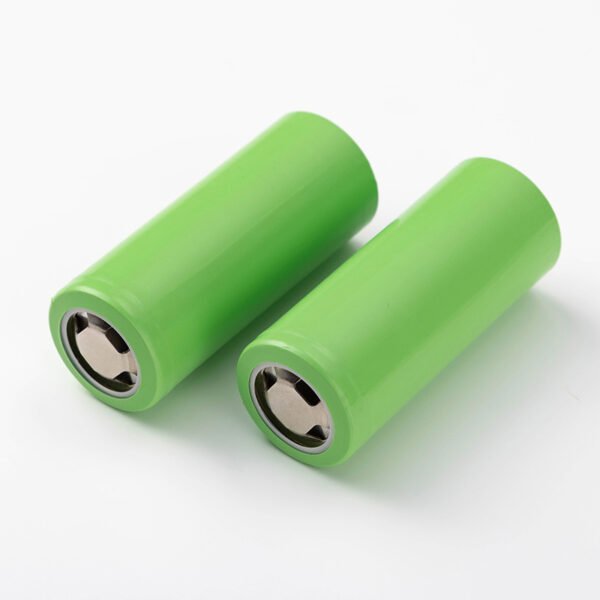
At CNS Battery, we understand that industrial applications demand industrial-grade consistency. We specialize in providing cylindrical battery cells—ranging from the industry-standard 18650 to the high-capacity 21700 and 32700 formats—that are rigorously sorted to meet tight tolerance requirements.
Our automated production lines and strict quality management systems ensure that when you buy a 3.0Ah cell, you get a cell that performs within a predictable range, batch after batch. We don’t just sell batteries; we provide the foundational components for your engineering success.
If you are developing a product where reliability and performance are paramount, you cannot afford to gamble on loose tolerances.
Explore our comprehensive range of cylindrical battery cells, engineered for the global market, or contact our sales team directly to discuss your specific tolerance and customization requirements.
Explore our Cylindrical Battery Cell Range
Contact Us for a Customized Consultation
Copyright © 1998-2026 HENAN CNS ENERGY TECHNOLOGY CO., LTD. ALL RIGHTS RESERVED


