Ultimate Nissan e-NV200 62kWh to 24kWh Battery Conversion & Installation Guide
Are you looking to repurpose your Nissan e-NV200 for a specialized application that doesn’t require the full 62kWh capacity? Whether you’re converting the vehicle into a camper, a mobile workshop, or simply want to reduce weight and cost, downsizing from a 62kWh pack to a 24kWh pack is a viable engineering solution.
As a leading manufacturer of Nissan EV batteries, CNS Battery specializes in OEM-compatible solutions that ensure safety and precision. This guide provides a professional overview of the conversion process, focusing on the technical and safety aspects required for a successful installation.
Why Downsize to a 24kWh Pack?
Converting from 62kWh to 24kWh is not a simple “removal” of cells; it is a structural reconfiguration. A standard 24kWh pack typically utilizes a portion of the original modules found in the larger Nissan packs (similar to the older 24kWh Leaf configurations).
Key Benefits:
- Weight Reduction: Significantly reduces the vehicle’s weight, improving payload capacity for cargo or camper conversions.
- Cost Efficiency: A smaller pack is cheaper to purchase and maintain.
- Thermal Management: A smaller battery generates less heat, potentially simplifying thermal management in stationary or low-speed applications.
Pre-Installation: Safety & Preparation
Warning: High-voltage batteries are dangerous. Only qualified technicians should perform this work.
- Disconnect the Vehicle: Ensure the vehicle is powered off and the maintenance plug (if present in the donor vehicle) is removed.
- PPE (Personal Protective Equipment): Always wear insulated gloves and safety glasses.
- Battery State: The battery should be at a “Soak” state of charge (approximately 40-60%) for safe handling.
Step 1: Physical Removal and Assessment
To install a 24kWh pack, you will likely be utilizing modules from a donor battery or purchasing a pre-configured 24kWh module set.
- Remove the 62kWh Pack: Jack up the vehicle and remove the underbody covers. Disconnect the high-voltage (HV) and low-voltage (LV) connectors. Remove the mounting bolts and carefully lower the 62kWh pack.
- Assess the Chassis: The Nissan e-NV200 chassis is designed for the larger pack. You will need to fabricate a custom mounting tray or adapter plate to secure the smaller 24kWh modules into the existing chassis structure.
Step 2: Installing the 24kWh Modules
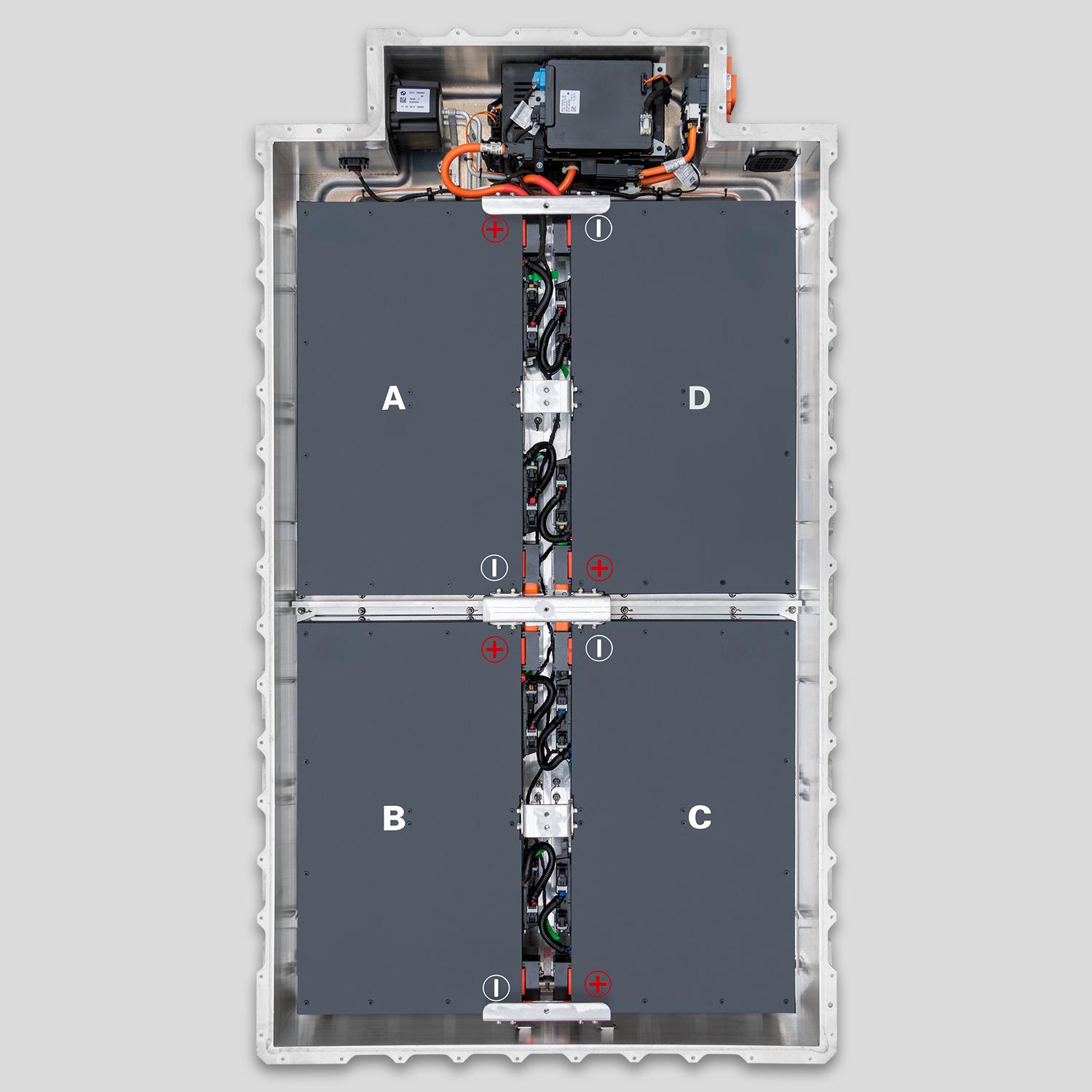
A 24kWh Nissan battery pack usually consists of 4 module strings.
- Mounting: Secure the 24kWh modules onto the custom adapter plate. Ensure the modules are level and the terminals are accessible.
- High Voltage (HV) Connection: Connect the modules in series. Ensure all busbars are tightened to the manufacturer’s torque specifications (usually around 5-8 Nm).
- Thermal Interface: If your application requires active cooling, ensure the thermal pads or cooling plates are correctly installed between the modules and the chassis.
Step 3: BMS and Wiring Integration
This is the most critical step. The Battery Management System (BMS) must be compatible with the Nissan communication protocol.
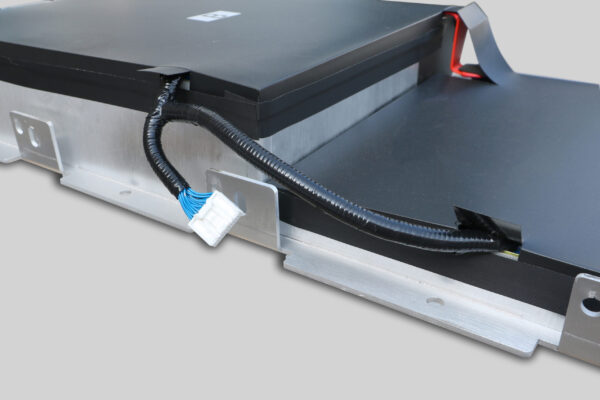
- Low Voltage (LV) Harness: Connect the BMS harness to the Nissan vehicle harness. This includes the CAN bus lines, the interlock circuit, and the temperature sensors.
- BMS Configuration: The BMS must be programmed to match the 24kWh capacity. CNS Battery provides pre-programmed BMS units specifically designed for Nissan platforms to ensure the vehicle’s dashboard displays the correct State of Charge (SOC).
Step 4: Testing and Commissioning
Before sealing the battery or reinstalling it in the vehicle:
- Voltage Check: Measure the total open-circuit voltage (OCV). A 24kWh pack should read approximately 77V – 85V depending on the charge state.
- Continuity Test: Ensure there are no short circuits.
- System Scan: Use an OBD2 scanner to check for any communication errors between the vehicle and the new battery pack.
Why Choose CNS Battery for Your Conversion?
At CNS Battery, we understand that electric vehicle conversions require reliable, high-quality components. We don’t just sell batteries; we provide engineered solutions.
- OEM Compatibility: Our packs are designed to fit Nissan’s original specifications, ensuring seamless integration with the e-NV200’s Body Control Module (BCM).
- Premium Cells: We utilize brand-new, top-tier cells (including CATL) to guarantee cycle life and thermal stability.
- Technical Support: Our engineering team provides remote support and wiring diagrams to ensure your conversion project is a success.
Frequently Asked Questions (FAQ)
Q1: Can I simply remove modules from my 62kWh pack to make it 24kWh? No, this is not recommended. The Battery Management System (BMS) is calibrated for the specific number of modules. Removing modules will cause a communication fault and potentially damage the remaining cells. You need a dedicated 24kWh BMS and module configuration.
Q2: Will the car’s dashboard show the correct battery percentage? Yes, but only if the BMS is correctly programmed. CNS Battery provides pre-programmed BMS units that communicate accurately with the Nissan e-NV200 dashboard.
Q3: Do I need to modify the charging system? Generally, no. The onboard charger (OBC) will automatically adjust to the smaller capacity. However, the charging time will be significantly reduced (e.g., a 6.6kW charger will fill a 24kWh pack in roughly 3-4 hours).
Q4: Is the 24kWh pack water and dust resistant? Our standard packs are built with IP67-rated enclosures. However, if you are doing a custom installation, you must ensure the final assembly maintains this rating to protect against the elements.
Q5: How long does the installation take? For a professional technician, the physical installation and wiring typically take 4-6 hours, depending on the complexity of the custom mounting solution.
Ready to start your Nissan e-NV200 conversion project? Contact our technical experts for a customized 24kWh solution or a full 62kWh replacement.