Ultimate Leaf AZE0 62kWh to 50kWh Fix Tutorial: Revive Your Ride with Precision
The Nissan Leaf AZE0 is a workhorse, but battery degradation is the inevitable Achilles’ heel of any EV. If you’re driving a Leaf AZE0 originally equipped with a 62kWh battery pack and are facing the dreaded “Battery Capacity Reduced” warning, you’re likely looking for a solution that balances cost, performance, and reliability. Many owners in this situation consider a downgrade or a swap to a 50kWh configuration to bypass complex BMS errors or simply to get back on the road affordably.
This guide is specifically tailored for Leaf AZE0 owners looking to transition from a degraded 62kWh setup to a functional 50kWh system. As experts in Nissan EV batteries, we understand the technical nuances of this swap and how to execute it safely.
🛠️ Why Swap from 62kWh to 50kWh on a Leaf AZE0?
Before diving into the “how,” let’s address the “why.” The Leaf AZE0 utilizes a specific battery management strategy that can trigger hard faults when individual modules fail.
- Bypassing BMS Errors: The AZE0’s Battery Management System (BMS) is strict. If a cell group in the 62kWh configuration fails, the car often refuses to operate. Swapping to a 50kWh configuration (which uses a different physical module layout) can bypass these specific error codes.
- Cost Efficiency: Rebuilding a 62kWh pack with new modules can be expensive. A 50kWh swap, especially if utilizing refurbished or repurposed modules, is often the most budget-friendly way to restore drivability.
- Simplicity: For DIY mechanics, working with the 50kWh module configuration can sometimes be less complex than trying to splice and reprogram a partially dead 62kWh unit.
📦 The Core Solution: New Modules vs. Used Packs
When fixing a 62kWh to 50kWh issue, the quality of the replacement modules is paramount. You have two paths: patching up with used parts or installing a fresh solution.
| Component Type | Longevity | Performance Risk | Best For |
|---|---|---|---|
| Used/Refurbished Modules | Low (Aged Cells) | High (Swelling/Failure) | Quick, temporary fixes |
| Brand New Modules (CATL) | High (10+ Years) | Low (Zero Defects) | Permanent, Safe Fix |
Expert Insight: At CNS BATTERY, we strongly advise against using salvaged modules for this specific fix. The AZE0 requires stable voltage output. Using old, degraded modules for your 50kWh conversion is a gamble; they may fail within months, leading to a repeat of the same problem.
🧰 Step-by-Step: The 62kWh to 50kWh Conversion Process
⚠️ Warning: Lithium-ion batteries are dangerous. Only qualified technicians or experienced EV DIYers should attempt this. Ensure you have proper PPE (Insulated gloves, face shield) and tools.
Step 1: Diagnostics and Preparation
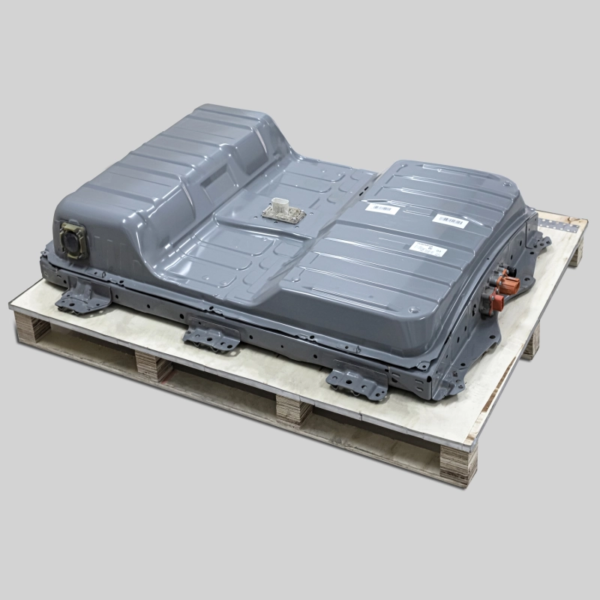
First, confirm that the issue is indeed the battery pack and not the BMS logic board. Once confirmed, drain the coolant and disconnect the vehicle’s 12V battery. For a Leaf AZE0, you will need to remove the entire underbody pack.
Step 2: Module Configuration Mapping
The physical layout of a 62kWh pack differs from a 50kWh pack. You cannot simply remove modules; you must reconfigure the electrical pathway.
- 62kWh: Typically utilizes a specific arrangement of 48 modules.
- 50kWh: Requires a different arrangement, often utilizing modules from the center section of the original pack or installing new compatible modules.
Step 3: Physical Installation of New Modules
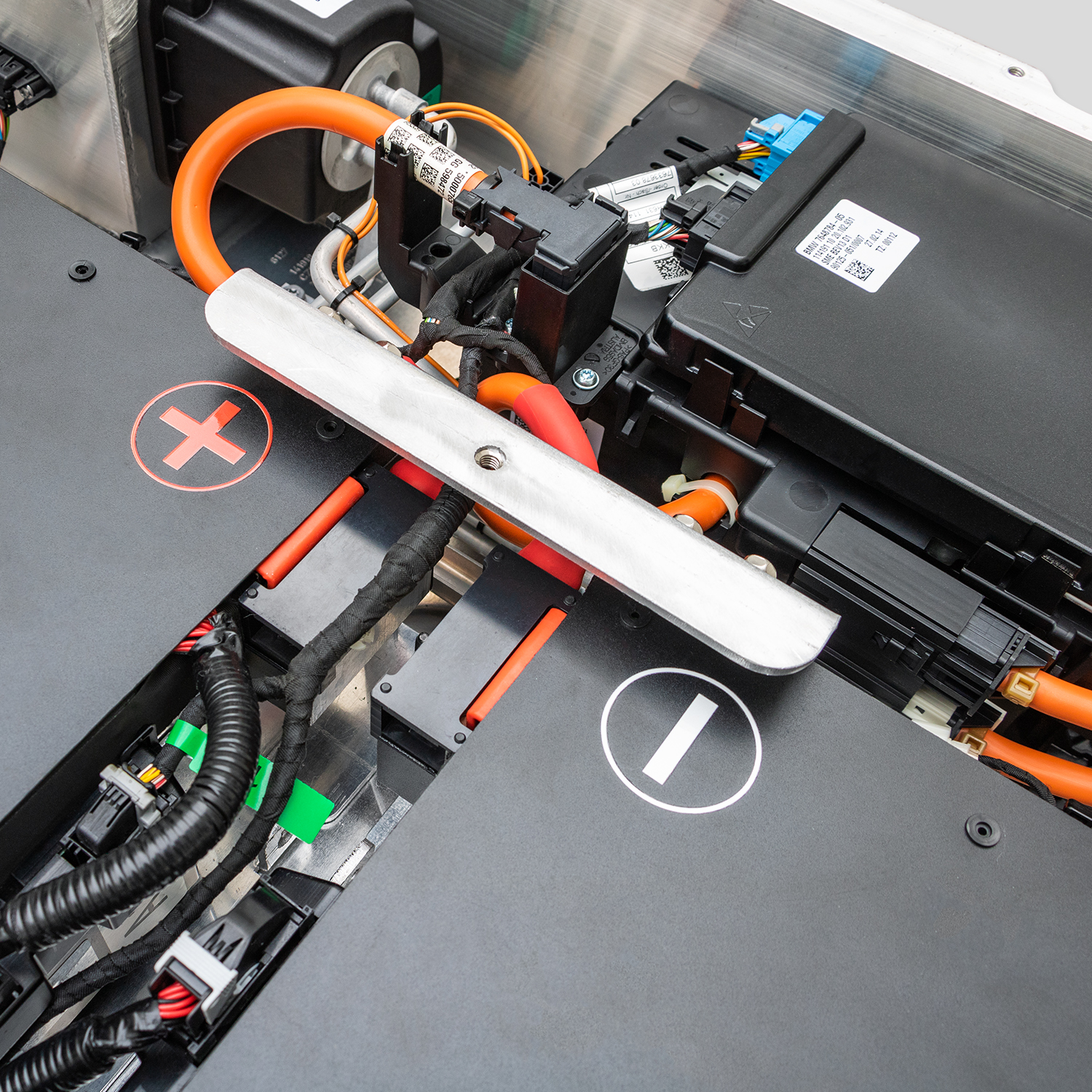
If you are utilizing brand new replacement modules (the recommended route), ensure they are securely bolted into the chassis rails. The contactors and busbars must be torqued to Nissan specifications to prevent arcing.
Step 4: BMS Reprogramming (The Critical Step)
This is where most “62kWh to 50kWh” fixes fail. You cannot just plug in different modules. You must reprogram the BMS to recognize the new capacity.
- You will need a Nissan Consult cable or a compatible aftermarket programming tool.
- Flash the BMS with the 50kWh firmware map.
- Perform a “Battery Reset” procedure to allow the BMS to recalibrate the State of Charge (SOC).
💡 Pro-Tips for a Successful Fix
- Cooling System Flush: Since you have the pack open, always flush the coolant. Old, contaminated coolant is a leading cause of battery overheating and premature failure in the Leaf AZE0.
- Thermal Pads: Replace the thermal interface material (TIM). Old, dried-out thermal pads lead to hotspots and cell imbalance.
- Sealing: The AZE0 pack seal is crucial. Use high-quality RTV sealant to ensure the IP67 rating is maintained, preventing moisture ingress which causes short circuits.
🚀 Why Choose a New Module Solution?
While the “62kWh to 50kWh” tutorial above outlines the technical path, the reality is that sourcing individual modules and programming tools is complex. For most drivers, the smartest fix is a complete, pre-programmed solution.
CNS BATTERY specializes in OEM-compatible Nissan Leaf batteries, including specific configurations for the AZE0 series. Instead of a risky DIY module swap, consider a direct replacement:
- Plug-and-Play Design: Our packs are engineered to match the original Nissan specifications, eliminating the need for complex rewiring.
- New CATL Cells: We use brand new, Grade-A cells, ensuring your “50kWh fix” actually gives you 50kWh of usable capacity, not a fraction of it.
- Cost Savings: We offer these solutions at 50% less than dealership prices, making it the most economical long-term fix.
❓ FAQ: Your Conversion Questions Answered
Q1: Can I really just swap a 62kWh for a 50kWh in my Leaf AZE0 without coding issues?
A: Technically, yes, but only if you reprogram the BMS. You cannot physically install a 50kWh pack into a 62kWh car without updating the software. The car will throw a “Battery System Malfunction” error. You must either flash the existing BMS or use a pre-flashed replacement pack.
Q2: What is the range difference between the 62kWh and 50kWh in real-world driving?
A: The 62kWh offers approximately 270 km (168 miles) of real-world range. The 50kWh will give you roughly 215 km (134 miles). For daily commuting, the 50kWh is usually sufficient, but you lose the long-distance capability of the larger pack.
Q3: Is it cheaper to rebuild my 62kWh or swap to 50kWh?
A: It depends on the damage. If only a few modules are bad, rebuilding is cheaper. However, if the entire pack is degraded (common in AZE0), sourcing enough good used modules is difficult. In this case, a new 50kWh module conversion or replacement is often the most cost-effective path to a reliable vehicle.
Q4: Do you offer pre-built 50kWh packs for the Leaf AZE0?
A: Yes, we specialize in custom configurations. Whether you need a specific 50kWh module set for your DIY repair or a complete Leaf AZE0 battery pack, we provide OEM-standard solutions with a 2-year warranty.
📝 Final Thoughts
The Leaf AZE0 62kWh to 50kWh conversion is a viable lifeline for a dead electric vehicle. However, the success of this fix hinges entirely on the quality of the replacement hardware and the accuracy of the BMS programming.
Don’t settle for used, unreliable modules that will fail again. Choose a solution built with new technology and precision engineering.
Ready to fix your Nissan Leaf battery issue? Get a free, no-obligation quote for a brand new, compatible battery solution today.