⚡ The Truth About Nissan e-NV200 LFP vs NCM for Long-Term Reliability
If you own a Nissan e-NV200 and are considering a battery replacement or upgrade, you are likely facing a critical decision: LFP (Lithium Iron Phosphate) vs NCM (Nickel Cobalt Manganese) chemistry.
As an EV battery expert specializing in Nissan platforms, I often get asked which technology offers the best “set-it-and-forget-it” solution for long-term reliability. The answer isn’t just about chemistry; it is about how that chemistry interacts with your specific vehicle’s thermal management and usage patterns.
At CNS Battery, our decade of experience in R&D has shown us that while both chemistries have merits, NCM often holds the edge for the e-NV200 when considering the vehicle’s original design constraints and longevity in diverse climates.
Here is the breakdown of why NCM remains the gold standard for long-term reliability in the e-NV200, and how our solutions ensure your van lasts for years to come.
🔋 Understanding the Core: LFP vs NCM Chemistry
Before we dive into reliability, let’s clarify the fundamental differences. Both are lithium-ion, but their atomic structures differ significantly.
⚖️ The Trade-Offs
| Feature | NCM (Nickel Cobalt Manganese) | LFP (Lithium Iron Phosphate) |
|---|---|---|
| Energy Density | High (More range per kg) | Lower (Heavier for the same range) |
| Thermal Stability | Good (Requires active/passive cooling) | Excellent (Inherently stable) |
| Voltage Platform | Higher (3.6V-3.7V nominal) | Lower (3.2V nominal) |
| Cold Weather | Moderate performance drop | Significant performance drop |
🧐 Why NCM is Often More Reliable in the e-NV200
While LFP batteries are renowned for their thermal safety (they are hard to overheat), reliability in the context of the Nissan e-NV200 involves more than just not catching fire. It involves seamless integration, range consistency, and battery management system (BMS) communication.
1. Voltage Compatibility and BMS Communication
The Nissan e-NV200 was designed around a high-voltage platform (typically 360V+). NCM cells naturally operate at a higher voltage (around 3.6V-3.7V per cell) compared to LFP (3.2V per cell).
- The NCM Advantage: An NCM pack can easily mimic the original factory voltage curves. This means the car’s BMS (Battery Management System) reads the battery exactly as it did when the van was new. There are no “voltage drop” alarms or communication errors.
- The LFP Challenge: To reach the required voltage, LFP packs need more cells wired in series. This often requires complex “bypass” modules or “voltage lifting” electronics to trick the car’s computer. These added electronic components are potential points of failure that simply do not exist in a native NCM chemistry pack.
2. Cold Weather Performance (A Critical Factor for Reliability)
If you live anywhere that experiences winter, LFP is notoriously unreliable.
- The Science: LFP chemistry suffers from poor ionic conductivity at low temperatures. In freezing conditions, an LFP battery’s internal resistance skyrockets.
- The Reality: This means your van might refuse to charge in the morning, or the range could drop by 40-50% on a cold day. For a commercial van or a family relying on it daily, this inconsistency is the opposite of reliability.
- NCM Superiority: While NCM also loses range in the cold, the drop is far less severe (typically 15-25%). For long-term dependability across seasons, NCM is the safer bet.
3. Weight and Mechanical Stress
The e-NV200’s chassis and suspension were engineered for a specific weight distribution.
- NCM: Higher energy density means a lighter pack for the same capacity (e.g., 40kWh).
- LFP: To achieve the same 40kWh, an LFP pack can be 100-200kg heavier.
- The Reliability Risk: This extra weight puts additional stress on the suspension, brakes, and the battery mounting points themselves. Over the long term, this can lead to chassis fatigue or accelerated wear on mechanical components—issues you won’t face with a properly spec’d NCM replacement.
🛡️ How CNS Battery Ensures “Zero-Fault” Reliability
We don’t just sell batteries; we engineer solutions specifically for the Nissan e-NV200. Our approach to reliability involves three pillars:
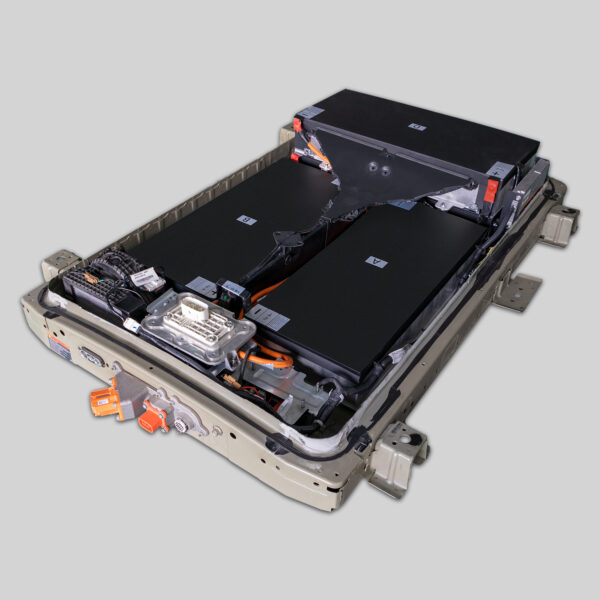
1. OEM-Standard Research & Design
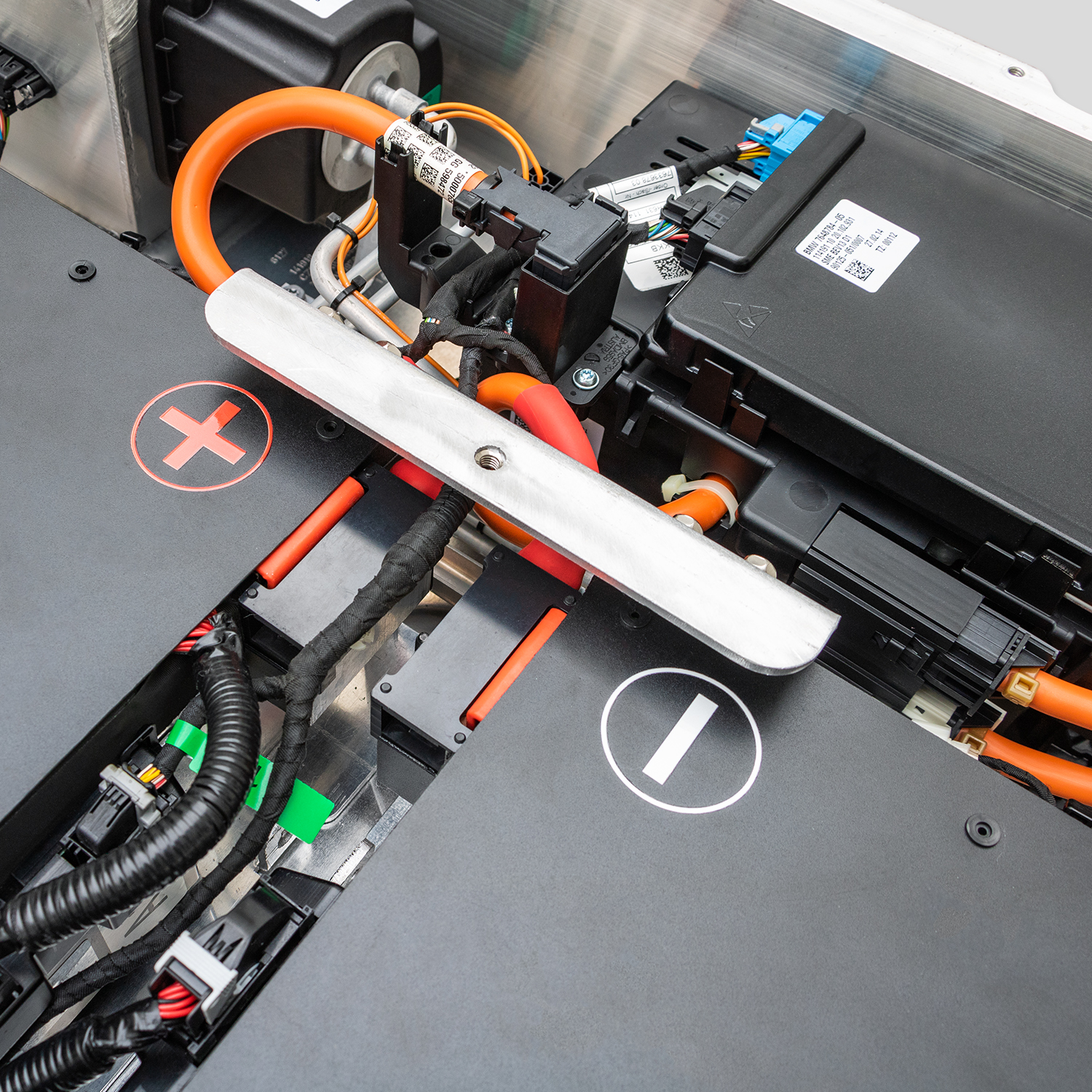
We don’t use generic “one-size-fits-all” casings. Our packs are designed to fit the e-NV200’s battery bay perfectly. We utilize brand-new CATL (Contemporary Amperex Technology Co. Limited) cells, which are the same quality tier used by major OEMs. This ensures the cells have the structural integrity and cycle life to match the vehicle’s lifespan.
2. Advanced BMS Integration
Our proprietary BMS is programmed specifically for Nissan protocols. This isn’t just about turning the car on; it is about providing granular data back to the dashboard—accurate State of Charge (SOC), accurate range estimation, and fault code suppression. You shouldn’t have to guess if your battery is healthy.
3. Environmental Resilience
We build our packs with robust thermal management in mind. While the e-NV200 doesn’t have liquid cooling like newer EVs, our NCM packs are designed with passive cooling systems that prevent hotspots, ensuring the battery doesn’t degrade prematurely due to heat buildup during summer months.
💰 The Value Equation: Cost vs. Longevity
It is true that LFP batteries often have a lower upfront cost. However, long-term reliability is about Total Cost of Ownership (TCO).
- The LFP Trap: You might save money initially, but if the added electronics fail, or if you need to replace the suspension due to extra weight, or if you are forced to buy a second car for winter use, the savings vanish.
- The NCM Investment: With a CNS NCM battery, you are paying for:
- Plug-and-Play Simplicity: No extra modules to fail.
- Longer Lifespan: CATL NCM cells are rated for thousands of cycles.
- Peace of Mind: A warranty that backs up the reliability claims.
📝 Conclusion: Making the Right Choice
When it comes to the Nissan e-NV200, choosing a battery is not just a technical spec sheet comparison. It is about choosing a technology that respects the vehicle’s original engineering.
For long-term reliability, NCM technology, specifically utilizing high-grade cells like those from CATL and engineered to OEM standards, provides the most seamless, durable, and dependable solution. It eliminates the risk of electronic bypass failures, handles cold weather with grace, and integrates perfectly with your van’s existing systems.
Don’t gamble on your daily driver. Choose the chemistry that Nissan engineers knew would last.
❓ Frequently Asked Questions (FAQ)
Q1: What is the lifespan of an NCM battery in the e-NV200?
A: With proper care and our advanced BMS, a CNS NCM battery is designed to last for 8-10 years or over 200,000 kilometers. Our cells are rigorously tested to retain over 70% capacity even after 3,000 charge cycles, far exceeding the lifespan of most LFP alternatives in this specific application.
Q2: Can I install a 62kWh NCM battery in my e-NV200 like the Nissan Leaf?
A: While the e-NV200 uses a similar chassis, the battery compartment dimensions and cooling requirements differ from the Leaf. We specialize in 40kWh and 50kWh configurations that are perfectly tailored to the e-NV200’s footprint. Installing a Leaf battery directly is not feasible, but our custom NCM packs offer the maximum possible capacity for your van.
Q3: How does the 2-year warranty work?
A: We offer an industry-leading 24-month or 80,000 km warranty (whichever comes first). This covers defects in materials and workmanship. If any cell module or the BMS fails during this period, we provide free replacement or repair. We also offer prorated coverage for performance degradation, ensuring your battery maintains at least 70% health.
Q4: Is the installation difficult?
A: Not at all. Our NCM batteries are designed for Plug-and-Play installation. The connectors match the original factory specifications exactly. Most professional mechanics can complete the swap in 1-2 hours. We also provide detailed video tutorials and remote video guidance if you encounter any issues during the process.
Q5: Do you ship internationally?
A: Yes. We support international sales to over 50 countries. We handle the complex logistics of shipping lithium batteries (UN 3480/3481) via DHL, FedEx, or sea freight. We offer DDP (Delivered Duty Paid) services, meaning we handle customs and duties, so the battery arrives at your door ready to install.
Ready to upgrade your Nissan e-NV200 with a reliable, long-lasting NCM battery? Get a free, no-obligation quote today and see how much you can save compared to the dealer price.