The Best Value-for-Money EV Upgrades Beyond Just the Battery
If you own a Nissan Leaf or BMW i3, you know the struggle. While these cars are incredibly reliable, battery degradation over time can turn a highway cruiser into a glorified grocery getter. The standard advice is usually to “just replace the battery,” but what if I told you that simply dropping in a new pack isn’t always the maximum value move?
As an EV battery expert specializing in the Nissan Leaf ZE0, ZE1, AZE0, and BMW i3 markets, I’ve seen it all. Many owners don’t realize that pairing a new battery with a few strategic, low-cost modifications can unlock a driving experience that rivals modern EVs—at a fraction of the price.
In this guide, we’ll look past the obvious battery swap and explore the upgrades that actually move the needle on range, performance, and safety.
Why a Battery Swap is Only Half the Battle
Let’s be honest: if your battery is dead, replacing it is non-negotiable. However, the value equation changes drastically depending on what you replace it with.
Many shops offer “remanufactured” or “refurbished” batteries. While this sounds cheaper upfront, it’s often a false economy. These packs use old, degraded cells that were pulled from the scrap heap. You might save a few hundred dollars, but you’re buying a ticking time bomb of swelling, sudden power loss, and another expensive repair in 6-12 months.
The true value upgrade starts with a brand-new core.
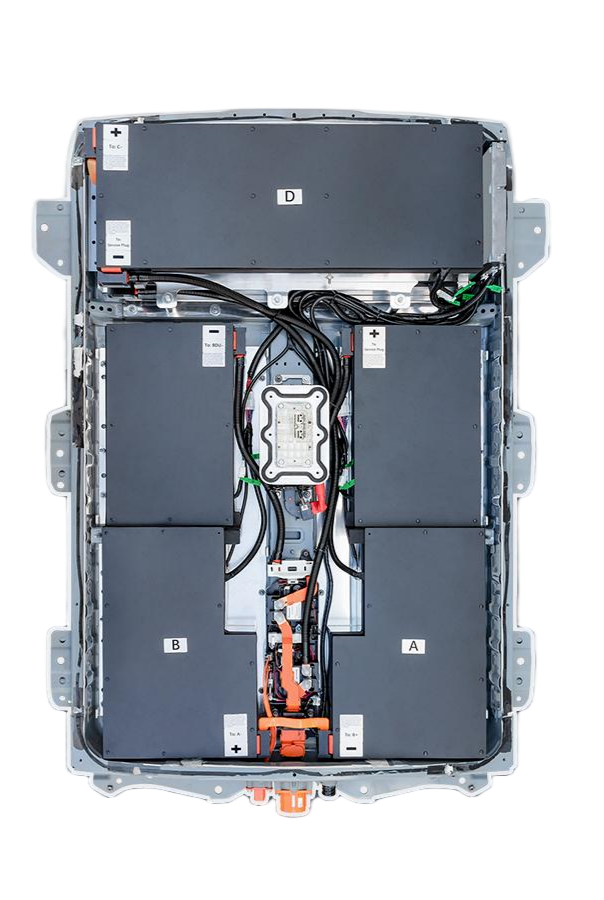
At CNS BATTERY, we manufacture OEM-compatible packs using brand-new CATL cells. This isn’t a “good enough” solution; it’s a “better than new” solution. By using fresh, top-tier cells, we eliminate the inherent risk of old hardware. This is the foundation of your upgrade. Without this solid base, the following modifications are pointless.
Upgrade 1: The “Plug-and-Play” BMS (Battery Management System)
You might be wondering, “If I’m buying a new battery, why do I need to upgrade the software side of things?”
The BMS is the brain of your battery. Many aftermarket batteries cut corners here, leading to communication errors with your car (like the dreaded “Check Charging System” light) or inefficient charging.
The best value upgrade here is a Perfectly Matched OEM Protocol.
- The Problem: Generic batteries often require “hacking” or complex reprogramming that voids warranties and risks damaging your car’s ECU.
- The Solution: A battery that uses the exact same communication protocol as the factory original. Our packs are designed for a Plug-and-Play experience. You install it, and the car recognizes it as a factory part—no reprogramming, no errors, no stress.
Pro-Tip: If you’re doing this yourself (which our battery makes easy), having a BMS that doesn’t require complex coding saves you the $800-$1000 mechanic bill just for the software setup.
Upgrade 2: Thermal Management & Safety Reinforcement
This is where most budget batteries fail. Owners of older Leafs and i3s often complain about range anxiety in winter or fear of overheating.
Simply replacing the cells doesn’t fix the thermal pathways. The best value upgrade here is Enhanced Safety Architecture.
Look for a battery that includes:
- Upgraded Insulation: Protecting cells from extreme cold (crucial for郑州 winters or freezing climates).
- Reinforced Structural Integrity: Using modern adhesives and mounting points that match the original factory specs to prevent vibration damage.
By upgrading to a pack that prioritizes these safety features, you’re not just buying range; you’re buying peace of mind. Our 2-Year / 80,000 KM Warranty exists specifically because we trust this reinforced safety standard—something refurbished batteries simply cannot offer.
Upgrade 3: Maximizing Range Through Cell Chemistry
Let’s talk about the elephant in the room: kWh.
Most owners stick with the stock capacity (e.g., 40kWh for older Leafs). However, the absolute best value upgrade is often the Capacity Bump.
- Scenario A: Buy a new 40kWh battery. You get your original range back.
- Scenario B: For a marginal increase in cost, upgrade to a 62kWh or 68kWh battery.
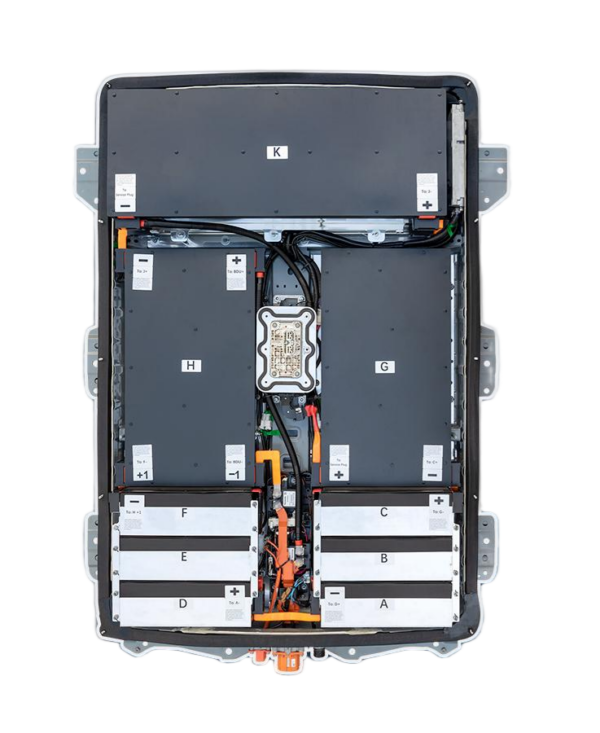
Because we manufacture these in-house at CNS, the price difference between a 40kWh and a 62kWh pack is far less than what a dealership would charge. By upgrading the capacity, you effectively turn your old Leaf into a long-range EV capable of highway trips without the constant anxiety. This single upgrade changes the car’s utility entirely.
Upgrade 4: The “DIY” Empowerment Kit
This isn’t a physical part of the battery, but it is a crucial part of the upgrade package.
Most people think replacing a battery requires a lift and a team of mechanics. While that’s an option, the best value comes from Empowerment.
We provide:
- HD Installation Videos: Step-by-step guides specifically for your chassis (ZE0, ZE1, i3).
- Remote Video Support: If you get stuck, an expert can guide you live via Zoom.
Why is this an upgrade? Because it turns a $3000 repair job (parts + labor) into a $1500-$2000 repair job (parts only). Saving $1000-$1500 on labor is the ultimate “value hack.”
The CNS Value Proposition: Beyond the Price Tag
When you look at “Value-for-Money,” you have to look at the total cost of ownership over the next 5 years.
| Feature | Refurbished/Used Battery | Standard New Battery | CNS BATTERY (Premium Value) |
|---|---|---|---|
| Cell Quality | Old, degraded, random batches | New, but often unknown brand | Brand New CATL (World’s Top Tier) |
| Warranty | Often None, or 3-6 months | 1 Year | 2 Years / 80,000 KM |
| Installation | Risk of errors, no support | Manual only | Video Guides + Live Support |
| True Cost | Cheap now, expensive later | Very Expensive | 50% Less than OEM, 0% Risk |
Why settle for a used battery when new is safer and more cost-effective in the long run?
Frequently Asked Questions (FAQ)
Q1: Can I really install this 62kWh battery in my 2013 Nissan Leaf myself?
A: Absolutely. While having a lift and basic mechanical skills helps, our “Plug-and-Play” design means the connectors match your original car perfectly. We provide detailed video tutorials and even live video support to guide you through removing the old pack and bolting in the new one. Most DIYers complete it in a weekend.
Q2: Is a 62kWh upgrade worth it for a BMW i3?
A: It depends on your use case. The standard i3 range is limited. If you primarily drive in the city, the stock equivalent is fine. However, if you want to use the i3 for longer commutes or road trips, upgrading the capacity (if your model supports it) or ensuring you have a brand-new, high-density pack from CATL makes a massive difference in real-world usability and charging speed.
Q3: What is the actual price difference between a 40kWh and a 62kWh pack?
A: At CNS, we design our packs to minimize the delta between capacities. While exact pricing depends on the specific model year and exchange rates, the upgrade from 40kWh to 62kWh typically costs significantly less than upgrading at a dealership—often only a 20-30% premium for a 50% increase in range. This is the definition of “Value for Money.”
Q4: How do I know if this battery is compatible with my specific car?
A: We don’t guess. We use your VIN (Vehicle Identification Number) to verify the exact specifications. Every Nissan and BMW has specific voltage and interface requirements. Before you buy, we offer a free compatibility check to ensure the battery fits your car like a glove, preventing costly mistakes.
Ready to Unlock the True Potential of Your EV?
Don’t let an old, degraded battery kill your favorite car. You don’t need to buy a new Tesla; you need a smart, value-driven upgrade.
By choosing a brand-new, high-capacity battery from a trusted manufacturer like CNS BATTERY, paired with the confidence of our 2-year warranty and expert support, you are making the single best investment in your EV’s future.
Stop paying for temporary fixes and start driving with the range and reliability you deserve.
Get Your Free Custom Quote Today and See How Much You Can Save: Contact CNS BATTERY Experts