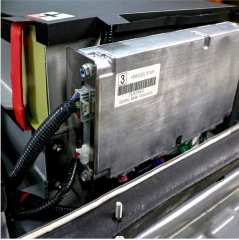
🚀 Ultimate Nissan Leaf Battery Upgrade Guide: New Steps for 2026
Is your Nissan Leaf losing its spark? As the seasons change, many Leaf owners in the US, Europe, and Australia face the same dilemma: the original battery has degraded, and the range has dropped from a comfortable 170km to barely enough for a grocery run.
You might be wondering: Is it better to buy a new car, or can I revive my Leaf with a new battery pack?
The answer is clear. Thanks to advancements in lithium-ion technology and new supply chain solutions, upgrading your Nissan Leaf battery is now the most cost-effective choice. This guide will walk you through the new steps for a successful upgrade in 2026, ensuring you get the most range for the least money.
⚡ Why Upgrade? The 2026 Cost-Benefit Analysis
Before diving into the “how,” let’s look at the “why.” The automotive landscape has shifted. Dealerships often quote prices exceeding $16,000 for a factory replacement. For most drivers, this doesn’t make financial sense when a high-quality, third-party solution can do the same job for half the price.
Here is a quick comparison of your options:
| Feature | Refurbished/Used Battery | CNS BATTERY (New Upgrade) | Original Manufacturer (OEM) |
|---|---|---|---|
| Core Cells | Aged, recycled cells | Brand new CATL cells | Brand new cells |
| Price | High (70-80% of OEM) | ~50% of OEM price | Very Expensive |
| Warranty | Short or None | 2 Years / 80,000 km | Standard Warranty |
| Risk | Swelling, sudden death | Zero failure rate | Low risk |
The Verdict: A new battery upgrade using premium cells like CATL offers the safety of new technology without the sticker shock of a new car.
🛠️ Step 1: The VIN Compatibility Check (The New First Step)
Gone are the days when you could just “plug and play” any battery into a Leaf. With different generations (ZE0, AZE0, ZE1), it is crucial to verify compatibility before you purchase.
Why this step is critical: The Nissan Leaf has three distinct battery pack designs. Installing a 40kWh pack where a 62kWh should go (or vice versa) can damage the Battery Management System (BMS).
What to do:
- Locate your Vehicle Identification Number (VIN).
- Contact a technical expert. Do not guess. Upload your VIN to a supplier like CNS BATTERY for a free assessment.
- Confirm the exact kWh rating and physical dimensions that fit your chassis year.
Pro Tip: This step alone saves 90% of customers from costly return shipping and installation errors.
🔋 Step 2: Choosing Your Capacity (40kWh vs. 62kWh)
Once compatibility is confirmed, you face the fun decision: how far do you want to go?
Most owners upgrade from a degraded 24kWh or 30kWh pack to a modern standard.
- The Daily Driver (40kWh): Perfect for city commutes. This upgrade restores your range to approximately 240km. It is the most budget-friendly option to get back on the road safely.
- The Long-Distance Revival (62kWh): This is the “gold standard” upgrade. It boosts your range to a staggering 430km+. If you take highway trips, this is the only way to go.
Expert Insight: Many customers opt for the 62kWh upgrade because the price difference is often negligible compared to the massive gain in daily usability.
📦 Step 3: Understanding the “Plug and Play” Reality
When you buy a new EV battery pack, you will see the term “Plug and Play.” While the physical connectors often match the OEM design, there is usually a small technical hurdle: BMS Programming.
The New Step for 2026:
Simply bolting in the battery is not enough. The car’s brain (VCU) needs to recognize the new battery’s BMS.
- The Challenge: If you do not program the BMS correctly, the car will show a “Propulsion Battery Fault” and refuse to charge.
- The Solution: Most reputable suppliers now offer remote programming support. You connect a dongle, and a technician guides you via video call to sync the modules.
What you need for installation:
- A torque wrench (specific torque settings are vital).
- Dielectric grease (usually included in the kit).
- A laptop or tablet for the programming step.
🌍 Step 4: Logistics & The DDP Advantage
Shipping a lithium-ion battery internationally is complex. This is a major change from buying standard car parts.
Key Considerations:
- Dangerous Goods: Batteries are classified as UN 3480. You cannot ship them via standard mail.
- Customs: Duties and taxes vary by country (USA, Germany, UK, Australia).
The Modern Solution:
Look for suppliers offering DDP (Delivered Duty Paid) services. This means:
- The supplier handles the dangerous goods logistics.
- They pay the customs duties upfront.
- The battery arrives at your door, ready for installation, with no surprise fees.
📝 Step 5: The Installation Process
If you are mechanically inclined, this is a weekend project. If not, hiring a local mechanic is still cheaper than a dealership.
Estimated Time: 1.5 – 2 hours.
The Process:
- Disconnect: Always disconnect the 12V battery first.
- Drain & Remove: Remove the undertray, disconnect the coolant, and unbolt the old pack.
- Swap: Lift out the old battery and lower in the new CNS BATTERY pack.
- Reconnect: Reattach the high-voltage connectors and coolant lines.
- Test: This is where the remote video guidance comes in handy for the BMS handshake.
🤝 Why Choose CNS BATTERY for Your Upgrade?
At CNS BATTERY, we have spent over a decade refining the EV battery upgrade process. We don’t just sell boxes; we provide peace of mind.
- Unbeatable Warranty: We back our packs with a 2-year / 80,000 km warranty. This covers manufacturing defects and performance degradation (ensuring you keep at least 70% capacity).
- Premium Cells: We use only brand-new CATL cells. No recycled or second-hand cells that might swell or fail.
- Global Support: Whether you are in Texas or Berlin, our customer service team provides remote video installation guidance to ensure your first-try success.
“After the original battery degraded, the 4S dealership quoted €12,000. My friend recommended CNS… The brand-new CATL battery cells were of the same quality as the original.”
— Lisa K. (BMW i3 & Leaf Enthusiast)
📋 Summary: Your Action Plan
- Verify: Send your VIN to confirm ZE0/AZE0/ZE1 compatibility.
- Choose: Decide between 40kWh (city) or 62kWh (highway).
- Order: Select DDP shipping to avoid customs headaches.
- Install: Use the video tutorials and remote support for the BMS setup.
Don’t let a dead battery kill your electric dream. With the right steps, your Nissan Leaf can drive for another 10 years.
❓ Frequently Asked Questions (FAQ)
Q1: How long does the installation take?
For a professional technician, installation typically takes 50 minutes to 1.5 hours. DIY users should budget 2 hours to include safety checks and preparation. We provide step-by-step video guides to assist you.
Q2: What is the warranty on the upgraded battery?
We offer an industry-leading 2-year or 80,000 km warranty (whichever comes first). This covers defects in materials and workmanship. We also provide prorated coverage if the battery capacity drops below 70% during the warranty period.
Q3: Are CNS batteries compatible with my Nissan Leaf model?
Yes, our batteries are designed specifically for Nissan Leaf generations ZE0, AZE0, and ZE1. We ensure OEM-standard voltage, capacity, and interface matching (Type 2 connectors). Always confirm your specific model number with our sales team before ordering.
Q4: Do I need special tools for the upgrade?
The process is standard mechanical work. You will need basic tools like wrenches and screwdrivers. The most important “tool” is a laptop or smartphone for the BMS programming step, for which our team provides live video guidance.
Q5: How much does shipping cost, and is it safe?
We utilize DDP (Delivered Duty Paid) shipping. This means the price you see includes all shipping costs and customs duties. We ship in fumigation-free wooden crates to protect the battery, and we partner with FedEx, DHL, or UPS to ensure compliance with dangerous goods regulations.
Ready to revive your Nissan Leaf?
Get a free, no-obligation quote today and get back on the road with confidence.