How to Replace BMW i3 Battery High-Voltage Fuse – The $15 Part That Can Fry Your Entire Pack (If You Skip This One Safety Step)
“A technician in Toronto replaced a blown HV fuse on an i3 without de-energizing the system first. He assumed the car was ‘off’ because the display was dark. As he pulled the fuse holder, residual capacitor voltage arced across the terminals. The spark ignited insulation dust inside the junction box. Result: melted busbars, damaged BMS, and a $9,200 full pack replacement—when a $12 fuse would’ve fixed it.”
You’ve likely faced this:
- Sudden power loss with no warning
- ‘High-voltage system malfunction’ on startup
- Or worse—no crank, no lights, just silence
And your scanner shows no communication with the battery ECU.
Before you assume the pack is dead, consider this: the HV fuse—a small but critical component—may have sacrificed itself to protect the entire system. But replacing it isn’t as simple as popping in a new one. One misstep can turn a minor repair into a catastrophic failure.
This guide delivers the exact, safety-first procedure used by BMW-certified EV centers in 2026, designed to get your i3 back on the road without risking life, equipment, or reputation:
- Why “off” doesn’t mean “safe” in high-voltage systems
- How to confirm full de-energization before touching anything
- The correct fuse specs (many shops use wrong amperage!)
- Where the fuse is actually located (hint: not always obvious)
- And how CNS BATTERY packs integrate service-friendly fuse access—so future replacements are faster and safer
Because in EV repair, confidence comes from protocol—not luck.
Understanding the i3’s High-Voltage Fuse: More Than Just a Link
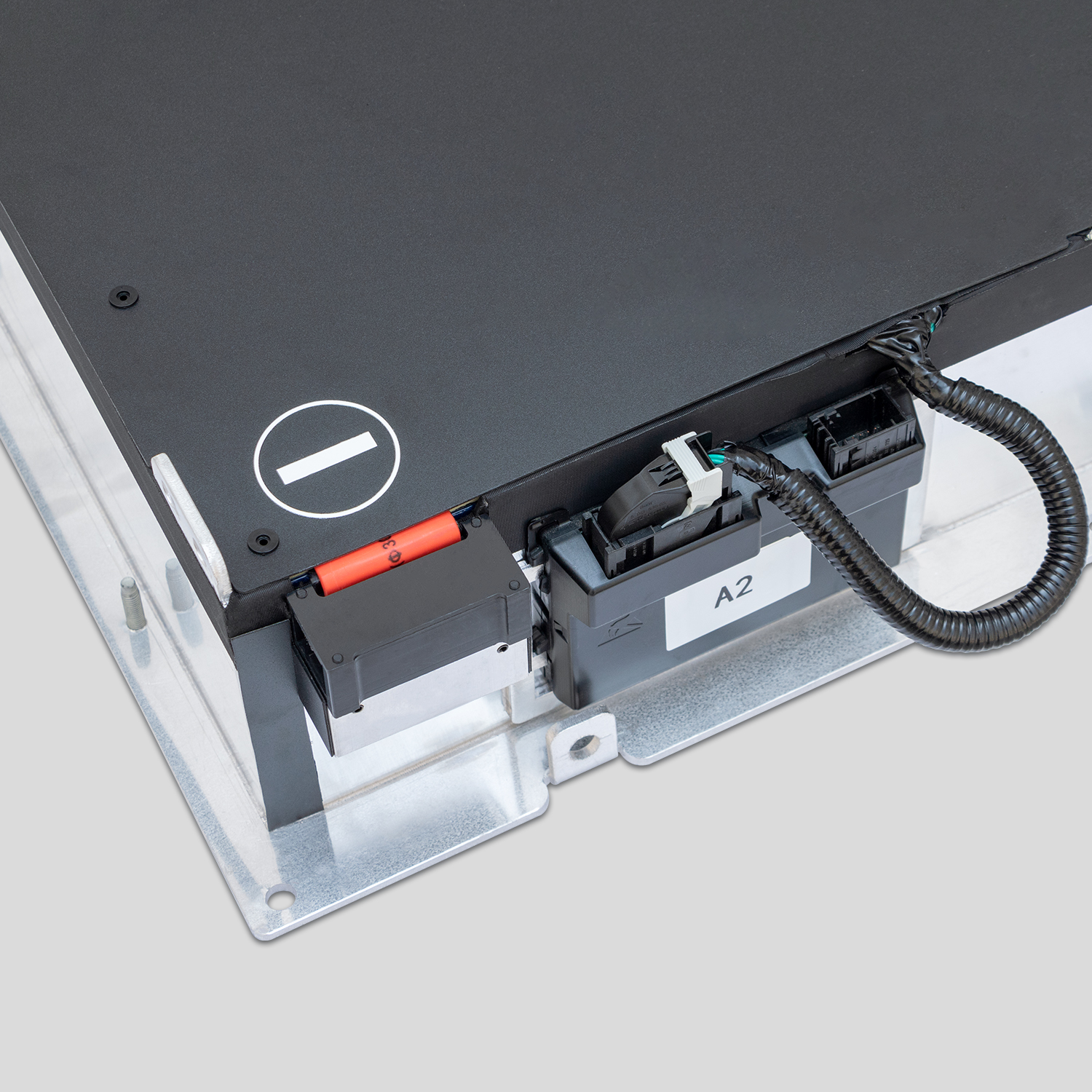
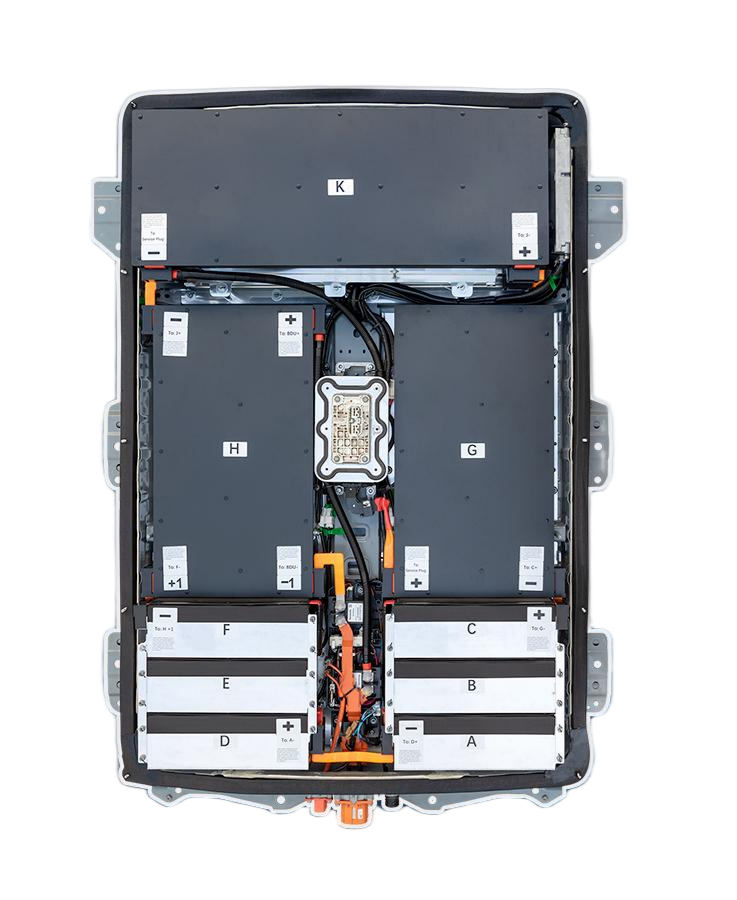
The BMW i3 uses a pyro-fuse or bolt-on HV fuse (depending on model year) rated between 250A–400A, located either:
- Inside the battery junction box (near the rear axle), or
- Integrated into the HV distribution unit under the rear seat
Its job? To instantly disconnect the pack during short circuits, crashes, or insulation faults—acting as the last line of defense before thermal runaway.
⚠️ Critical fact: Even after shutdown, capacitors in the inverter and DC-DC converter can hold lethal voltage for 10+ minutes. Never assume the system is safe.
🔧 Step-by-Step HV Fuse Replacement (Shop-Safe Protocol)
Step 1: Confirm Symptoms & DTCs
- Common signs:
- No HV contactor engagement
- BMS offline (no data via OBD2)
- DTCs like A8F200, 93B100, or U1123
- Rule out 12V issues first—a weak 12V battery can mimic HV faults
Step 2: Full De-Energization (Non-Negotiable)
- Turn ignition OFF
- Remove orange HV service disconnect (under rear seat)
- Disconnect 12V negative terminal
- Wait minimum 10 minutes
- Verify with CAT III 1000V meter:
- <60V between HV+ and chassis
- <60V between HV– and chassis
❌ Never skip verification—even if the car “seems dead.”
Step 3: Locate & Access the Fuse
- 2014–2017 i3: Fuse inside battery junction box (remove rear undertray)
- 2018–2022 i3: Often in HV distribution block near motor
- Use plastic pry tools—never metal near HV components
Step 4: Inspect & Replace Correctly
- Check fuse visually: melted end cap or broken element = blown
- Match exact specs:
- Voltage: 500V DC min
- Current: 300A (most common) or 400A (62kWh models)
- Type: Bolt-on ceramic body (e.g., Littelfuse POWR-GARD)
- Never substitute with automotive blade fuses or copper bars
Step 5: Reassemble & Validate
- Torque bolts to 8–10 Nm (prevents arcing from loose connections)
- Reconnect 12V, then HV service plug
- Power on and scan for BMS communication
- Perform insulation resistance test to rule out underlying short
💡 Pro tip: Log pre-failure DTCs—they often reveal why the fuse blew (e.g., coolant leak, cell short).
Why Most Fuse Replacements Fail Long-Term
❌ Using incorrect amperage → fuse blows again in days
❌ Skipping root-cause analysis → same fault recurs
❌ Reusing corroded terminals → increased resistance → heat → fire
✅ Best practice: Treat a blown HV fuse as a symptom—not the problem. Always investigate what caused it.
CNS BATTERY: Service-Optimized Design for Real-World Repairs
Every CNS i3 battery features:
✅ Easily accessible HV fuse compartment with clear labeling
✅ Pre-installed OEM-spec 300A/500V fuse (Littelfuse or equivalent)
✅ Color-coded, torque-marked terminals to prevent installation errors
✅ Integrated diagnostic port for quick BMS communication checks
Result?
Faster diagnostics, safer servicing, and fewer comebacks.
“We had a customer with a blown fuse after a minor crash. With the OEM pack, we’d need to drop the whole battery. With CNS, we accessed the fuse in 20 minutes—no lift needed. Huge time-saver.”
— Javier R., Paris EV Specialist
Frequently Asked Questions: i3 HV Fuse Replacement
Q: Can I bypass the fuse temporarily to test?
A: Absolutely not. Bypassing removes critical protection—risking pack destruction or fire.
Q: What causes HV fuses to blow?
A: Common causes:
- Internal cell short
- Coolant-induced ground fault
- Crash-triggered pyro-fuse activation
- Lightning strike or grid surge
Q: Are CNS fuses replaceable by the shop?
A: Yes—standard bolt-on design using widely available OEM-equivalent parts.
Q: Do I need special tools?
A: Only a CAT III multimeter, insulated socket set, and plastic trim tools.
Q: Will replacing the fuse fix a dead battery?
A: Only if the only fault was the fuse. If cells or BMS are damaged, the fuse will blow again.
A Blown Fuse Isn’t the End—It’s a Warning You Can’t Ignore
Respect the system. Diagnose deeply. Repair safely.
Choose a Battery Designed for Real-World Serviceability: Install CNS Packs with Tool-Free Fuse Access, Clear Labeling, and Built-In Diagnostic Confidence.
Don’t let a $15 part cost you thousands—or compromise safety.
Order your CNS BMW i3 battery today—or request our free HV Safety & Fuse Replacement Checklist for Certified Shops:
👉 https://cnsbattery.com/ev-battery-home/ev-battery-contact/