
⚡ Expert Tips for Leaf ZE0 62kWh Battery Upgrade: Maximize Range & Value
Upgrading your Nissan Leaf ZE0 (2011-2015 model) is a game-changer. The original 24kWh and 30kWh batteries often struggle to meet modern driving demands, leaving owners with range anxiety and limited usability. A 62kWh battery upgrade is widely regarded as the “sweet spot” for ZE0 owners, effectively transforming your older EV into a modern long-range vehicle.
However, not all 62kWh upgrades are created equal. As an expert in EV powertrain customization, I have seen the market evolve. To ensure you get the most value and performance, here are the critical tips you need to consider before making this significant investment.
1. Why the 62kWh is the Ultimate ZE0 Solution
The Nissan Leaf ZE0 has a loyal following, but its Achilles’ heel has always been battery capacity. Upgrading to 62kWh is not just about adding numbers; it is about physics and usability.
- Doubling the Fun: You are essentially doubling (or more) the energy capacity of your original pack. This translates to a real-world range of approximately 260-280 km (160-175 miles), depending on weather and driving style.
- Software Liberation: Many early ZE0 models were software-limited. A proper 62kWh conversion often unlocks the full potential of the motor and drivetrain, giving you access to the higher power output usually reserved for newer Leaf models.
- Cost Efficiency: While a 40kWh or 50kWh upgrade offers improvement, the 62kWh provides the best “cost per kWh” ratio. You are paying for the labor and BMS (Battery Management System) integration regardless of size, so going bigger offers superior long-term value.
2. The Core Component: Demand Brand-New CATL Cells
This is the most crucial technical tip. The heart of your new battery pack is the cell chemistry.
Never accept “recycled” or “used” cells for a 62kWh upgrade. You are paying for a “new” battery; you deserve new cells.
- The Standard: The industry standard for high-performance aftermarket upgrades is brand-new CATL (Contemporary Amperex Technology Co. Limited) cells. CATL is the world’s largest battery manufacturer and supplies OEMs like Tesla, BMW, and Volkswagen.
- Why New Matters: Used cells from salvage yards have unknown degradation. They might work initially, but their cycle life is already depleted. Brand-new cells guarantee a full cycle life (typically 3000+ cycles) and consistent performance.
- Safety First: New cells from a reputable manufacturer like CATL come with rigorous safety certifications. They are less prone to thermal runaway, swelling, or sudden failure compared to refurbished cells.
3. Compatibility & Fitment: OEM Standards Only
A common pitfall in the aftermarket is “custom fitment” that requires cutting or drilling.
When you upgrade your Leaf ZE0 to 62kWh, the battery must meet Original Equipment Manufacturer (OEM) standards.
- Plug-and-Play: The ideal solution should be a direct drop-in replacement. It should use the same connectors, mounting points, and cooling interfaces as the original Nissan battery.
- BMS Programming: The Battery Management System is the brain. It must be pre-programmed to communicate seamlessly with your Leaf’s Vehicle Control Unit (VCU). A mismatch here can lead to error codes, charging failures, or even immobilization.
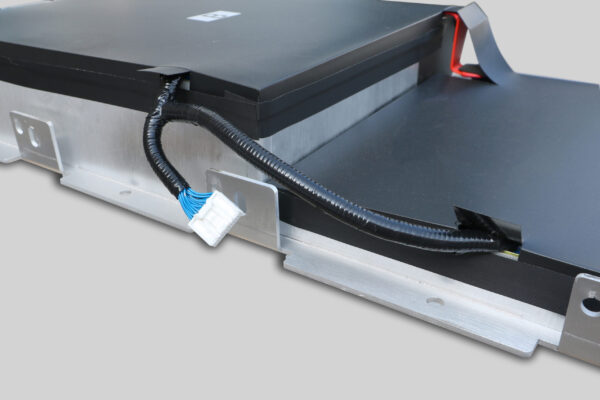
- Physical Dimensions: The 62kWh pack is physically larger than the original 24/30kWh. Ensure the supplier has engineered the casing to fit within the ZE0 chassis without interfering with the suspension or undercarriage.
4. Warranty: The Safety Net You Hope You Never Use
An upgrade of this magnitude requires a robust warranty. Do not settle for vague promises.
- The Benchmark: Look for a warranty that covers 24 months or 80,000 km (whichever comes first). This is the industry benchmark for quality assurance.
- Degradation Coverage: A truly confident manufacturer will offer prorated coverage for performance degradation. Your battery should maintain at least 70% State of Health (SOH) throughout the warranty period.
- Defects: Ensure the warranty explicitly covers defects in materials and workmanship. If a cell module fails or the BMS shorts out, you need a clear path for replacement or repair.
5. Installation: DIY vs. Professional
While the Nissan Leaf is known for being relatively DIY-friendly, a 62kWh upgrade is a high-voltage operation.
- Safety Protocol: Always disconnect the 12V battery first. High-voltage gloves and insulated tools are mandatory.
- The Process: A professional technician should be able to complete the swap in 1-2 hours. It involves removing the underbody shields, disconnecting the old pack, lifting it out, and bolting in the new one.
- Video Guidance: Even if you are hiring a mechanic, ensure your supplier offers video call support or detailed installation videos. This ensures the BMS programming and final connection are done correctly.
📊 Expert Comparison: What Defines a Premium 62kWh Upgrade?
To help you distinguish between a “good” upgrade and a “risky” one, I have compiled this comparison based on my technical audits of the market.
| Feature | Premium Upgrade (e.g., CNS BATTERY) | Low-Quality / Risky Option |
|---|---|---|
| Cell Source | Brand-new CATL cells (Fresh from factory) | Recycled/salvaged cells (Unknown history) |
| Warranty | 2 Years / 80,000 km (Industry leading) | 3-6 months or None |
| Fitment | OEM-standard plug-and-play (No modifications) | May require custom wiring or adapters |
| Performance | Stable 62kWh capacity, no swelling risk | Rapid degradation, potential swelling |
| Support | Dedicated technical team & video guidance | Email only, or no technical support |
🤝 Partnering with the Right Manufacturer
Choosing the right partner for your Leaf ZE0 62kWh upgrade is about trust. You are not just buying a box of batteries; you are buying a long-term power solution for your vehicle.
A reputable manufacturer, like CNS BATTERY, combines the use of brand-new CATL cells with OEM-level engineering. This ensures that when you press the accelerator, you feel the instant torque and smooth power delivery you expect from a modern EV, not the hesitant crawl of an aging battery.
By following these expert tips, you are not just replacing a part; you are revitalizing your Nissan Leaf ZE0, giving it a second life with the range and reliability of a much newer car.
❓ Frequently Asked Questions (FAQ)
Q1: Is a 62kWh upgrade safe for my Leaf ZE0?
A: Yes, it is safe if you use a high-quality battery pack designed to OEM standards. The 62kWh pack uses the same voltage architecture as the newer Leaf models. The key is ensuring the Battery Management System (BMS) is correctly calibrated to protect the cells and communicate with your car’s computer.
Q2: How much does a professional 62kWh conversion cost?
A: Prices vary globally, but you should expect the battery pack itself to cost significantly less than a dealership replacement (often around 50% of the OEM price). When comparing, look at the “total cost of ownership.” A premium pack using new CATL cells might have a higher upfront cost than a cheap recycled pack, but it will save you money in the long run due to its longer lifespan and lack of repair needs.
Q3: Will this upgrade affect my car’s charging speed?
A: Generally, a proper 62kWh upgrade will support the same charging speeds as a new Nissan Leaf. This means you can utilize standard Level 2 charging and DC fast charging (if supported by your specific ZE0 model year and the kit). The charging speed is determined by the BMS and the cell chemistry, which is why using high-grade CATL cells is essential for maintaining fast-charging capability.
Q4: How do I know if my specific ZE0 model is compatible?
A: Compatibility depends on your Vehicle Identification Number (VIN) and model year. The best practice is to contact the manufacturer’s technical team directly. They can perform a free compatibility assessment to confirm that the connectors, mounting points, and software protocols match your specific vehicle.
Ready to transform your Nissan Leaf ZE0 experience? Get a Free Custom Quote for your 62kWh upgrade today and take the first step towards zero-range anxiety driving.

