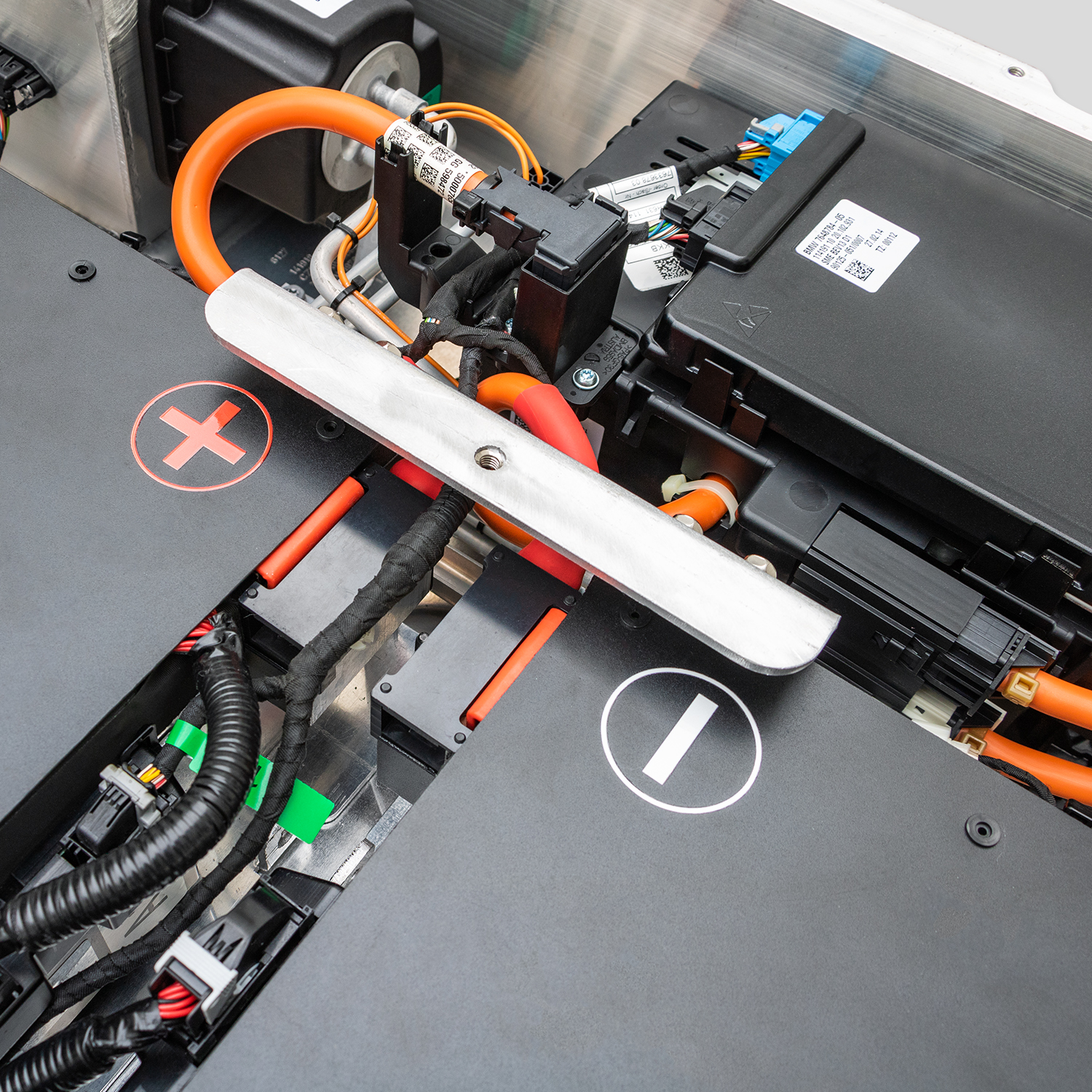
BMW i3 Battery Thermal Runaway Prevention: Shop Tips – The Silent Killer Lurking in “Healthy” Packs (And How to Stop It Before It Starts)
“A 2017 i3 came in for a routine 12V battery replacement. While scanning, we noticed Module 3 consistently ran 12°C hotter than others during regen—even though the BMS showed no faults. We dug deeper: the cooling plate under that module was partially clogged with degraded thermal paste sludge. Left unchecked, it would’ve triggered localized overheating, cell venting, and possibly thermal runaway within months. We replaced the pack preemptively. The customer had no idea his ‘perfectly working’ i3 was a ticking time bomb.”
You see normal range.
No warning lights.
No DTCs.
But thermal runaway doesn’t announce itself—it builds silently in compromised cells until it’s too late.
For shops, the stakes are higher than ever:
- Liability exposure if a repaired pack fails catastrophically
- Reputation damage from fire incidents—even off-site
- Insurance denial if improper cells or assembly are found
This guide delivers actionable, field-tested strategies to prevent thermal runaway at every stage:
- The 3 hidden risk factors most diagnostics miss
- How to spot early thermal imbalance before codes appear
- Why cell chemistry and build quality matter more than capacity
- How CNS BATTERY integrates multi-layer thermal protection
- And the post-install validation protocol that gives you peace of mind
Because in EV safety, prevention isn’t optional—it’s your professional duty.
What Is Thermal Runaway—And Why the i3 Is Vulnerable
Thermal runaway occurs when a single lithium-ion cell overheats (>130°C), triggering an exothermic chain reaction that spreads to neighboring cells—releasing flames, toxic gas, and extreme heat (up to 1,000°C).
The BMW i3’s compact pack design intensifies risk because:
- Cells are tightly packed with minimal spacing
- Cooling relies on direct contact with a single aluminum plate
- Older packs use NMC 111 chemistry, which has lower thermal stability than modern formulations
⚠️ Critical insight: Once initiated, thermal runaway cannot be stopped—only contained. Your only real defense is prevention.
🔥 Professional Shop Strategies to Prevent Thermal Runaway
1. Never Mix Cell Batches or Ages
- Even if voltages match, internal resistance varies between production lots
- Higher-resistance cells generate more heat under load
- Result: Localized hot spots → accelerated degradation → runaway risk
✅ Best practice: Replace modules in full, matched sets from a single production batch
2. Validate Cooling System Integrity
- Perform coolant flow test:
- Disconnect outlet hose
- Run pump via ISTA → should deliver ≥4 L/min
- Inspect for sludge, corrosion, or air pockets in cooling channels
- Replace coolant every 4 years (glycol degrades into conductive acids)
3. Use Only High-Stability Cell Chemistry
- Avoid packs using recycled or unknown-origin cells
- Demand NMC 532 or 622 chemistry—higher nickel content = better energy density and thermal resilience
- Verify UN38.3 and UL 2580 certification for safety testing
4. Monitor Real-Time Thermal Gradients
- During road test, use thermal camera or BMW ISTA live data:
- Max allowed temp difference between modules: ≤5°C
- Any module >45°C at rest after driving = red flag
- Log baseline temps on first install for future comparison
5. Ensure Proper Mechanical Compression
- Loose cells lose contact with cooling plate → poor heat transfer
- Over-compressed cells crack separators → internal shorts
- CNS packs use precision spring-loaded frames to maintain optimal pressure
The Myth of “Safe” Refurbished Packs
Many low-cost suppliers claim “tested and safe” packs—but skip critical steps:
- No accelerated aging tests to simulate long-term stress
- No nail penetration or overcharge testing per UL 2580
- Reuse of swollen or dented cells with hidden micro-shorts
Result? A pack that works today—but becomes a hazard in 6–18 months.
CNS BATTERY: Engineered to Contain, Delay, and Prevent
Every CNS i3 battery includes four layers of thermal runaway defense:
✅ CATL NMC 532 cells with ceramic-coated separators (shuts down at 130°C)
✅ Phase-change thermal pads between cells absorb excess heat
✅ Laser-welded cooling plates ensure uniform contact—no hot spots
✅ BMS with millisecond-level cell disconnect on abnormal temp rise
“We used to worry about liability with aftermarket packs. Now, with CNS’s certified cells and thermal design, we sleep soundly. Their engineering prioritizes safety over cheap cost savings.”
— Lisa K., Berlin EV Specialist
Frequently Asked Questions: Thermal Runaway Prevention
Q: Can thermal runaway happen while the car is parked?
A: Yes—if a latent internal short exists (e.g., from manufacturing defect or impact damage), it can self-heat over hours.
Q: Does fast charging increase risk?
A: Only if the pack is already degraded or poorly cooled. Healthy packs with intact thermal systems handle DC fast charging safely.
Q: Are all new cells equally safe?
A: No—cell origin matters. CNS uses only brand-new CATL cells with full traceability and safety certifications.
Q: What’s the #1 shop mistake that increases risk?
A: Installing mismatched or aged modules—creating thermal imbalance that accelerates failure.
Q: Can I test for thermal runaway risk?
A: Not directly—but thermal imaging + impedance testing can identify high-risk cells before failure.
Safety Isn’t a Feature—It’s the Foundation
When you install a battery, you’re not just restoring range—you’re assuming responsibility for your customer’s safety.
Choose a Pack Built with Certified Cells, Proven Thermal Design, and Zero Compromise on Safety
Don’t gamble with recycled cells or unverified suppliers.
Order your CNS BMW i3 battery—engineered with multi-layer thermal runaway prevention—or request our Thermal Safety Validation Checklist for Shops:
👉 https://cnsbattery.com/ev-battery-home/ev-battery-contact/