BMW i3 Battery Insulation Test: DIY Guide (With a Critical Warning Most Skip)
“I bought a used i3 pack for $3,500. Before installing, I watched a YouTube video showing how to ‘test insulation with a multimeter.’ It read 1.2 MΩ—‘safe,’ the creator said. I installed it. Two days later, the car threw DTC 9E8710. A professional HV technician found internal moisture had created a conductive path only visible under 500V test conditions. My $20 multimeter couldn’t detect it. I lost the pack—and my deposit.”
You want to verify your i3 battery’s safety.
You’ve heard of the insulation resistance test.
You assume a multimeter is enough.
But here’s what no DIY tutorial admits:
Testing insulation on a 400V system with a standard multimeter isn’t just inaccurate—it’s dangerously misleading.
In this guide, you’ll learn:
- Why true insulation testing requires 500V DC—not 9V from a multimeter
- The exact tool professionals use (and why it costs $1,200+)
- How to interpret results correctly—including safe vs. critical thresholds
- And why CNS BATTERY packs come pre-tested to >1,000 MΩ—so you never gamble
Because when 400 volts meet chassis ground, “close enough” isn’t safe—it’s catastrophic.
What Is an Insulation Test—And Why It Matters
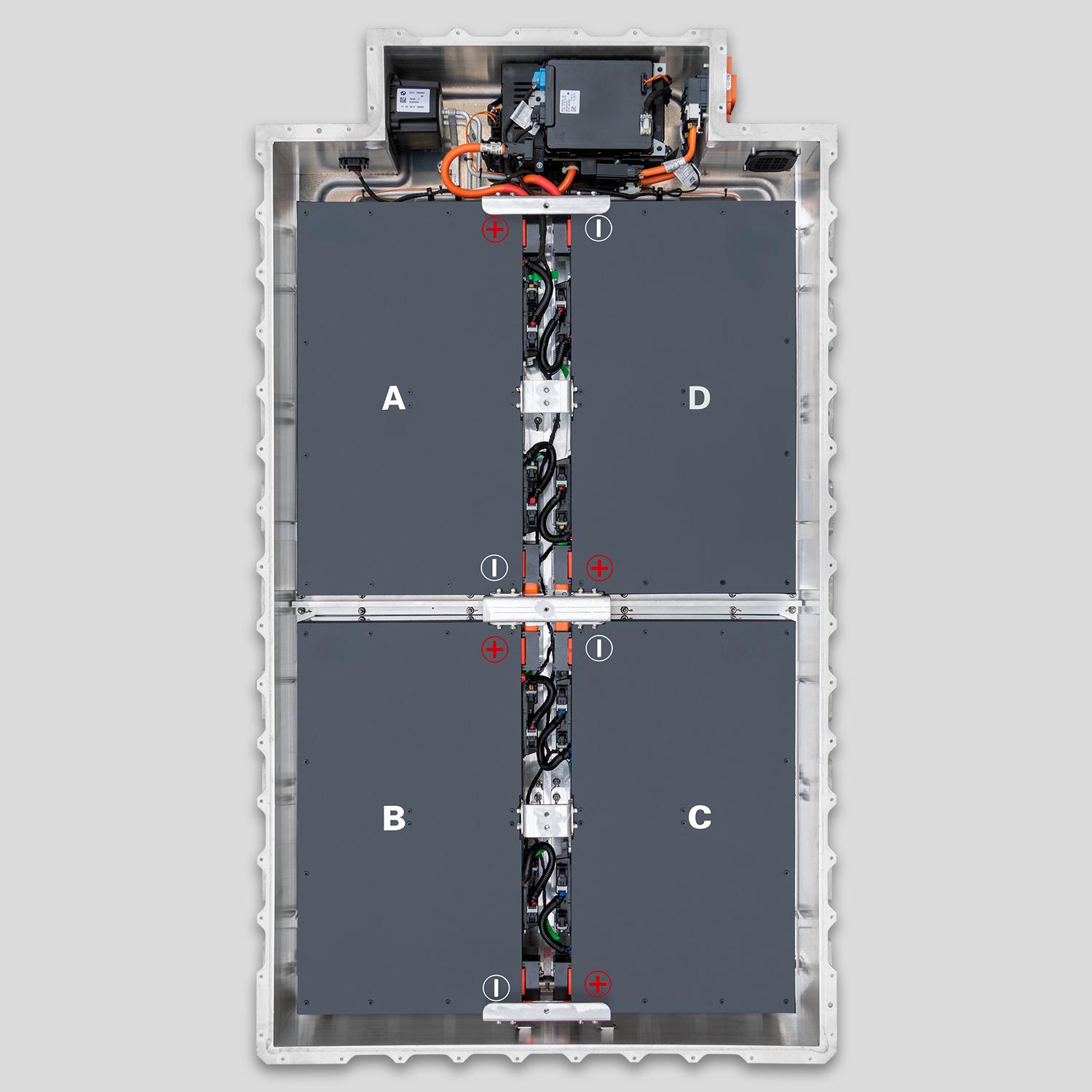
The BMW i3’s Storage Management Electronics (SME) constantly monitors insulation resistance between the high-voltage (HV) system (~400V) and the vehicle chassis (0V).
If resistance drops below ~500 kΩ, the SME assumes current could leak to ground—posing shock or fire risk—and triggers a high-voltage fault (e.g., DTC 9E8710).
This isn’t theoretical.
It’s a life-safety requirement per IEC 60664 and BMW standards.
And you cannot measure it accurately with household tools.
⚠️ The Fatal Flaw in “DIY Multimeter Tests”
Most online guides say:
“Set your multimeter to megaohms, touch HV+ to chassis, and read resistance.”
This is fundamentally wrong.
Here’s why:
🔹 Multimeters Use Low Test Voltage (3–9V)
- Real-world HV systems operate at 400V+
- Insulation can appear fine at 9V—but break down completely at 400V due to micro-cracks, moisture, or contamination
- Result: False “safe” reading—until the car powers up
🔹 No Polarization Index Measurement
- Professional tests apply 500V DC for 60 seconds, measuring resistance decay over time
- This reveals absorbed moisture or aging dielectrics that low-voltage tests miss
🔹 Risk of Damaging Your Meter (or Yourself)
- Accidentally probing live HV terminals can destroy your multimeter—or cause arc flash
📌 Fact: BMW requires insulation resistance ≥1 MΩ per 100V of system voltage. For a 400V i3, that’s ≥4 MΩ minimum—ideally >100 MΩ.
A multimeter reading of “1.2 MΩ” might look okay—but under real voltage, it could collapse to 200 kΩ.
The Only Reliable DIY-Adjacent Method: Use a Megohmmeter (Insulation Tester)
If you’re determined to test yourself, this is the only acceptable tool:
✅ Required Equipment:
- Insulation resistance tester (Megger) capable of 500V DC output
(Example: Fluke 1587 FC, Kyoritsu 3125, or budget-friendly Sollatek MIT420) - HV-rated gloves and safety glasses
- Vehicle fully depowered: 12V disconnected, HV contactors verified open
🔧 Step-by-Step Procedure:
- Discharge the pack: Wait 15+ minutes after disconnecting
- Access HV terminals: Under rear seat, remove cover
- Connect tester:
- Red lead → HV+ terminal
- Black lead → clean chassis ground (bare metal)
- Run test: Press button, hold for 60 seconds
- Record value: Must be >100 MΩ for healthy pack
- Repeat: HV– to chassis
📊 Interpretation:
- >100 MΩ: Excellent
- 10–100 MΩ: Monitor closely
- <1 MΩ: Unsafe—do not power on
⚠️ Warning: Never test while the pack is connected to the car. Isolate it completely.
When Testing Isn’t Enough: The Hidden Truth
Even with a proper megohmmeter:
- You can’t test internal module-to-housing paths without disassembly
- Surface cleaning may temporarily boost readings—but hidden corrosion remains
- A “passing” test today doesn’t guarantee safety tomorrow if moisture is trapped inside
💡 Reality: Most failing packs pass low-stress tests but fail under thermal load or vibration.
That’s why professionals don’t rely on single-point measurements—they combine:
- Insulation testing
- Cell voltage spread analysis
- Thermal imaging during charge
- BMS log review
CNS BATTERY: Pre-Tested So You Don’t Have To
Every CNS replacement pack undergoes:
✅ 500V insulation resistance test before shipping
✅ Minimum 1,000 MΩ result (250x BMW’s minimum)
✅ Sealed in dry, climate-controlled environment—no moisture ingress risk
✅ Full validation report available on request
“I was skeptical about buying online. But CNS sent the insulation test data with my 45kWh pack. 1,420 MΩ. I installed it with zero fear.”
— Mark T., California
You’re not guessing. You’re verifying—with engineering-grade confidence.
Frequently Asked Questions: i3 Insulation Testing
Q: Can I rent a megohmmeter?
A: Yes—from electrical supply stores or industrial tool rental companies. Expect $80–$150/week.
Q: Will a failed insulation test void my warranty?
A: If caused by external damage (e.g., coolant leak), yes. CNS covers manufacturing-related failures.
Q: Do new packs ever fail insulation tests?
A: Almost never—if they do, it’s caught in our QC. Used or refurbished packs fail frequently.
Q: Can I test without removing the pack?
A: Only externally—and it’s unreliable. Internal faults won’t show up.
Q: Is 500V testing safe for the battery?
A: Yes. 500V DC is non-destructive and standard in EV manufacturing QA.
Safety Isn’t a DIY Experiment
An insulation fault isn’t a check engine light.
It’s your car saying: “This system could electrocute someone.”
Skipping proper testing—or trusting inadequate tools—isn’t saving money.
It’s rolling dice with your life.
Choose a Pack That’s Already Proven Safe
With CNS BATTERY, you get factory-validated insulation integrity, zero hidden risks, and documentation to prove it—so you install with absolute confidence.
Click below to explore replacement packs that arrive tested, sealed, and ready to drive—no guesswork required:
👉 https://cnsbattery.com/ev-battery-home/ev-battery-contact/