The Ultimate Guide to BMW i3 Battery Maintenance: Ensuring Longevity and Performance
Owning a BMW i3 is a unique driving experience. The instant torque, the silent propulsion, and the iconic design make it a favorite among urban drivers and EV enthusiasts alike. However, like any electric vehicle, the heart of your i3 is its battery. As a vehicle that has been on the road for several years, battery maintenance and health are critical topics for current owners.
Whether you are looking to extend the life of your current pack or considering a replacement due to degradation, understanding how to care for your BMW i3 battery is essential. At CNS BATTERY, we specialize in providing high-performance, OEM-compatible battery solutions for the BMW i3 and Nissan Leaf. Our decade of experience in the EV battery field has taught us that proper maintenance is the key to unlocking maximum range and lifespan.
Here is our expert guide to keeping your BMW i3 battery in peak condition.
1. Understanding Your BMW i3 Battery Chemistry
Before diving into maintenance tips, it is crucial to understand what makes your BMW i3 battery unique. The BMW i3 originally utilized a range of battery capacities, including 22kWh, 33kWh, and later 42.2kWh packs. These batteries are composed of lithium-ion cells, specifically designed for the “Life Module” architecture of the i3.
Unlike standard automotive batteries, lithium-ion packs are sensitive to extreme states of charge. Avoiding the “100% to 0%” cycle is the golden rule. Lithium-ion cells degrade faster when held at full charge for extended periods or when completely drained. This is the foundational principle of EV battery care.
2. Charging Best Practices for Daily Use
Charging habits are the single most significant factor in your battery’s health. Many i3 owners rely on Level 1 (120V) or Level 2 (240V) charging at home or public stations. To maximize longevity:
- The 20%-80% Sweet Spot: For daily driving, try to keep your state of charge between 20% and 80%. If your i3 has a range extender (REx), you might be tempted to run the battery lower, but for pure EV health, staying within this window is ideal.
- DC Fast Charging (CCS): While convenient for long trips, DC fast charging generates significant heat. Frequent use of DC fast charging can accelerate thermal degradation. Use it when necessary, but rely on Level 2 charging for your daily top-ups.
- Scheduled Charging: Use the i3’s built-in timer or a smart charger to schedule charging to finish just before you leave in the morning. This prevents the battery from sitting at 100% all night, which stresses the cells.
3. Temperature Management: The Silent Killer
Temperature plays a massive role in battery chemistry. The BMW i3 was one of the first mass-market EVs to utilize a liquid thermal management system. This system is designed to keep the battery at an optimal temperature, but it requires your help.
- Preconditioning: If you are driving in freezing temperatures, use the preconditioning feature (often activated when you start charging or via the app). This warms the battery to an optimal temperature for charging and driving, reducing strain.
- Avoiding Extreme Heat: Parking in direct sunlight during a hot summer day can push the battery’s thermal limits. If possible, park in shaded or covered areas. An overheated battery will throttle its charging speed and power output to protect itself.
4. Driving Habits and Regenerative Braking
The BMW i3 is famous for its “one-pedal driving” capability, thanks to its strong regenerative braking system. This feature is not just for convenience; it is a vital maintenance tool.
- Maximizing Regen: By using the throttle to slow down the car instead of the brake pedal, you convert kinetic energy back into electricity. This reduces wear on the physical brake pads and rotors, but more importantly, it smooths out the power draw from the battery.
- Smooth Acceleration: While the i3 is fun to drive, launching from 0-60 mph repeatedly puts thermal stress on the battery. Smooth, progressive acceleration is easier on the cells and the electric motor.
5. Long-Term Storage and Winterization
If you plan to store your BMW i3 for an extended period (more than a month), the battery requires special care. Unlike a gasoline car, you cannot simply let an EV sit with a full or empty tank.
- The 50% Rule: For storage, charge the battery to approximately 50%. This middle state minimizes chemical stress.
- Disconnecting: While the i3 has a low parasitic drain, if storing for many months, it is wise to check the charge level every 3 months and top it up if it drops below 20%.
- Winter Storage: If storing in a cold climate, ensure the battery is charged to 50% before the temperature drops below freezing. A charged battery has a lower freezing point than a depleted one.
6. Recognizing Degradation and Replacement Options
Despite your best efforts, all lithium-ion batteries degrade over time. If you notice your range dropping significantly or the car displaying “Reduced Power” messages, it may be time to consider a replacement.
When looking at replacements, there are generally two paths: refurbished OEM packs or new aftermarket solutions. At CNS BATTERY, we offer a third option: New OEM-Compatible Powertrains.
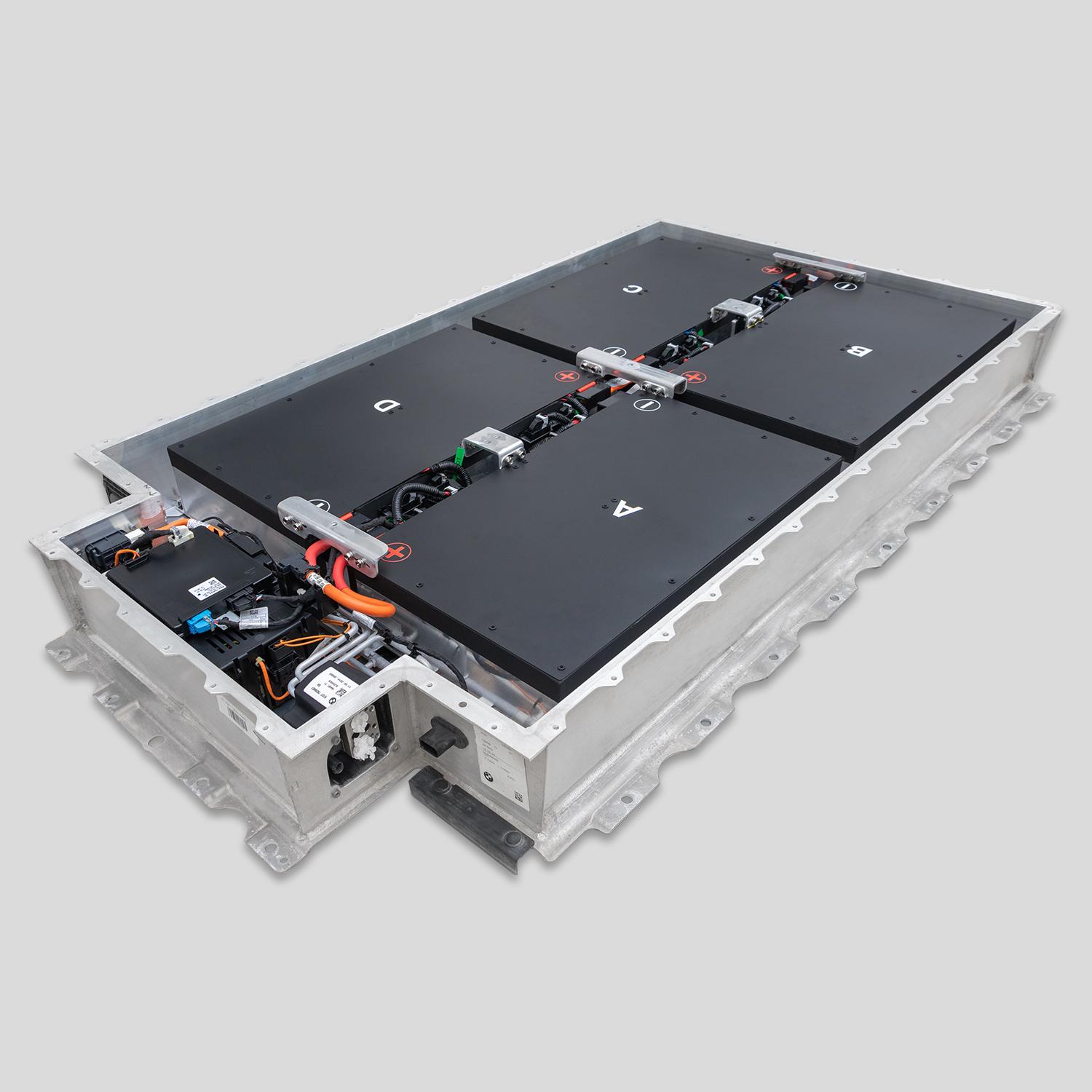
Our batteries are built using brand-new CATL (Contemporary Amperex Technology Co. Limited) cells, which are the same quality cells used by many original manufacturers. We engineer our packs to meet OEM standards for the BMW i3, ensuring perfect fitment and communication with your vehicle’s BMS (Battery Management System).
Why choose a CNS replacement?
- New Cell Technology: Unlike refurbished batteries that reuse old, degraded cells, we use fresh cells with a full lifecycle ahead of them.
- Extended Warranty: We back our confidence with an industry-leading 2-year / 80,000 km warranty, covering performance degradation and defects.
- Cost Efficiency: You can save over 50% compared to dealership prices while receiving a product that often outperforms the original in terms of energy density and thermal management.
7. Professional Installation vs. DIY
Replacing an EV battery is a significant task. While some experienced owners opt for a DIY approach, it requires specialized tools, knowledge of high-voltage safety, and the right lifting equipment.
If you are considering a DIY replacement, ensure you have:
- A suitable EV battery lift table.
- Proper insulated high-voltage safety gear (gloves, mats).
- Access to the correct diagnostic software for BMS programming.
For most users, we recommend having the replacement performed by a certified mechanic. However, if you do decide to tackle it yourself, CNS BATTERY provides comprehensive support, including step-by-step video tutorials and remote video guidance from our technical experts to ensure a seamless installation.
Frequently Asked Questions (FAQ)
Q1: How often should I service my BMW i3 battery?
A1: Unlike internal combustion engines, EV batteries do not require “fluid changes.” However, we recommend having the high-voltage system and thermal management system inspected by a professional every 2 years or 20,000 miles. This ensures coolant levels are correct and there are no connection issues.
Q2: What is the expected lifespan of a BMW i3 battery?
A2: With proper maintenance, a BMW i3 battery can last 10-15 years or more. Our CNS replacement batteries, utilizing new CATL cells, are designed to exceed this standard, offering a minimum of 2 years or 80,000 km of worry-free performance.
Q3: Can I install a CNS BATTERY pack myself?
A3: Yes, many of our customers successfully install our packs themselves. We provide detailed installation manuals, HD video tutorials, and remote video support. However, due to the high voltage and weight of the pack, we strongly recommend professional installation unless you have specific EV repair experience.
Q4: Does a CNS BATTERY replacement affect my car’s warranty?
A4: When installed correctly, our batteries integrate seamlessly with your BMW i3’s systems. We recommend checking your specific regional regulations regarding independent repair shops. Our technical team can assist with VIN compatibility checks to ensure a perfect match for your vehicle model.
Q5: How do I know if my battery needs replacing?
A5: Common signs include a significant drop in range (e.g., less than 70% of original capacity), error messages like “High Voltage Battery Service,” or visible swelling in the battery casing. If you are unsure, our technical experts offer free compatibility assessments based on your VIN.
Ready to give your BMW i3 a new lease on life? Don’t let battery degradation limit your driving range. Explore our range of high-performance, OEM-compatible BMW i3 battery solutions and experience the difference of new cell technology.