
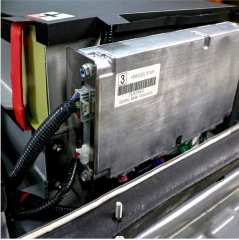
Wholesale e-NV200 Power Battery vs CATL: The Ultimate Value Comparison
The Nissan e-NV200 is a workhorse for fleets and families alike. However, as these vehicles age, the original batteries degrade, leading to range anxiety and costly replacements. When it comes to replacing your e-NV200’s heart, you’re often faced with a dilemma: pay a premium for the original manufacturer (OEM) brand or find a reliable alternative.
Many assume that Original Equipment Manufacturer (OEM) parts are the only safe bet, but what if there was a solution that utilized the same world-class cells as the OEMs, at a fraction of the cost? This article breaks down the comparison between generic wholesale e-NV200 batteries and the industry-standard CATL cells used in premium aftermarket solutions.
Understanding the Core: CATL Cells vs. Generic Lithium
To understand why the cell manufacturer matters, we must look beyond the battery pack’s外壳 (shell) to the cells inside.
The Gold Standard: CATL (Contemporary Amperex Technology Co. Limited)
CATL is the world’s largest lithium-ion battery manufacturer. They supply batteries to Tesla, BMW, Volkswagen, and yes, Nissan. When you see a battery advertised as “CATL,” you are getting cells that have passed rigorous international safety standards (UN38.3), have a proven lifespan, and offer stable thermal management.
The Generic Alternative: Unknown “Wholesale” Suppliers
The term “Wholesale e-NV200 Power Battery” often refers to packs assembled by smaller factories using cells from unknown or secondary-tier manufacturers. These cells are often:
- Repurposed: Salvaged from other industries or used batteries.
- Unverified: Lack proper safety certifications.
- Inconsistent: Prone to swelling, voltage drops, and rapid degradation.
Expert Insight: The battery is the most expensive component of an EV. Cutting corners on the cell chemistry is the fastest way to turn a budget repair into a financial disaster.
The Direct Comparison: Value vs. Risk
Let’s break down the hard facts between choosing a generic wholesale route versus a solution built on CATL-grade technology.
1. Performance & Range
- Generic Wholesale Batteries: Often suffer from “capacity虚标” (false labeling). A pack advertised as 40kWh might only deliver 30kWh of actual usable energy. Users frequently report a rapid drop in range within the first few months.
- CATL-Based Solutions (e.g., CNS BATTERY): Utilize brand-new, top-tier cells. For the e-NV200, this translates to a reliable 348km+ of real-world range (based on 50kWh configurations). Users report stable performance even in high temperatures (e.g., 38°C) without overheating protection kicking in.
2. Longevity & Degradation
- Generic Wholesale Batteries: Due to inconsistent cell quality and poor Battery Management Systems (BMS), these packs often die within 1-2 years. Cell swelling is a common issue, rendering the battery unusable.
- CATL-Based Solutions: CATL cells are renowned for their cycle life. A new CATL-based pack can retain over 70% capacity after 2,000+ charge cycles. This means the battery lasts significantly longer than the vehicle’s remaining lifespan.
3. Safety & Reliability
- Generic Wholesale Batteries: Lack the sophisticated thermal runaway prevention found in major brands. This poses a fire risk, especially during fast charging.
- CATL-Based Solutions: Inherit the safety DNA of OEM vehicles. The cells are designed to withstand vibration, overcharging, and extreme climates.
Why “Wholesale” Doesn’t Mean “Better Deal”
The allure of a “wholesale” price is strong, but it is crucial to calculate the Total Cost of Ownership (TCO).
- Hidden Costs: A cheap battery often requires frequent replacements. If a $2,000 generic battery needs replacing every 18 months, you spend $4,000 in 3 years.
- Downtime: For commercial users (delivery vans, taxis), a failed battery means lost income.
- Installation Fees: You pay the mechanic the same rate whether the battery is cheap or premium.
The Math of Value:
A premium solution, such as those utilizing CATL cells, typically costs about 50% less than the original Nissan dealer price but offers the same quality. Compared to a generic “wholesale” battery, the premium solution might cost 20-30% more upfront but lasts 3-5 times longer.
Case Study: Real-World Results
To illustrate the difference, let’s look at a recent case involving a fleet operator in Europe.
The Situation:
An e-NV200 owner purchased a “wholesale” 40kWh battery online for a low price. After 6 months, the range dropped from 180km to 80km, and the battery management system failed.
The Solution:
The owner switched to a 50kWh lithium battery pack utilizing new CATL cells from a reputable supplier.
The Outcome:
- Range: Restored to 348km.
- Stability: No power drop even with AC running at highway speeds.
- Durability: After 2 months of daily commercial use, the battery health remained at 12/12 bars.
- Savings: Avoided the $15,000+ dealer replacement cost.
“The installation was plug-and-play. The connectors matched perfectly, and the real range matches the specifications. It feels like a new car,” reported the user.
Making the Right Choice for Your e-NV200
When searching for an e-NV200 battery replacement, do not be blinded by the word “Wholesale.” Instead, look for transparency in the supply chain.
What to Look For:
- Cell Branding: The supplier should explicitly state they use CATL, LG, or Samsung cells.
- Warranty: Generic batteries rarely offer long warranties. A reputable CATL-based solution should offer a minimum of 24 months or 80,000 km.
- Certifications: Look for UN38.3, MSDS, and CE marks.
Choosing a battery built with CATL-grade technology is not just a repair; it is an upgrade. It ensures your e-NV200 remains a reliable, high-performing vehicle for years to come, without the financial burden of an OEM invoice.
Frequently Asked Questions (FAQ)
Q1: Can I really trust a non-OEM battery with CATL cells?
A: Absolutely. The cells themselves are manufactured by the same factory (CATL) that supplies Nissan. The difference is that third-party manufacturers purchase the cells directly and assemble the pack without the Nissan branding markup, passing the savings on to you.
Q2: What is the expected lifespan of a CATL-based e-NV200 battery?
A: Under normal operating conditions, a new CATL cell pack can last 8-10 years or 200,000+ km. Most users experience minimal degradation, maintaining over 70% capacity even after 5 years of daily use.
Q3: Is the installation difficult?
A: No. These batteries are designed for OEM compatibility. The connectors, dimensions, and mounting points are identical to the original Nissan battery. Most mechanics can complete the swap in 1-2 hours using basic tools. Video tutorials and remote support are usually available for DIY enthusiasts.
Q4: How much can I save compared to the dealer?
A: You can typically save 50% to 60% compared to the official Nissan dealership price. While a generic “wholesale” battery might be slightly cheaper than the CATL option, the risk of failure and the need for early replacement make the CATL solution the most cost-effective choice in the long run.
Q5: Do these batteries come with a BMS (Battery Management System)?
A: Yes. A high-quality CATL-based battery includes a sophisticated BMS that monitors every cell’s voltage and temperature. This ensures balanced charging and prevents over-discharging, which is critical for safety and longevity.
Ready to upgrade your Nissan e-NV200 with a reliable, high-capacity battery? Stop risking your vehicle’s health on generic wholesale alternatives and switch to a proven solution.

