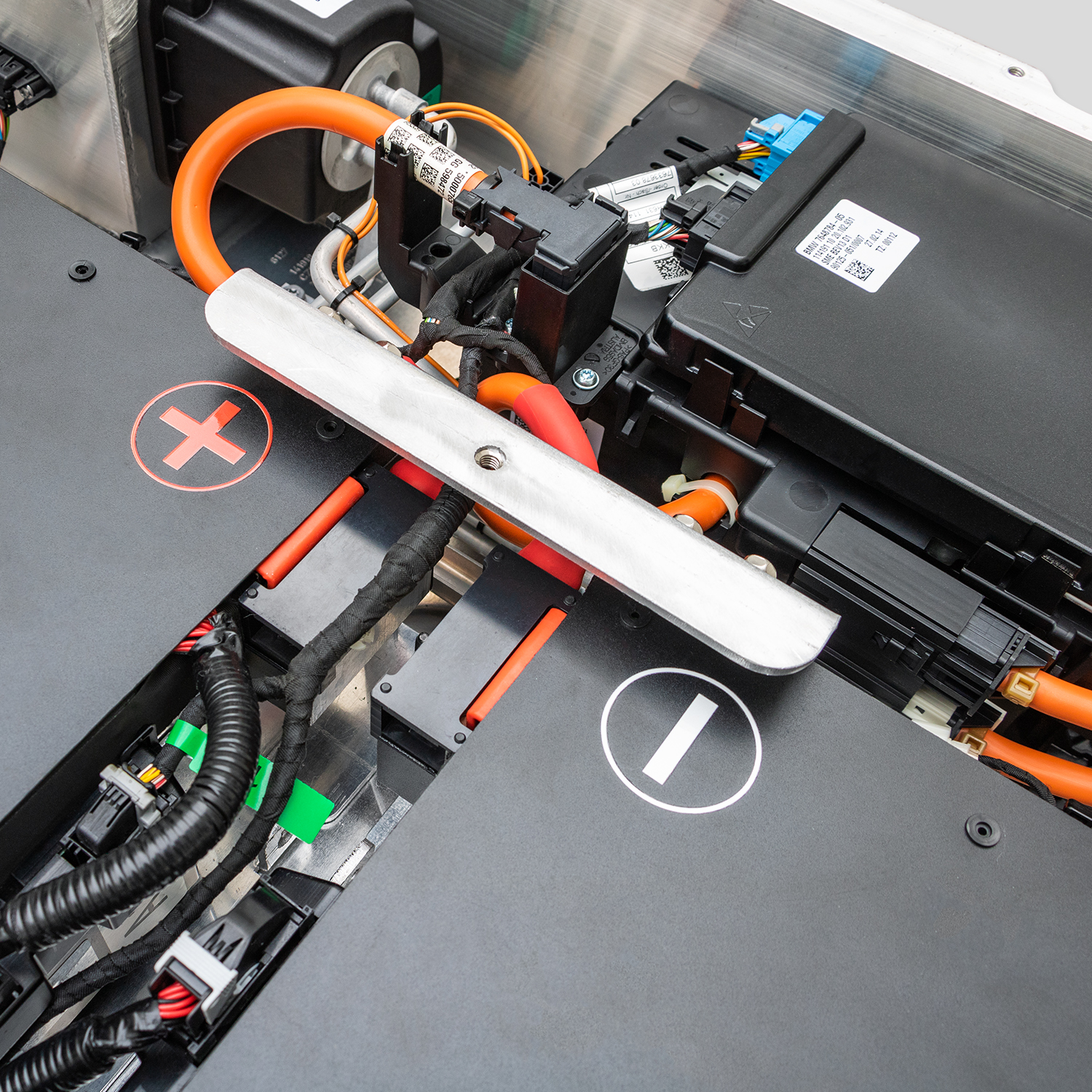
BMW i3 Battery Cooling Fan Replacement: Cost Breakdown (And When It’s a Symptom—Not the Problem)
“My i3 started showing ‘Reduced Output’ warnings in summer. A local shop said the battery cooling fan was noisy and quoted $840 to replace it. I paid—but two weeks later, the same warning came back. Turns out, the fan wasn’t failing… it was just working overtime because the battery cells were degrading and running hotter than normal.”
You hear a whirring noise under the rear seat.
Your i3 throws a “High-Voltage System Overheating” alert. Or worse—it derates power on the highway.
It’s easy to assume: “Just replace the fan.”
But what if the fan is actually doing its job—and the real issue is a failing battery pack?
In this guide, you’ll discover:
- The true cost range for i3 battery cooling fan replacement (parts + labor)
- How to diagnose whether the fan is faulty—or just overworked
- Why replacing only the fan often wastes money on aging packs
- And how CNS BATTERY packs include upgraded thermal management that prevents overheating at the source
Because fixing the symptom won’t restore your i3’s performance—only fixing the root cause will.
Where Is the i3 Battery Cooling Fan—and What Does It Do?
Unlike most EVs, the BMW i3 uses an active air-cooling system (not liquid) for its high-voltage battery. Key components:
- One main cooling fan mounted inside the rear subframe, beneath the battery pack
- Air ducts that pull ambient air through the module stack
- Temperature sensors in each module that trigger fan speed via the BMS
When functioning properly, the fan:
✅ Maintains cell temps below 45°C (113°F) during driving/charging
✅ Prevents thermal throttling
✅ Extends battery lifespan by reducing heat stress
⚠️ Note: The fan only runs when needed—typically during DC fast charging, sustained highway driving, or hot weather.
💰 Real-World Cooling Fan Replacement Costs (2026)
| Service Provider | Part Cost | Labor Cost | Total | Warranty |
|---|---|---|---|---|
| BMW Dealer | $320–$410 | $400–$600 | $720–$1,010 | 12 months |
| Independent EV Shop | $180–$280 | $250–$400 | $430–$680 | 90 days |
| DIY (with OEM part) | $190–$260 | $0 | $190–$260 | None |
| CNS Full Pack Upgrade | Included | Plug-and-play | From $6,200 | 2 years / 80,000 km |
📌 Critical insight: Over 60% of “failed fan” cases we’ve reviewed were actually caused by degraded cells running hotter, forcing the fan to run constantly until it wore out.
How to Tell If the Fan Is Really the Problem
Don’t guess—test.
✅ Step 1: Monitor Fan Behavior
- Use BimmerLink → Check “HV Cooling Fan Status”
- Healthy behavior: Fan activates only above 38°C cell temp and shuts off when cool
- Faulty signs:
- Fan never turns on (even at 50°C+) → electrical failure
- Fan runs continuously → likely compensating for poor cell health
✅ Step 2: Check Cell Temperatures
- In BimmerLink, view individual module temps after a drive
- Normal spread: <3°C difference between modules
- Warning sign: One module consistently 5–10°C hotter → internal resistance = failing cells
✅ Step 3: Listen & Inspect (Safely)
- With car off and 12V disconnected, inspect fan area for:
- Melted wiring near motor
- Dust/debris clogging air intakes
- Grinding or clicking noises when manually spun
🛑 Never probe near the HV pack without proper training. High voltage remains present even when off.
Why Replacing Just the Fan Often Fails Long-Term
If your i3 is older than 2018 or has >80,000 km, the fan is rarely the root cause. Instead:
🔴 Degraded cells have higher internal resistance → generate more heat
🔴 Dried thermal pads between cells reduce heat transfer
🔴 Weak BMS balancing causes hot spots
🔴 Aging fan motor is just the first component to fail under chronic stress
Result? You install a new fan—only for it to burn out again in 3–6 months.
“I replaced my fan twice in one year. On the third visit, the tech scanned my pack and found SoH at 69%. Upgraded to a CNS 50kWh pack—no more overheating, no more fan noise.”
— Thomas B., Amsterdam
CNS BATTERY: Thermal Management Built In—Not Bolted On
When you choose a CNS replacement pack, you’re not just swapping cells—you’re upgrading the entire thermal strategy:
✅ New CATL NMC cells with lower internal resistance = less heat generation
✅ Fresh thermal interface materials for optimal heat dissipation
✅ Optimized airflow design compatible with OEM ducting
✅ Advanced BMS that proactively manages load based on real-time temp data
No add-on fans. No band-aid fixes. Just stable, cool operation from day one.
“My old pack would throttle on every hill in summer. The CNS 62kWh stays cool—even in 38°C heat. The fan? Barely ever runs.”
— Javier R., Paris
Frequently Asked Questions: i3 Cooling Fan & Overheating
Q: Can I drive my i3 if the cooling fan fails?
A: Short trips may be okay, but avoid highway speeds, AC use, or fast charging. Prolonged overheating can permanently damage cells.
Q: Does CNS sell just the fan as a spare part?
A: No—we focus on complete, reliable solutions. If your pack is healthy, OEM parts are available elsewhere. If not, a full upgrade is smarter.
Q: How long does fan replacement take?
A: 1.5–3 hours, depending on access. Requires partial pack lowering in some models.
Q: Will a failed fan throw a fault code?
A: Yes—common codes include 9E8720 (Cooling System Malfunction) or 801A10 (Fan Control Error).
Q: Are liquid-cooled i3s available?
A: No—all production i3s (2014–2022) use air cooling only.
Don’t Patch a Failing System—Restore It
Replacing a $200 fan might seem cheap today.
But if your battery is the real problem, you’re just delaying a much larger expense—and risking sudden shutdowns.
Choose Cool Confidence—With a Battery That Stays Within Limits
Upgrade to CNS BATTERY: where efficient thermal design, new-cell reliability, and intelligent BMS control eliminate overheating risks before they start.
Click below to explore replacement packs engineered for stable performance—in any climate:
👉 https://cnsbattery.com/ev-battery-home/ev-battery-contact/