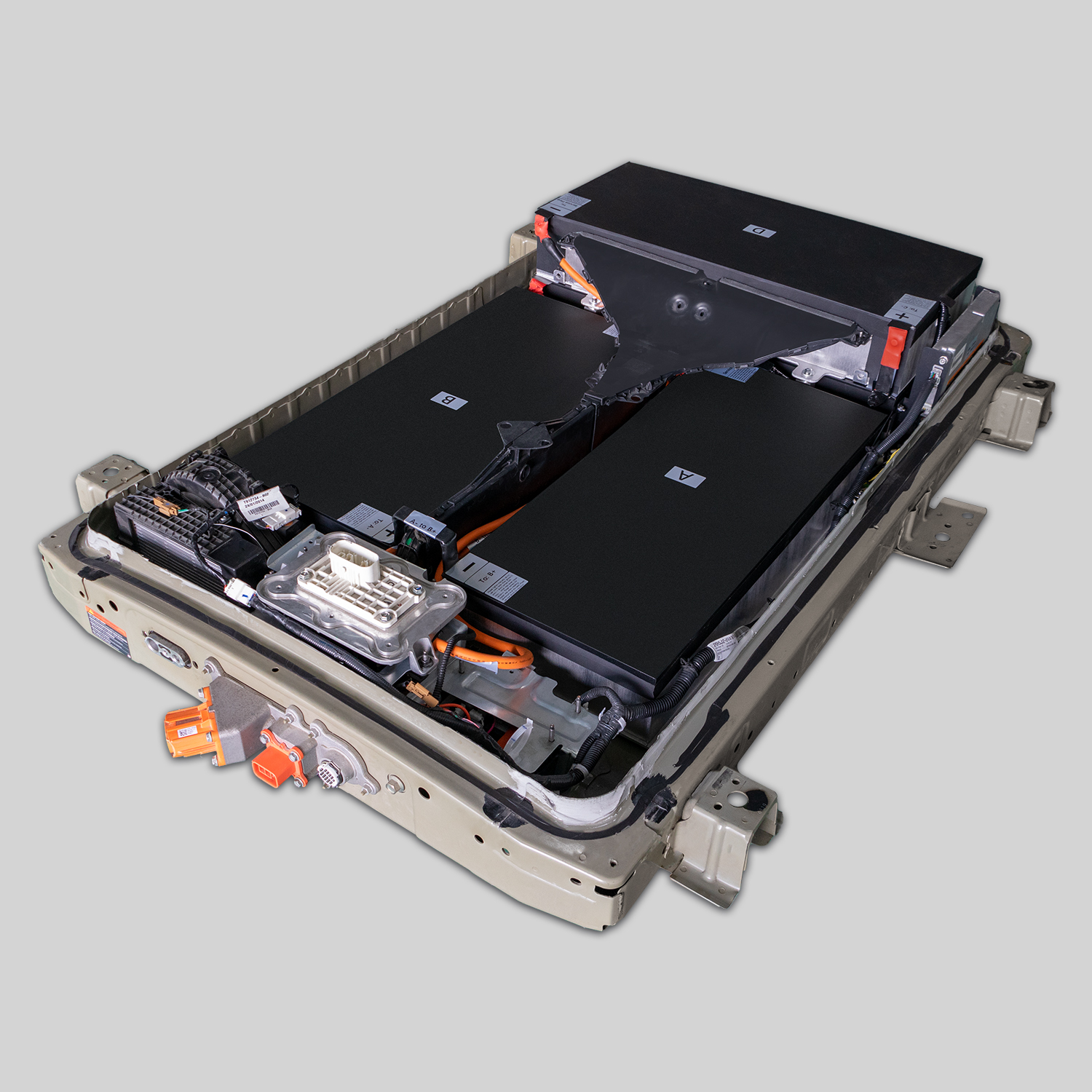
Installing the wrong Battery Management System (BMS) in your Nissan Leaf is not just a minor technical hiccup; it is a critical decision that can lead to the total destruction of your battery pack and potentially dangerous safety hazards. As an expert in electric vehicle battery systems, I have seen firsthand how a mismatched BMS can turn a cost-saving DIY project into a costly disaster. This article will explore the severe consequences of using an incompatible BMS, the importance of precise specifications, and why choosing a factory-standard solution from a trusted manufacturer like CNS BATTERY is essential for the longevity and safety of your vehicle.
The Critical Role of the BMS in Your Nissan Leaf
The Battery Management System (BMS) acts as the brain of your electric vehicle’s powertrain. It is responsible for monitoring the voltage, temperature, and state of charge of every individual cell within the battery pack. For a Nissan Leaf, this system ensures that the complex chemistry of lithium-ion cells operates within a safe “Goldilocks zone.” When you install the correct BMS, it communicates seamlessly with the Vehicle Control Unit (VCU), managing the flow of energy to keep you driving efficiently.
However, the moment you introduce a BMS that is not specifically calibrated for your Leaf’s model year, voltage requirements, or cell chemistry, you disrupt this delicate balance. A wrong BMS cannot interpret the data correctly, leading to a cascade of failures that can render your car inoperable.
The Domino Effect: Consequences of a Mismatched BMS
When the wrong BMS is installed, the first sign of trouble is often a communication breakdown. The BMS speaks a specific language to the car’s computer. If the protocols do not match—such as using a BMS designed for a different voltage pack or a different car manufacturer—the Nissan Leaf will throw error codes and enter “Limp Mode” or refuse to start altogether. This is the car’s safety mechanism kicking in because it cannot trust the data being sent from the battery.
Beyond just a car that won’t start, the physical damage to the battery pack is where the real danger lies. A BMS that is not tuned to the specific chemistry of your cells (for example, using a BMS set for NMC chemistry on a pack that requires different parameters) will fail to protect the cells during charging and discharging. This results in overcharging, which causes the cells to swell, leak, and in extreme cases, catch fire. Conversely, if the BMS cuts power too early due to incorrect calibration, you will experience a drastic reduction in driving range, defeating the purpose of the battery replacement.
Why “Generic” BMS Solutions Fail
Many drivers are tempted by “universal” or “generic” BMS units found online, believing they can save money on the replacement. However, the Nissan Leaf, especially models like the ZE0, ZE1, and AZE0, requires a BMS with specific firmware and hardware configurations. A generic BMS lacks the proprietary algorithms needed to manage the thermal dynamics of the Leaf’s unique pack design.
For instance, the Leaf’s BMS must manage the heat distribution across the modules effectively. A wrong BMS will not activate the cooling fans at the right time or will misread the temperature sensors. This thermal runaway can degrade the battery cells permanently within just a few charge cycles. Furthermore, incorrect current ratings on a generic BMS can lead to the MOSFETs (transistors) burning out, causing a short circuit that damages not only the battery but also the onboard charger and the DC-DC converter.
The Professional Solution: Factory-Calibrated Reliability
To avoid these catastrophic failures, it is imperative to use a BMS that is engineered to Original Equipment Manufacturer (OEM) standards. At CNS BATTERY, we understand that a battery replacement is not just about swapping cells; it is about restoring the vehicle to its factory performance. Our BMS units are pre-programmed with the exact firmware required for specific Nissan Leaf models, ensuring perfect plug-and-play compatibility.
Our engineering team utilizes high-precision sensors and robust communication protocols that mirror the original Nissan specifications. This means that when you install a CNS BATTERY pack, the BMS integrates seamlessly with your Leaf’s existing electronics. There is no guesswork, no risky reprogramming, and no risk of damaging your vehicle. We back this reliability with a comprehensive 2-year / 80,000 km warranty, a testament to our confidence in the quality of our components.
Real-World Risks vs. Engineered Safety
The table below illustrates the stark contrast between the risks associated with installing a wrong or generic BMS and the safety offered by a professionally engineered CNS BATTERY solution.
| Feature | Wrong/Generic BMS | CNS BATTERY OEM Solution |
|---|---|---|
| Communication | Protocol mismatch, error codes, car won’t start | Perfect CAN-Bus communication, plug-and-play |
| Cell Protection | No protection against overcharge/swelling, fire risk | Precise voltage/temp control, zero failure rate |
| Warranty & Support | No warranty, no technical support | 2-Year / 80,000 km warranty, lifetime technical support |
The Cost of Cutting Corners
While the upfront cost of a generic BMS might seem attractive, the long-term financial implications are severe. Replacing a battery pack destroyed by a faulty BMS can cost thousands of dollars. Additionally, the labor costs to disassemble the pack again, potentially repair damaged wiring harnesses, and source new cells add up quickly. In the worst-case scenario, damage to the vehicle’s main contactors or motor controller can result in repair bills that exceed the value of the car itself.
Choosing a CNS BATTERY solution eliminates these hidden costs. Our packs come with the BMS already integrated and tested. We provide detailed installation videos and offer remote video guidance from our technical experts to ensure the installation is done correctly the first time. This level of support ensures that you are not left stranded with a malfunctioning vehicle.
Conclusion: Trust the Experts for Your EV Investment
Your Nissan Leaf represents a significant investment, and the battery is its most expensive component. Cutting corners on the BMS is a gamble that rarely pays off. The risks of fire, total battery failure, and damage to your vehicle’s electronics are simply too high. By choosing a CNS BATTERY pack, you are not just buying a collection of cells; you are investing in a complete, engineered system designed for safety and reliability.
We invite you to experience the peace of mind that comes with a factory-standard solution. Customize your Nissan Leaf battery solution today and get a free quote to see how we can help you extend your range and improve safety.
Frequently Asked Questions (FAQ)
Q: Can I reuse my old Nissan Leaf BMS with a new aftermarket battery pack?
A: Generally, it is not recommended. Aftermarket battery packs often use different cell chemistries (such as NMC) compared to the original pack (often LMO). The BMS is calibrated to specific voltage curves and thermal characteristics of the cells it manages. Using an old BMS on a new chemistry pack can lead to inaccurate State of Charge (SOC) readings and lack of proper protection.
Q: What happens if the BMS voltage settings are incorrect?
A: Incorrect voltage settings are extremely dangerous. If the “High Voltage Cut Off” (HVC) is set too high, the cells will overcharge, leading to gas generation, swelling, and potential thermal runaway. If it is set too low, the battery will cut off power prematurely, giving you a drastically reduced range and potentially stranding you.
Q: Does CNS BATTERY provide BMS programming services?
A: Yes, absolutely. All CNS BATTERY packs come with the BMS pre-programmed for your specific Nissan Leaf model (such as ZE0, ZE1, or AZE0). We handle all the complex coding and calibration in the factory so that you receive a plug-and-play solution that requires no additional programming on your end.