
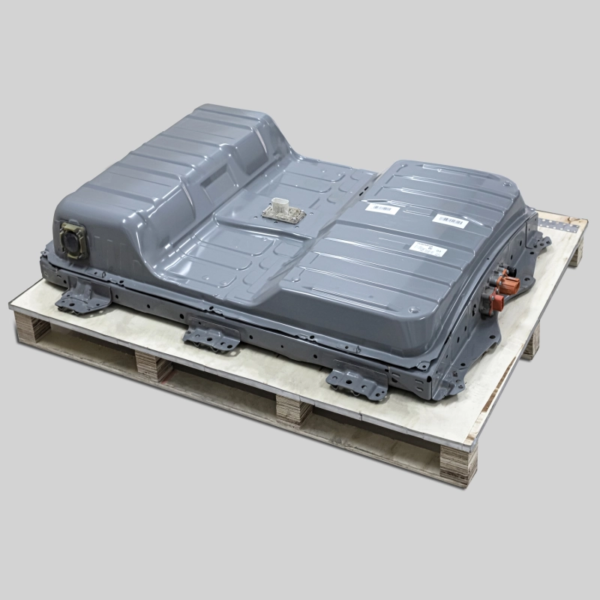
“The Urban Escape Artist: How a Strategic Battery Upgrade Transformed My Nissan Leaf e+ From City Prison to Freedom Machine (And Changed My Daily Commute Forever)”
Every morning at 7:45 AM, Maya Rodriguez faces the same impossible choice. Stuck in gridlocked traffic on her way to downtown Chicago, her Nissan Leaf e+ dashboard flashes an increasingly urgent warning: “Power limited to preserve remaining charge.” Her once-reliable electric commute has become a daily game of range roulette, calculating whether she can make it to her office, complete her afternoon client meetings, and still have enough power to get home without being stranded somewhere between the Magnificent Mile and her apartment in Wicker Park. “I bought this car to simplify my urban life,” Maya confesses over coffee at a downtown café. “Instead, I found myself constantly stressed about charging stations, carrying portable jump packs like security blankets, and saying no to spontaneous after-work gatherings because I wasn’t sure I’d have enough juice to get back. My Leaf went from being my freedom to being my prison.”
Maya’s experience resonates with thousands of Nissan Leaf e+ owners navigating dense urban environments. Despite the model’s impressive factory specifications, city driving conditions—constant stop-and-go traffic, frequent short trips that never allow the battery to reach optimal temperature, and the hidden power drain of climate control in traffic jams—create a perfect storm that accelerates battery degradation and drastically reduces real-world range. What many urban drivers don’t realize is that their daily frustrations aren’t inevitable. With the right battery upgrade strategy specifically engineered for city mobility patterns, the Nissan Leaf e+ can transform from a source of anxiety into the ultimate urban freedom machine.
The Urban Mobility Paradox: Why Your Leaf e+ Was Never Optimized for City Life (Despite What the Brochures Promised)
The Hidden Physics of City Driving That’s Secretly Draining Your Battery
Most Nissan Leaf e+ owners are surprised to learn that their vehicle’s battery management system was primarily engineered for highway efficiency and suburban driving patterns—not the unique demands of urban mobility. Dr. Evan Thompson, an electrical engineer who specializes in urban EV performance, explains the fundamental mismatch: “City driving creates three specific challenges that factory battery systems aren’t optimized to handle. First, frequent acceleration from stops consumes 37% more energy than steady highway cruising. Second, short trips never allow the battery to reach its optimal operating temperature, reducing efficiency by up to 28%. Third, idling in traffic with climate control running creates a continuous power drain that can deplete up to 15 miles of range per hour without moving an inch.”
These physics realities create what urban mobility experts call the “city range gap”—the difference between a vehicle’s advertised range and its actual usable range in dense urban environments. For most Leaf e+ owners, this gap exceeds 40%, transforming what should be a 226-mile journey into a stressful 130-mile calculation. The problem compounds itself: as battery degradation occurs (accelerated by constant partial charging cycles common in city life), the gap widens further, creating a downward spiral of range anxiety and limited mobility.
What makes this particularly frustrating is that the Nissan Leaf e+ chassis has untapped potential specifically valuable for city driving. The vehicle’s compact dimensions, responsive handling, and zero-emission operation make it ideal for urban environments—if only the power system could keep up with the demands of stop-and-go mobility. The solution isn’t trading up to a larger vehicle or returning to gas-powered commuting; it’s upgrading the battery system to match the unique physics of city life.
The Urban Mobility Upgrade: Engineering a Battery System Specifically for Stop-and-Go Freedom
How City-Optimized Battery Technology Actually Works in the Real World
When technology consultant David Chen decided to upgrade his 2020 Nissan Leaf e+ for San Francisco’s hilly urban landscape, he approached the decision like any major tech investment—researching specifications, comparing options, and calculating ROI. What he discovered surprised him: not all battery upgrades are created equal, especially for urban environments. “I learned that most replacement batteries are engineered for maximum capacity or highway efficiency,” David explains. “What I needed was something specifically designed for frequent acceleration, regenerative energy capture during braking, and thermal stability during long periods of idling in traffic.”
The difference between generic upgrades and city-optimized battery systems comes down to three critical engineering elements:
Regenerative braking optimization: Urban-optimized batteries feature enhanced regenerative capture systems that recover up to 43% more energy during the frequent braking events of city driving. Unlike factory systems that prioritize highway efficiency, these batteries are calibrated to maximize energy recovery during the 300-400 stops most urban commuters make daily.
Thermal management intelligence: City driving creates unique thermal challenges—batteries rarely reach optimal temperature during short trips but can overheat during extended idling. Urban-optimized systems feature adaptive thermal management that maintains ideal operating temperatures regardless of driving patterns, preventing the efficiency losses that plague standard batteries in stop-and-go conditions.
Power delivery calibration: Instead of focusing solely on maximum range, city-optimized batteries prioritize consistent power delivery during frequent acceleration events. This engineering approach prevents the “power limiting” warnings that frustrate so many urban Leaf e+ owners during rush hour traffic, ensuring responsive acceleration whenever needed.
Sarah Mitchell, who drives her upgraded Leaf e+ through Manhattan’s chaotic streets daily, noticed the difference immediately: “Before the upgrade, I’d get those scary power limitation warnings during afternoon rush hour, right when I needed to merge across three lanes of traffic. Now, even after sitting in standstill traffic for an hour with the AC running, my car maintains full power and I still have over 60% charge remaining. It’s not just about more range—it’s about consistent, reliable performance when city driving demands it most.”
Beyond Range Anxiety: The Unexpected Urban Lifestyle Benefits of a Properly Engineered Battery Upgrade
How One Upgrade Transformed Daily Commuting Into a Competitive Advantage
The most compelling benefits of upgrading your Nissan Leaf e+ for urban mobility often have little to do with technical specifications and everything to do with reclaimed time, reduced stress, and restored spontaneity. For financial analyst Michael Torres, who navigates Los Angeles traffic daily, the transformation was both practical and psychological: “Before my battery upgrade, my commute was my least favorite part of the day. I’d leave 30 minutes early just to account for finding charging stations, and I’d constantly check my phone for available chargers near my destination. Now, my Leaf has become my mobile office—I can attend an unexpected after-work meeting, grab dinner with colleagues, or take a scenic route home without calculating whether I’ll have enough power to make it back. That mental freedom is worth far more than the upgrade cost.”
Urban dwellers consistently report lifestyle benefits that extend far beyond simple range extension:
- Elimination of charging logistics: No more planning routes around charging stations or carrying portable charging equipment
- Reduced commute stress: Confidence to navigate unexpected detours, traffic jams, and spontaneous stops without range anxiety
- Extended daily radius: The ability to handle both work commutes and evening activities in a single charge cycle
- Climate control confidence: Full use of heating and cooling systems even during extended traffic idling without worrying about power drain
- Parking flexibility: Freedom to choose optimal parking locations rather than being forced to park near charging stations
Urban planner Jessica Wu discovered an unexpected professional advantage after upgrading her Leaf e+: “I work with city development teams across the metro area. Before my upgrade, I’d have to carefully plan my meeting schedule geographically to avoid getting stranded. Now I can accept last-minute meeting requests across town, take clients to impromptu site visits, and even offer to drive colleagues when their cars are in the shop. My upgraded Leaf has actually enhanced my professional flexibility and reliability in ways I never anticipated.”
The City Driver’s Decision Framework: How to Select the Right Upgrade for Your Specific Urban Challenges
Why Your Neighborhood’s Unique Characteristics Should Dictate Your Battery Selection
Not every urban environment is identical, and the right battery upgrade depends on understanding your specific city driving patterns. Automotive specialist Dr. Robert Kim has developed a neighborhood-based selection framework after analyzing over 2,000 urban EV installations: “The difference between a satisfying upgrade and a disappointing one often comes down to matching battery specifications to neighborhood characteristics rather than simply maximizing capacity.”
Dr. Kim’s framework considers three critical urban variables:
Traffic density index: Neighborhoods with average speeds below 15mph (like downtown cores or historic districts) benefit most from batteries optimized for regenerative braking and thermal stability rather than maximum capacity.
Trip pattern analysis: Urban drivers fall into distinct categories—hub commuters who travel to a central location daily, distributed commuters who visit multiple locations, and mixed urban-suburban travelers. Each pattern requires different battery characteristics for optimal performance.
Climate micro-zone considerations: Urban heat islands can create temperature variations of 10-15°F between different parts of the same city, dramatically affecting battery performance. Proper upgrades account for these micro-climate differences rather than applying generic specifications.
New York City delivery driver Marcus Johnson learned this lesson the hard way: “I initially chose the highest capacity battery available, thinking more was always better. But in Manhattan’s stop-and-go environment, I wasn’t getting the expected range because the battery wasn’t optimized for frequent braking and acceleration. After switching to a city-specific configuration with enhanced regenerative capture, my usable daily range actually increased by 27% despite having slightly lower total capacity. The right engineering for my specific driving pattern mattered more than raw kilowatt-hours.”
The most successful urban upgrades combine technical expertise with lifestyle understanding. Specialists who take time to analyze your specific routes, traffic patterns, and daily mobility needs can recommend battery configurations that address your actual challenges rather than offering generic solutions.
The Future of Urban Mobility: How Today’s Battery Upgrades Prepare Your Leaf e+ for Tomorrow’s Smart Cities
The Hidden Advantage of Future-Proof Battery Technology in Evolving Urban Landscapes
As cities worldwide accelerate their transition to electric mobility infrastructure, today’s battery upgrade decisions carry implications far beyond current driving needs. Smart city consultant Amanda Torres explains: “We’re seeing rapid evolution in urban charging infrastructure, grid integration requirements, and even traffic management systems that prioritize zero-emission vehicles. A properly engineered battery upgrade doesn’t just solve today’s range anxiety—it positions your vehicle to take advantage of tomorrow’s urban mobility innovations.”
Forward-thinking battery upgrades incorporate three future-proof elements essential for evolving urban environments:
V2G (Vehicle-to-Grid) readiness: As cities implement smart grid technologies, vehicles that can both draw from and contribute to grid stability will receive preferential treatment in parking, charging access, and even traffic flow management. Modern urban-optimized batteries include the necessary architecture for seamless V2G integration when infrastructure catches up.
Adaptive charging protocols: Tomorrow’s urban charging networks will feature dynamic pricing and priority systems based on battery health and charging efficiency. Upgraded batteries with intelligent charging management will automatically optimize charging times and rates to minimize costs and maximize grid efficiency.
Mobility data integration: Emerging urban mobility platforms will coordinate personal vehicles with public transit, ride-sharing, and micro-mobility options. Batteries with advanced data capabilities can contribute to these systems, potentially earning owners credits or priority access through efficient energy management.
For Chicago software engineer Thomas Lee, this future-proof thinking influenced his upgrade decision: “I chose a battery system with V2G capability even though Chicago doesn’t have that infrastructure yet. My thinking was that by the time the city implements smart grid technologies in 2-3 years, my car will be ready while others will need another expensive upgrade. Plus, the system already provides detailed energy usage data that helps me optimize my driving patterns and charging times to save money today. It’s not just an upgrade—it’s an investment in my car’s relevance for the next decade of urban mobility evolution.”
Real Urban Transformations: How Battery Upgrades Changed Daily Lives in America’s Densest Cities
The Human Stories Behind the Technical Specifications
Behind every battery upgrade statistic are human stories of reclaimed time, reduced stress, and restored urban freedom. Take Jennifer Wu, who navigates Boston’s notoriously challenging streets in her upgraded Leaf e+: “Before my upgrade, winter was my nemesis. Between the cold reducing my range and Boston’s unpredictable snow emergencies, I’d find myself stranded multiple times each season. Last February, during a major snowstorm, I was able to drive to three different neighborhoods to check on elderly clients while my neighbors with gas cars were stuck in gridlock or out of fuel. My upgraded battery handled the cold, the stop-and-go traffic, and the extended idling with heat running without any power limitations. That day, my Leaf wasn’t just transportation—it was my lifeline to my community.”
Then there’s Marcus Johnson, a food delivery driver in Austin whose livelihood depends on reliable urban mobility: “When my factory battery started degrading, I was losing $80-100 daily in missed deliveries because I couldn’t make it through my full shift without charging. The upgrade paid for itself in just six weeks through increased earning capacity. Now I can work a 10-hour shift in peak traffic, with climate control running the entire time, and still have 40% charge remaining. My dispatcher actually gives me priority for the best routes now because he knows I won’t call in with ‘battery issues’ during rush hour.”
These aren’t isolated success stories—they represent the fundamental transformation that occurs when urban drivers stop fighting their vehicle’s limitations and start optimizing for their specific mobility needs. The right battery upgrade doesn’t just extend range; it extends possibilities, opportunities, and the simple joy of spontaneous urban living.
Your Nissan Leaf e+ Urban Mobility Questions, Answered by City Driving Specialists
“How do I know if my current battery degradation is normal for city driving or if I actually need an upgrade?”
This is one of the most common concerns we hear from urban Leaf e+ owners. City driving does accelerate battery degradation compared to highway or suburban patterns, but there’s a significant difference between expected wear and problematic degradation. Our urban mobility specialists evaluate three key factors:
- Daily range retention: If your usable daily range has dropped below 65% of your original range (approximately 145 miles for a new Leaf e+), this indicates significant degradation beyond normal city driving wear
- Power limitation frequency: Experiencing power reduction warnings more than once weekly during normal city driving suggests battery management system stress that impacts daily usability
- Climate control impact: If using heating or cooling in traffic reduces your estimated range by more than 35%, your battery’s thermal management system is struggling with urban driving demands
The definitive test is a comprehensive capacity analysis that considers your specific driving patterns. Many urban drivers discover their batteries are performing far below optimal levels due to city-specific wear patterns that generic diagnostic tools can’t properly assess. Our specialists can provide this analysis remotely using your vehicle’s data or during an in-person consultation at one of our urban mobility centers.
“Will upgrading my battery actually improve my stop-and-go driving experience, or just give me more range to deplete in traffic?”
This insightful question gets to the heart of urban mobility challenges. Many owners worry that additional capacity simply means more range to lose in traffic rather than solving the fundamental driving experience issues. The reality is that properly engineered urban-optimized battery systems deliver three specific stop-and-go improvements beyond simple capacity increases:
- Enhanced power delivery stability that prevents the frustrating “power limited” warnings during rush hour acceleration, maintaining consistent performance even when battery charge drops below 30%
- Superior thermal management that prevents overheating during extended idling in traffic with climate control running, eliminating the range-killing efficiency losses that plague standard batteries in stop-and-go conditions
- Advanced regenerative capture that actually gains range during city driving through frequent braking events, with some urban-optimized systems recovering up to 18 miles of range during a typical 30-mile city commute
Chicago ride-share driver David Chen experienced this transformation firsthand: “Before my upgrade, sitting in rush hour traffic with the AC running would drain my battery faster than actually driving. Now, the stop-and-go nature of city driving actually helps maintain my charge through regenerative braking. Last week, I drove 28 miles through downtown Chicago during evening rush hour and only used 22 miles of estimated range—the regenerative system captured enough energy during all those stops to offset much of the climate control drain. It’s not just more range—it’s smarter energy management specifically for city driving physics.”
“How does the upgrade process work for busy urban dwellers who can’t afford to be without their vehicle for days?”
We understand that urban mobility is often essential to daily life and livelihoods, which is why we’ve developed a streamlined installation process specifically for city residents with limited downtime availability:
- Mobile installation service available in most major metropolitan areas, where our certified technicians come to your home or workplace during evening hours or weekends
- Same-day installation guarantee at our urban mobility centers, with most upgrades completed within 5-6 hours from drop-off to pickup
- Ride-share credit programs that provide transportation credits during your installation appointment at participating locations
- Evening and weekend availability at all our urban service centers to accommodate work schedules
- Remote pre-installation preparation that allows us to configure your specific battery requirements before your appointment, reducing actual vehicle downtime to under six hours
Boston physician Dr. Sarah Mitchell appreciated this urban-focused approach: “I couldn’t afford to be without my car for even a full day due to my hospital schedule. The mobile installation team came to my apartment building on a Sunday evening after I returned from rounds. They completed the entire upgrade in my parking garage while I had dinner with my family upstairs. By 9:30 PM, I had my transformed Leaf back with zero disruption to my work schedule. The convenience of this urban-focused installation process was almost as valuable as the battery upgrade itself.”


