Ultimate Nissan e-NV200 40kWh to 30kWh Upgrade Tutorial
The Nissan e-NV200 is a versatile workhorse, but for many owners, the original 40kWh battery presents a unique challenge: too much weight and not enough efficiency for specific use cases. You might be wondering why anyone would downgrade from 40kWh to 30kWh. As a specialist in Nissan EV batteries, I often advise fleet managers and urban delivery drivers that less can be more.
Reducing your battery capacity to 30kWh significantly cuts the vehicle’s overall weight, which directly improves energy efficiency and lowers operating costs per mile. This is particularly beneficial for last-mile delivery drivers who rarely exceed a 100-mile daily range but suffer from the heavy drag of a full 40kWh pack.
This guide will walk you through the technical aspects of this specific downgrade, focusing on the safety protocols, component selection, and the superior value offered by CNS BATTERY.
🛠️ Why Downgrade? The Efficiency Equation
Before we dive into the tools, let’s address the core motivation. The standard Nissan e-NV200 40kWh pack weighs approximately 300kg. By opting for a custom 30kWh configuration, you shed roughly 75kg.
- Reduced Wear and Tear: Less weight means less stress on brakes, suspension, and tires.
- Increased Payload: That 75kg can be converted into actual cargo capacity.
- Faster Charging (Perceived): While the charging curve remains similar, reaching 100% on a smaller pack takes less absolute time.
Expert Note: This modification requires a deep understanding of the Battery Management System (BMS). You cannot simply remove modules and expect the car to function. The BMS must be reprogrammed to recognize the new cell count and capacity.
🧰 Phase 1: Preparation and Safety
Safety is non-negotiable. High-voltage battery work can be fatal if mishandled. Ensure you are a certified technician or are working under supervision.
Tools You Will Need
- Insulated HV Tools: 10mm, 13mm, and 14mm sockets.
- Dielectric Grease: For reconnecting terminals to prevent corrosion.
- Torque Wrench: Precision is key to avoid damaging the battery casing.
- Diagnostic Scanner: Nissan Consult III or equivalent to reset the BMS after modification.
- PPE: Class 0 rubber gloves and safety glasses.
⚡ Phase 2: The Physical Modification Process
This section outlines the general workflow for modifying a Nissan e-NV200 battery pack.
Step 1: Discharge and Disconnect
Never work on a fully charged battery. Ideally, discharge the pack to a State of Charge (SoC) between 30% and 50%. This is the safest window for disassembly.
- Remove the 12V auxiliary battery negative terminal.
- Access the main contactors inside the battery pack.
- Physically disconnect the main positive and negative HV cables.
Step 2: Module Removal
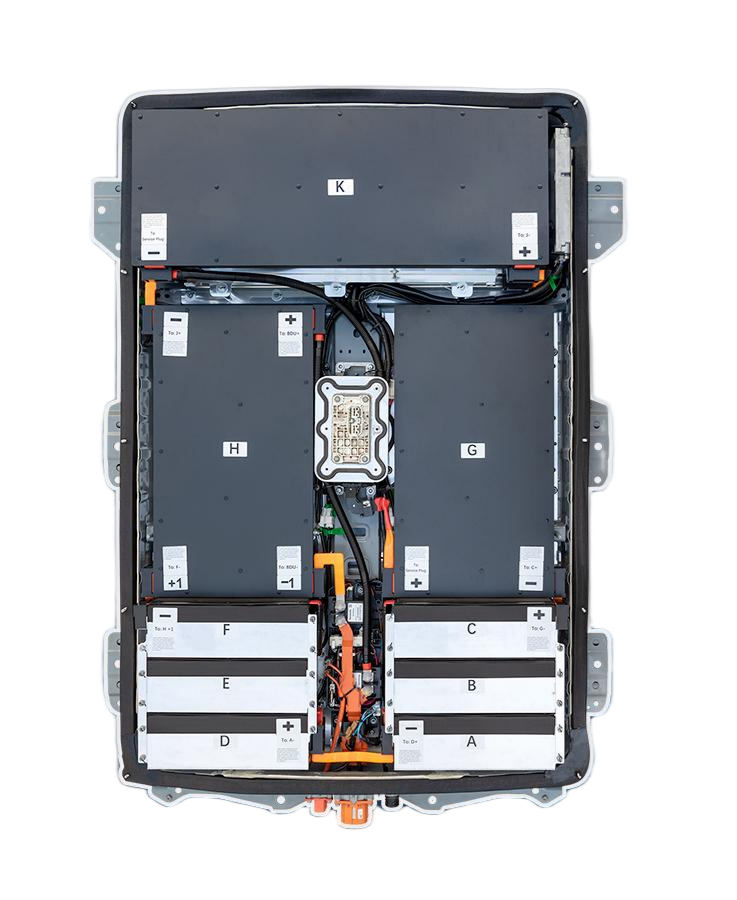
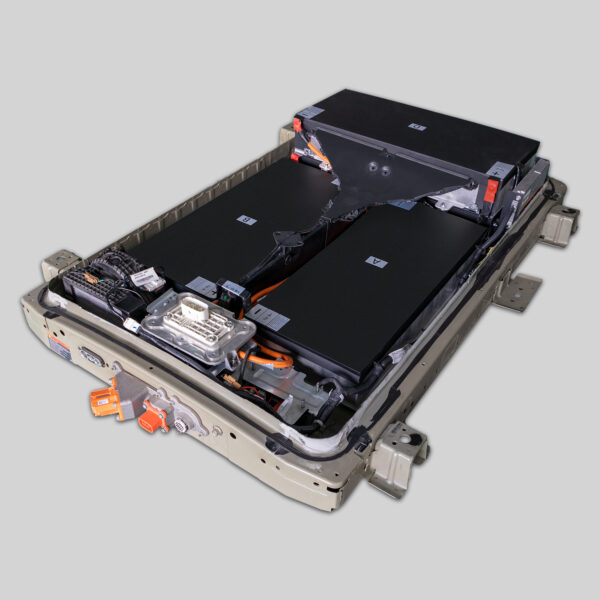
The 40kWh pack consists of 48 modules (24S2P configuration). To achieve 30kWh, you need to remove approximately 25% of the capacity.
- Open the battery enclosure.
- Identify and isolate 12 modules (removing one entire “string” or distributing the removal evenly depending on the thermal management design).
- Critical: Ensure the remaining modules are securely fastened. Loose modules cause vibration damage.
Step 3: BMS Reprogramming (The Most Crucial Step)
This is where most DIY attempts fail. You must splice and reprogram the harness.
- Update the BMS software to recognize the new module count (from 48 to 36).
- Adjust the voltage thresholds (Max/Min Cell Voltage).
- Recalibrate the SoC algorithm to reflect the 30kWh capacity.
🏆 Why Choose CNS BATTERY for Your Custom Solution?
While the tutorial above provides the technical theory, executing it safely requires pristine components and expert programming. This is where sourcing from a general scrap yard differs drastically from partnering with a manufacturer like CNS BATTERY.
We specialize in OEM-compatible solutions for Nissan and BMW, ensuring your downgrade doesn’t compromise safety.
1. New Energy, Zero Compromise
Unlike salvaged packs that may already be degraded, CNS utilizes brand-new CATL cells. When you downsize to 30kWh with us, you aren’t just reducing weight; you are upgrading to a fresh, high-grade chemistry that guarantees maximum cycle life.
2. Plug-and-Play Engineering
We eliminate the risky rewiring phase.
- Pre-Configured Packs: We manufacture the 30kWh chassis specifically, so there is no need for you to physically cut or splice the original harness incorrectly.
- Guaranteed Compatibility: Our packs are engineered to fit the e-NV200 chassis without modification.
3. Unbeatable Warranty Backing
Modifying a battery often voids warranties. However, CNS stands by its engineering with a 2-year / 80,000km warranty. This level of confidence is unmatched in the refurbished battery market.
| Feature | Standard Refurbished (Scrap) | CNS BATTERY Solution |
|---|---|---|
| Cell Quality | Used, Degraded, Mixed Health | Brand New CATL Cells |
| Warranty | Often None or 3 Months | 2 Years / 80,000km |
| Safety | Risk of Swelling/Short Circuits | OEM Standards, Zero Failure Rate |
| Cost | High Risk, Potential Rework Costs | 50% Savings vs OEM |
💡 Frequently Asked Questions (FAQ)
Q1: Is it safe to modify the Nissan e-NV200 battery size?
A: It is safe only if performed by professionals using compatible Battery Management Systems (BMS). Improper modification can lead to overcharging or fire hazards. We strongly recommend using a pre-built, professionally engineered solution like those from CNS rather than a DIY splice job.
Q2: Will the car’s software recognize a 30kWh battery?
A: The stock Nissan software expects a 40kWh or 24kWh configuration. To run a 30kWh pack, the BMS firmware must be updated to “trick” the car into recognizing the correct voltage curves. This requires specialized diagnostic tools and software patches that CNS provides with every custom order.
Q3: What is the range of a Nissan e-NV200 with a 30kWh battery?
A: A 30kWh pack typically offers a real-world range of 120-140 km (75-87 miles). This is ideal for dense urban delivery routes where the vehicle returns to base daily.
Q4: How much does a custom 30kWh upgrade cost?
A: While prices vary based on labor, the cost of the battery pack itself is significantly lower than a full 40kWh replacement. At CNS, we offer these custom solutions at roughly 50% of the OEM price, making it a highly cost-effective fleet solution.
Ready to optimize your fleet’s efficiency with a custom-engineered battery solution? Don’t risk your vehicle with uncertified scrap parts.
Contact our technical experts now for a free customization quote and ensure your Nissan e-NV200 is powered by the safest, most reliable technology on the market.