Ultimate Leaf AZE0 68kWh to 62kWh Upgrade Tutorial: Smart Swap for Long-Range Drivers
If you own a Nissan Leaf AZE0 and are facing the “range anxiety” that comes with an aging 68kWh battery, you’re likely weighing your options. Replacing it with a brand-new 68kWh pack is expensive, while a refurbished unit carries the risk of unknown degradation. However, there is a third path that balances cost, reliability, and performance: downgrading to a brand-new 62kWh battery.
This might sound counterintuitive—why go from 68kWh to 62kWh? The answer lies in the chemistry and the source. Most 68kWh Leafs originally used Lithium Nickel Manganese Cobalt Oxide (NMC) batteries, which degrade faster in harsh climates. By switching to a brand-new 62kWh Lithium Iron Phosphate (LFP) battery from a trusted OEM manufacturer like CNS Battery, you gain a longer warranty, superior thermal stability, and often better real-world longevity than your original pack.
This guide will walk you through the technical considerations, the “why” behind this specific swap, and the installation process to get your Leaf back on the road with zero anxiety.
Why Choose a 62kWh LFP Battery Over a 68kWh NMC?
Before we dive into the physical installation, let’s address the elephant in the room: Why downgrade?
- Chemistry Matters (LFP vs. NMC):
Your original 68kWh AZE0 battery is likely an NMC type. While NMC offers high energy density, it is more susceptible to degradation from heat and overcharging. The new 62kWh batteries offered by specialists like CNS utilize LFP (Lithium Iron Phosphate) technology. LFP batteries are renowned for their “iron-clad” thermal stability (much safer in summer heat), longer cycle life (often exceeding 3000+ cycles), and a flatter voltage discharge curve. - The “New” Factor:
Buying a replacement 68kWh battery usually means buying someone else’s used or refurbished battery. You inherit their wear and tear. A brand-new 62kWh battery comes with a clean slate, a 100% State of Health (SOH), and a full manufacturer warranty. - Cost Efficiency:
A brand-new 62kWh LFP pack costs significantly less than sourcing a “like-new” 68kWh NMC pack. You save money while getting a safer, newer product.
Technical Compatibility: Does it Fit?
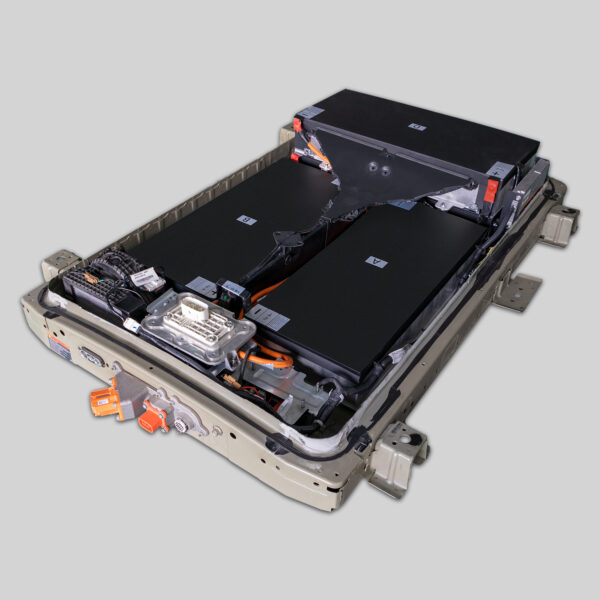
The Nissan Leaf AZE0 (2018-2022) has a very specific battery mounting system. The good news is that the physical dimensions of the 62kWh pack are compatible with the AZE0 chassis.
- Dimensions: The 62kWh pack is designed to fit the Leaf’s underbody cradle. While the kWh rating is lower, the physical footprint and the mounting bolt positions align perfectly with the AZE0 model.
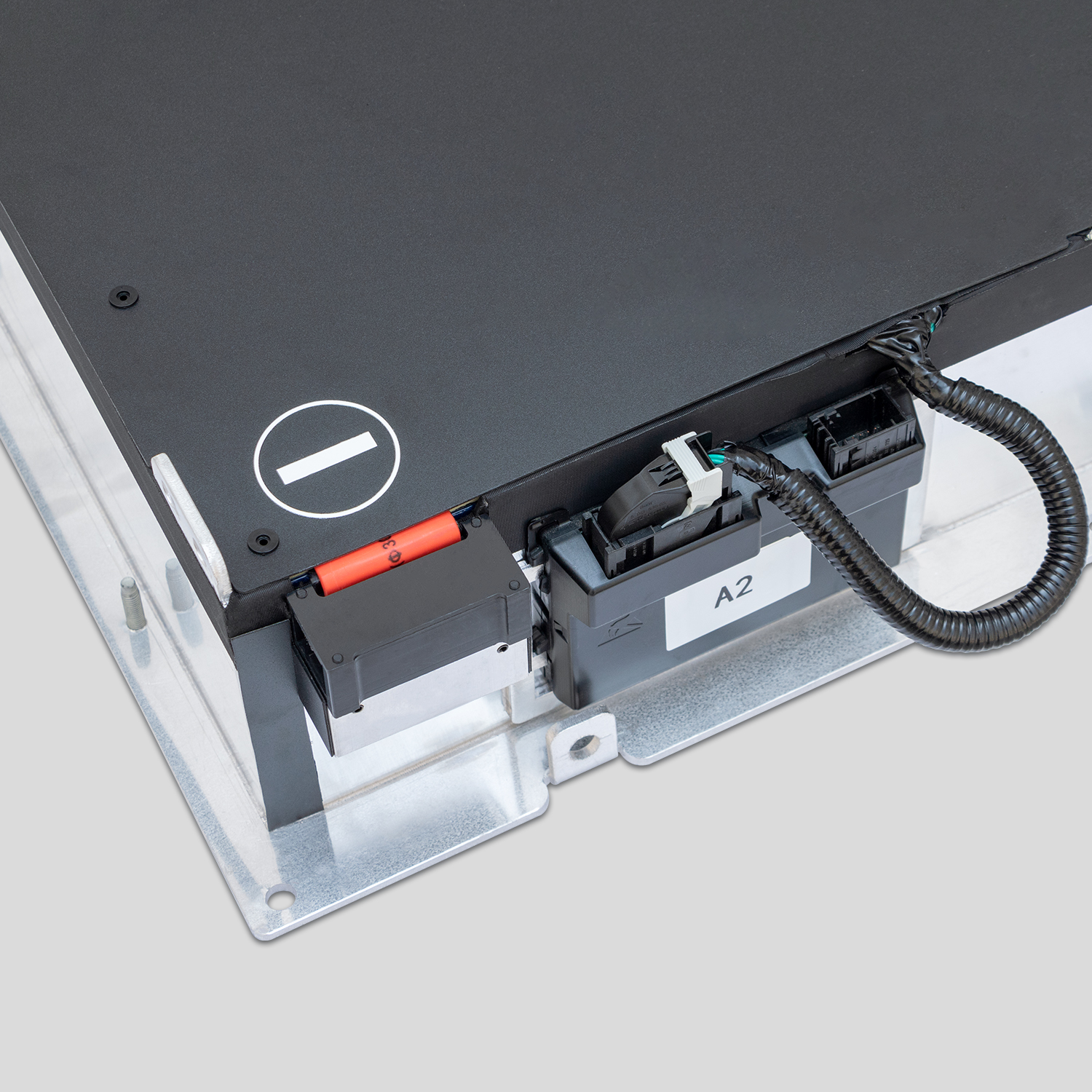
- Connectors: The high-voltage (HV) connectors and the CAN bus communication ports are identical to the OEM specifications. This is a Plug-and-Play scenario; no splicing or adapter hacking is required.
- BMS Compatibility: The Battery Management System (BMS) in the 62kWh unit is programmed to communicate seamlessly with the Leaf’s Vehicle Control Unit (VCU). You will not trigger error codes related to battery mismatch if using a professionally manufactured unit.
Step-by-Step Installation Guide
Disclaimer: While this guide provides a general overview, high-voltage battery work is dangerous. If you are not a certified EV technician, we strongly recommend having this installed by a professional. Always wear insulated gloves and safety glasses.
Tools Needed:
- Torque wrench (30-120 Nm)
- Insulated socket set
- EV Battery lift table (essential)
- Diagnostic scanner (for post-installation checks)
Phase 1: Preparation and Power Down
- Park Safely: Park the vehicle on a flat, level surface. Engage the parking brake.
- Disconnect 12V: Open the hood and disconnect the negative terminal of the 12V auxiliary battery. Wait at least 10 minutes to allow the capacitors in the inverter to discharge.
- Lift the Vehicle: Use a 4-post lift or secure jack stands to raise the vehicle high enough to fit the battery lift table underneath.
Phase 2: Removing the Old 68kWh Battery
- Remove Undertray: Remove the plastic undertray screws to expose the battery casing.
- Disconnect HV Connector: Locate the main HV connector on the side of the battery. Depress the safety latch and unclip the connector. Tape the exposed end to prevent debris ingress.
- Disconnect Cooling Lines: If equipped, disconnect the thermal coolant lines (have a drip pan ready).
- Unbolt the Battery: Remove the 16-20 retaining bolts securing the battery to the chassis. These can be tight; use appropriate leverage.
- Lower the Battery: Carefully lower the battery using the lift table. Warning: The 68kWh battery weighs approximately 380kg (838 lbs). Ensure your equipment is rated for this weight.
Phase 3: Installing the New 62kWh Battery
- Inspect the New Pack: Before lifting, inspect the new 62kWh battery for any shipping damage. Ensure the sealing strip is intact.
- Lift and Align: Carefully lift the new 62kWh battery into position. The weight is slightly less (approx. 330kg / 728 lbs), making handling easier.
- Bolt it Down: Reinstall the retaining bolts. Torque them to the manufacturer’s specification (usually 70-80 Nm). Do not overtighten, as this can crack the casing.
- Reconnect Systems: Reconnect the thermal cooling lines and the main HV connector. Ensure the latch clicks securely.
- Replace Undertray: Screw the plastic undertray back into place.
Post-Installation and Programming
This is the most critical step. Simply bolting in the battery is not enough.
- BMS Reset/Pairing: The new battery’s BMS needs to be initialized. This often requires a diagnostic tool to clear any previous error codes and allow the VCU to recognize the “new” battery parameters.
- First Charge: Once installed, perform a full charge cycle using a Level 2 charger. This helps the BMS perform its initial balancing.
- Road Test: Take the vehicle for a short drive. Monitor the battery bars and ensure there are no warning lights (like the “Car with a Key” or “Battery” light).
Real-World Performance Expectations
After the swap, you might notice a difference in the dashboard display. The Leaf’s software was designed for 68kWh, so you may see slightly fewer “bars” at full charge, or the GID (Graphics Intelligent Display) might show a slightly lower maximum range.
However, the driving experience will be vastly improved:
- Range: Expect a real-world range of 240-260 km (150-160 miles) in mixed driving, which is often more consistent than your old degraded 68kWh pack.
- Charging: LFP batteries love fast charging. You will likely see better DC fast-charge acceptance rates compared to your old, degraded NMC cells.
Why Choose a Professional Manufacturer?
While this tutorial explains the process, the success of this upgrade hinges entirely on the quality of the 62kWh battery you purchase. Generic batteries can lead to BMS failures, poor thermal management, and safety hazards.
When sourcing your 62kWh upgrade, look for manufacturers that adhere to OEM standards. For instance, CNS Battery specializes in Nissan Leaf powertrains and offers solutions specifically designed for the AZE0 model. Their batteries utilize brand-new CATL cells (the gold standard in the industry), ensuring you aren’t inheriting someone else’s battery degradation.
They also provide comprehensive support, including:
- 2-Year / 80,000 km Warranty: Far exceeding the coverage you’d get on a used 68kWh pack.
- Plug-and-Play Design: Precision-engineered to match the AZE0 chassis.
- Technical Support: Access to engineers who can guide you through the BMS programming process.
Swapping from 68kWh to 62kWh is not a downgrade in performance; it is a strategic upgrade in technology and reliability.
Ready to revive your Nissan Leaf AZE0? Don’t let a degraded battery limit your driving. Get a free, no-obligation quote for a brand-new 62kWh LFP battery designed specifically for your vehicle.
Frequently Asked Questions (FAQ)
Q1: Will my car think the battery is smaller, and will it affect the speed or power?
A: The power output (kW) of the motor remains unchanged. You will have the same acceleration and top speed. The car’s software will recognize the reduced capacity, so the estimated range on the dashboard will reflect the 62kWh size. You might see slightly fewer “bars” (e.g., 11 out of 12 instead of 12), but the driving dynamics are identical.
Q2: Is the 62kWh LFP battery really better than my old 68kWh NMC?
A: In terms of longevity and safety, yes. LFP batteries have a longer cycle life and are more resistant to thermal runaway (overheating). While NMC has a higher energy density (more range per kg), LFP compensates with durability. For most drivers, the 62kWh offers more reliable daily range than a degraded 68kWh pack.
Q3: Do I need to reprogram the car’s computer?
A: You do not need to “hack” the car’s main computer, but the Battery Management System (BMS) inside the new battery pack often requires initialization or pairing with the vehicle’s VCU. This is typically done using a diagnostic tool during installation. Professional manufacturers provide support for this process.
Q4: How much does this upgrade cost compared to a standard replacement?
A: Replacing a 68kWh battery with another used 68kWh unit can be risky and expensive due to the scarcity of healthy cells. A brand-new 62kWh LFP pack typically costs 50% less than the price of a comparable “remanufactured” 68kWh pack, while offering a full manufacturer warranty and new cell technology.