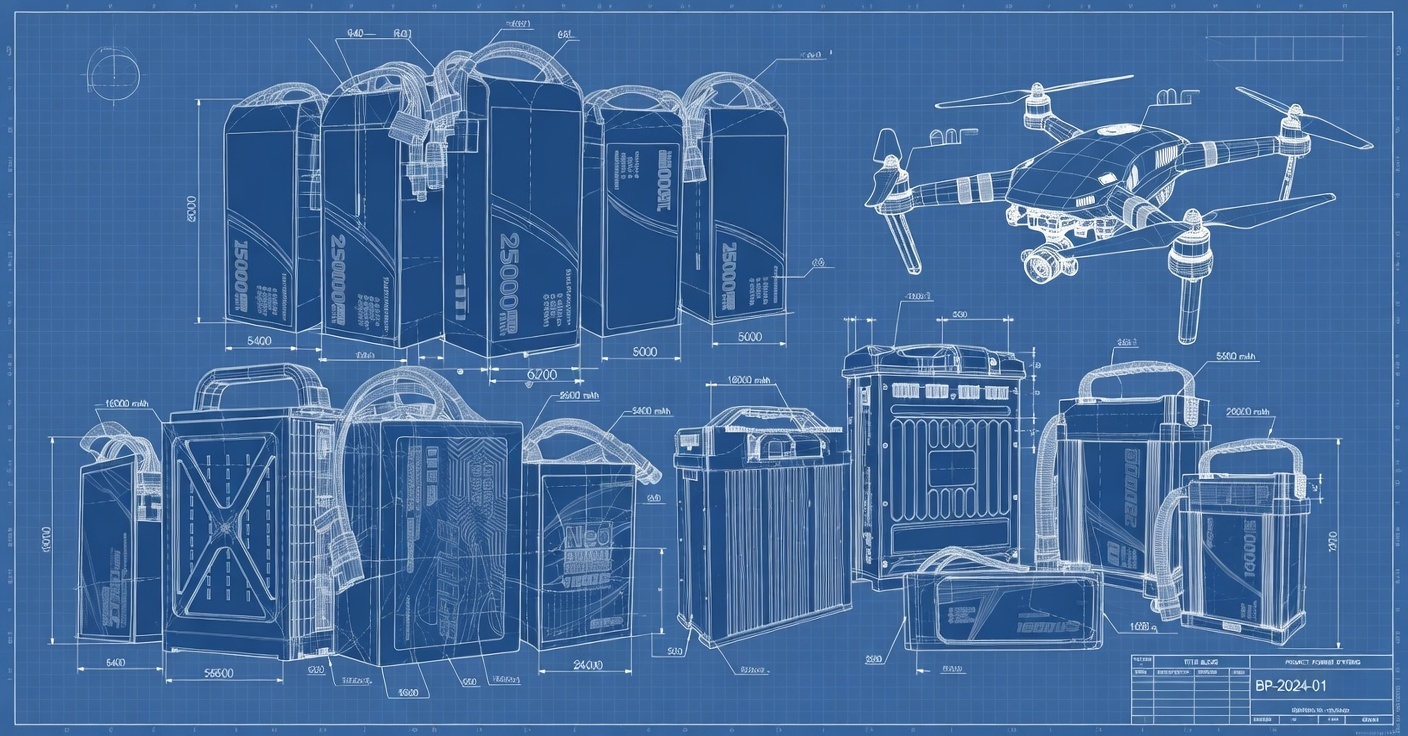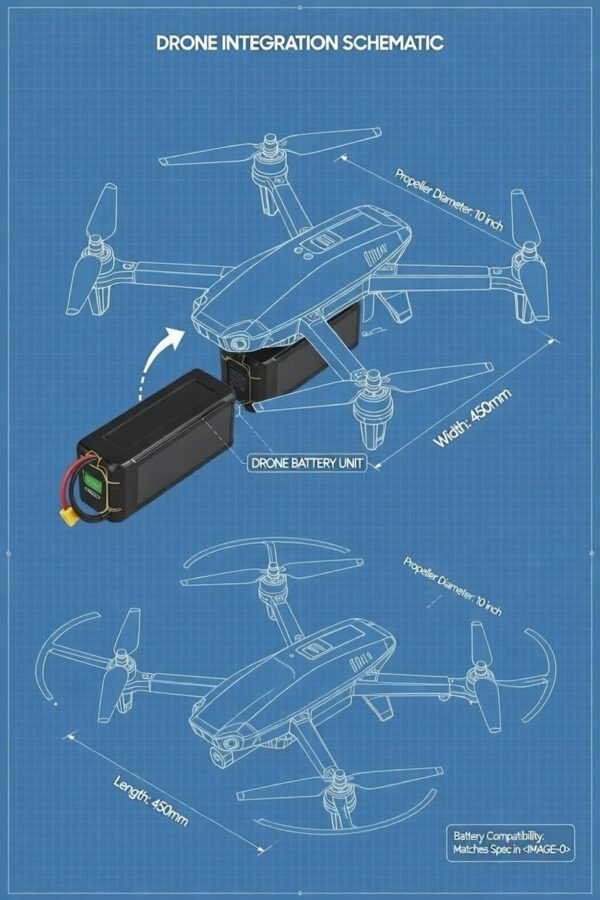
The sun rises over a remote mountain range at -20°C, and your delivery drone must launch on schedule. Meanwhile, across the globe, another operator faces 45°C desert heat while conducting critical infrastructure inspections. These scenarios represent the daily reality for low-altitude aircraft developers in 2026, where battery performance across extreme temperatures can mean the difference between mission success and costly failure.
As the low-altitude economy explodes—with China’s Guangdong province alone reporting 39% year-over-year drone production growth in 2025 and over 20 million flight operations annually—procurement teams face unprecedented pressure to secure batteries that perform reliably across wide temperature ranges. This comprehensive guide addresses the critical challenges, standards, and strategies essential for successful drone battery procurement in today’s demanding operational environments.
Understanding Temperature Challenges in Low-Altitude Aircraft Operations
Low-altitude aircraft, including drones and eVTOL vehicles, operate primarily in G airspace (below 300 meters) and W airspace (below 120 meters), where they remain highly susceptible to meteorological conditions. Unlike commercial aviation that cruises above weather systems, these vehicles must perform in everything from Arctic cold to tropical heat.
Critical Temperature-Related Performance Issues
When lithium polymer batteries encounter temperature extremes, several failure modes emerge:
- Cold Weather Performance Degradation: At temperatures below -10°C, standard LiPo batteries can lose 30-50% of their capacity. Electrolyte viscosity increases, slowing ion movement and reducing power output precisely when motors need maximum thrust for takeoff.
- High Temperature Safety Risks: Operating above 45°C accelerates chemical degradation, reduces cycle life by up to 40%, and significantly increases thermal runaway probability.
- Temperature Cycling Stress: Daily operations spanning 30°C+ temperature swings cause mechanical stress on battery components, leading to premature failure.
- Charging Limitations: Most standard drone batteries cannot be safely charged below 0°C or above 40°C without specialized management systems.
Industry Standards and Certification Requirements
Procurement decisions must align with internationally recognized standards that ensure both safety and performance across temperature ranges.
Essential Certification Framework
UN38.3 Transportation Standard: This mandatory certification includes eight critical tests that all lithium batteries must pass before air, sea, or ground transport:
- T.1 Altitude Simulation: Tests battery integrity at 11.6kPa (equivalent to 15,000 meters)
- T.2 Thermal Testing: Evaluates performance across temperature extremes from -40°C to +75°C
- T.3 Vibration: Simulates transportation stresses
- T.4 Shock: Tests impact resistance
- T.5 External Short Circuit: Verifies protection systems
- T.6 Impact/Crush: Assesses physical damage resistance
- T.7 Overcharge: Tests charging safety margins
- T.8 Forced Discharge: Evaluates deep discharge protection
IEC 62133 Safety Standard: Focuses on battery safety during normal use and reasonably foreseeable misuse, including temperature-specific testing protocols.
UL 2054 Comprehensive Testing: Provides broader safety evaluation across various application scenarios, particularly valuable for commercial drone operations.
2025-2026 Regulatory Updates
Recent guidelines from aviation authorities worldwide have tightened temperature performance requirements. The International Low-altitude Economy Expo 2025 in Guangzhou highlighted new expectations for battery documentation, requiring manufacturers to provide detailed temperature performance curves alongside traditional specifications.
Key Procurement Criteria for Wide Temperature Range Batteries
Temperature Operating Specifications
When evaluating suppliers, demand clear documentation of:
- Discharge Temperature Range: Quality wide-temperature batteries should operate from -40°C to +60°C minimum
- Charging Temperature Range: Look for 0°C to 45°C standard, with heated charging options for cold weather
- Storage Temperature Range: Typically -20°C to +45°C for long-term storage
- Temperature Coefficient: Understanding capacity loss per degree helps predict real-world performance
Battery Chemistry Considerations
Lithium Polymer (LiPo): Remains the industry standard, offering excellent power-to-weight ratios. Recent advances in electrolyte formulation from manufacturers like CATL have improved low-temperature performance significantly.
Sodium-Ion Emerging Technology: While offering slightly lower energy density, sodium-ion batteries demonstrate superior low-temperature performance and enhanced safety profiles. Industry analysts predict increased adoption for specific cold-climate applications by 2027.
Heated Battery Systems: Integrated heating elements enable operation in extreme cold but add weight and complexity. Evaluate whether the performance benefit justifies the trade-off for your specific use case.
Battery Management System (BMS) Requirements
A sophisticated BMS is non-negotiable for wide temperature operations:
- Real-time temperature monitoring across multiple cell points
- Active thermal management capabilities
- Temperature-based charge/discharge rate limiting
- Low-temperature preheating functions
- High-temperature cooling protocols
- Comprehensive data logging for performance analysis
Real-World Case Studies
Case Study 1: Arctic Survey Operations
A Canadian geological survey company required drones capable of operating at -35°C for extended mineral exploration missions. Initial procurement of standard drone batteries resulted in 60% flight time reduction and three emergency landings during the first month.
Solution: After consulting with battery specialists, they switched to custom wide-temperature batteries featuring:
- Specialized low-temperature electrolyte formulation
- Integrated cell heating system activated at -10°C
- Enhanced BMS with temperature-adaptive power management
Results: Flight time improved to 85% of rated capacity, zero emergency landings in six months, and total cost of ownership decreased 30% despite higher initial battery cost.
Case Study 2: Desert Infrastructure Inspection
A Middle Eastern energy company deployed inspection drones across facilities experiencing daytime temperatures exceeding 50°C. Standard batteries showed rapid degradation, requiring replacement every 150 cycles instead of the expected 500.
Solution: Procurement team implemented:
- High-temperature rated cells with enhanced thermal stability
- Passive cooling battery housings with reflective coatings
- Operational protocols limiting flights to morning/evening hours when possible
- Enhanced monitoring with automatic grounding at critical temperatures
Results: Battery cycle life increased to 450+ cycles, safety incidents eliminated, and inspection coverage improved 40% through reliable operations.
Supplier Evaluation Framework
Technical Capability Assessment
When vetting potential suppliers, evaluate:
- Manufacturing Quality Control: ISO 9001 certification and documented temperature testing procedures
- Testing Infrastructure: In-house environmental chambers capable of full temperature range validation
- Technical Support: Availability of engineering support for integration challenges
- Documentation Quality: Comprehensive datasheets with actual test data, not just theoretical specifications
Supply Chain Reliability
- Production Capacity: Can they scale with your growth?
- Lead Times: Typical delivery windows for standard and custom configurations
- Quality Consistency: Batch-to-batch variation data
- After-Sales Support: Warranty terms and replacement policies
Cost-Benefit Analysis
While wide-temperature batteries command 20-40% premium pricing, consider total cost of ownership:
- Reduced operational downtime
- Lower replacement frequency
- Decreased mission failure rates
- Enhanced safety reducing liability exposure
- Extended operational windows increasing asset utilization
Integration Best Practices
Pre-Deployment Testing
Before full-scale deployment:
- Conduct temperature chamber testing matching your operational environment
- Validate BMS communication with your aircraft systems
- Test charging infrastructure across temperature ranges
- Document baseline performance metrics for ongoing comparison
Operational Protocols
Develop standard operating procedures addressing:
- Pre-flight battery temperature checks
- Minimum temperature thresholds for launch
- Maximum temperature limits for charging
- Storage requirements between missions
- Emergency procedures for temperature-related anomalies
Maintenance and Monitoring
Implement systematic tracking:
- Cycle count and capacity retention monitoring
- Temperature exposure logging
- Regular performance testing schedules
- Predictive replacement based on degradation patterns
Future-Proofing Your Procurement Strategy
The low-altitude aircraft sector continues rapid evolution. NASA’s Advanced Air Mobility research and similar initiatives worldwide indicate increasing performance expectations. Procurement strategies should account for:
- Scalability: Ensure battery specifications support future aircraft upgrades
- Technology Roadmap: Understand supplier development plans for next-generation chemistries
- Regulatory Anticipation: Stay ahead of evolving certification requirements
- Sustainability Considerations: Increasing focus on battery recycling and environmental impact
Conclusion and Next Steps
Wide temperature range battery procurement represents a critical success factor for low-altitude aircraft developers operating in 2026’s demanding environment. The convergence of expanding operational scenarios, tightening regulatory requirements, and advancing battery technology creates both challenges and opportunities for procurement teams.
Success requires moving beyond basic specification matching to comprehensive supplier partnerships that deliver technical expertise, reliable quality, and ongoing support. The investment in proper wide-temperature battery solutions pays dividends through improved operational reliability, reduced total cost of ownership, and enhanced safety profiles.
Take Action Today
Don’t let temperature limitations constrain your operational capabilities. Our team specializes in matching low-altitude aircraft developers with battery solutions engineered for extreme environments. We provide:
- Custom temperature range specifications
- Full certification documentation (UN38.3, IEC 62133, UL 2054)
- Technical integration support
- Ongoing performance monitoring and optimization
Ready to optimize your drone battery procurement strategy? Contact our specialists today for a customized consultation addressing your specific temperature requirements and operational challenges.
Get Your Custom Battery Solution
Additional Resources
- Download our complete Drone Battery Temperature Performance Guide
- Access our Supplier Evaluation Checklist
- Review Case Studies from Similar Operations
- Schedule a Technical Consultation with Our Engineering Team
The sky is no longer the limit—it’s your workplace. Ensure your batteries perform wherever your missions take you.