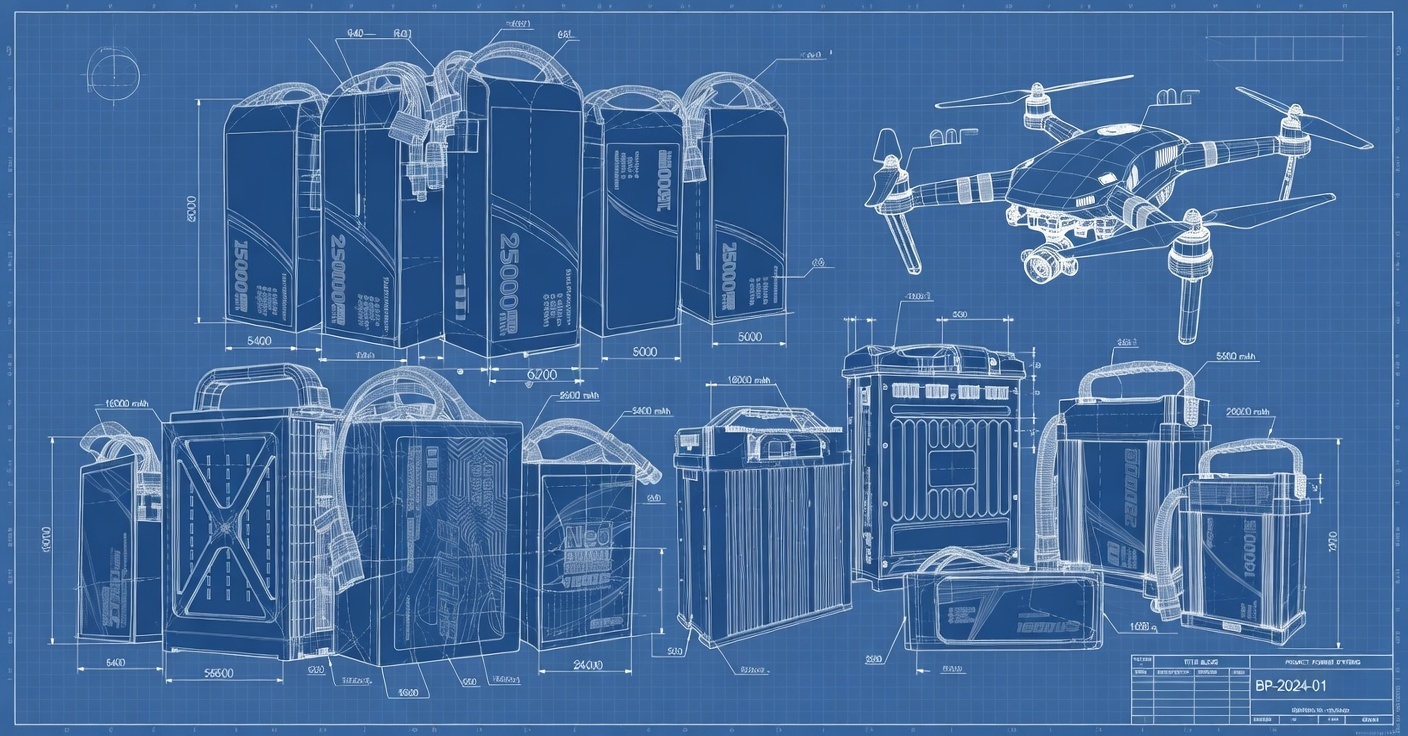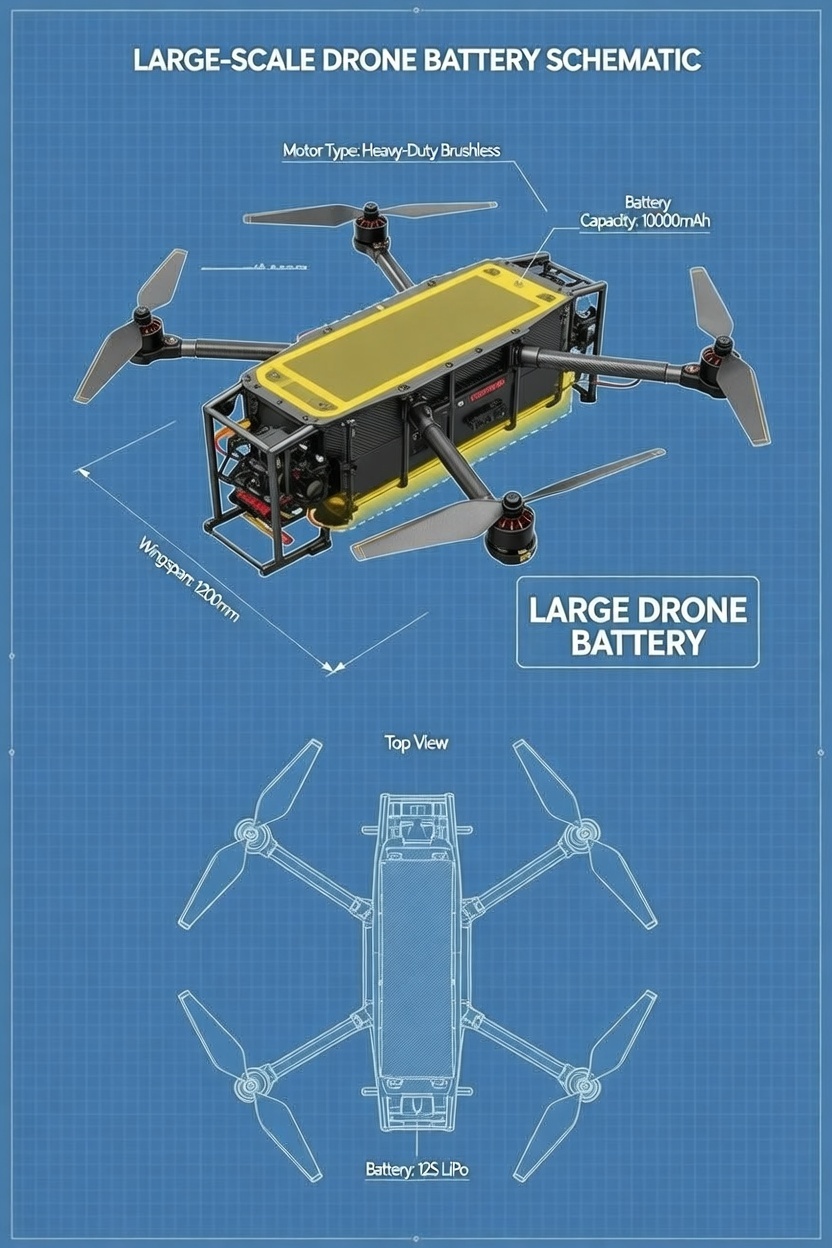
In the high-stakes world of security and surveillance, operational continuity isn’t just important—it’s mission-critical. Imagine this scenario: a surveillance drone powering critical perimeter monitoring suddenly experiences battery failure mid-flight due to compatibility issues. The consequences range from compromised security coverage to costly equipment damage and potential liability claims. For security firms deploying unmanned aerial systems (UAS), drone battery compatibility represents one of the most overlooked yet consequential technical challenges in 2026.
With the global commercial drone market projected to exceed $58 billion by 2026, security and surveillance operations increasingly depend on reliable aerial platforms. Yet, according to industry reports, nearly 40% of drone operational failures stem from power system incompatibilities. This comprehensive guide delivers ten essential technical compatibility tips specifically designed for security and surveillance firms seeking to optimize their drone battery performance, safety, and operational readiness.
H2: Understanding Drone Battery Fundamentals for Security Operations
Before diving into compatibility specifics, security firms must grasp the foundational elements of drone battery technology. Most commercial surveillance drones utilize lithium polymer (LiPo) or lithium-ion (Li-ion) battery packs, each with distinct characteristics affecting performance and compatibility.
H3: Key Battery Specifications That Matter
- Voltage Configuration: Typically 3S (11.1V) to 6S (22.2V) for commercial drones
- Capacity Ratings: Measured in milliampere-hours (mAh), ranging from 3000mAh to 20000mAh
- Discharge Rates: C-ratings determining power delivery capability
- Physical Dimensions: Critical for compartment fitment
- Connector Types: XT60, XT90, AS150, or proprietary connections
According to UL safety standards (UL1642 for cells, UL2054 for battery packs), proper specification matching prevents thermal runaway and ensures regulatory compliance. Security firms operating across multiple jurisdictions must verify batteries meet local aviation authority requirements, including the 2026 IATA Dangerous Goods Regulations mandating 30% state-of-charge limits for air transport.
H2: Top 10 Technical Compatibility Tips
H3: 1. Verify Voltage Compatibility Across Your Fleet
Voltage mismatch remains the leading cause of drone battery failures in security operations. Each drone model requires specific voltage configurations, and even minor deviations can damage electronic speed controllers (ESCs) or flight controllers.
Best Practice: Create a standardized voltage matrix documenting requirements for each drone in your fleet. For instance, DJI Matrice 300 RTK platforms require 6S configurations (22.2V nominal), while smaller surveillance quadcopters may operate on 4S (14.8V) systems. Implement color-coded labeling systems to prevent accidental mismatches during rapid deployment scenarios.
H3: 2. Match Connector Types and Implement Adapter Protocols
Connector incompatibility causes approximately 25% of battery-related operational delays. Common connector types in security drone applications include:
- XT60 (60-amp capacity)
- XT90 (90-amp capacity)
- AS150 (high-current applications)
- Proprietary smart connectors (DJI, Autel)
Case Study: A regional security firm in Texas reduced battery swap time by 67% after standardizing connector types across their 15-drone fleet and implementing quick-disconnect adapter protocols for emergency scenarios.
H3: 3. Ensure BMS Communication Protocol Compatibility
Modern drone batteries incorporate Battery Management Systems (BMS) that communicate vital data to the aircraft. Incompatible BMS protocols can prevent drones from recognizing batteries or displaying accurate charge levels.
Technical Requirement: Verify BMS communication protocols match your drone’s flight controller. Common protocols include:
- SMBus (System Management Bus)
- I2C (Inter-Integrated Circuit)
- UART (Universal Asynchronous Receiver-Transmitter)
- Proprietary digital communication (DJI Intelligent Battery System)
H3: 4. Validate Physical Dimension Tolerances
Battery compartment dimensions vary significantly between drone models. Even millimeter-level discrepancies can prevent proper installation or compromise vibration damping systems essential for surveillance camera stability.
Measurement Protocol: Document length, width, height, and mounting point positions for each battery type. Maintain 2-3mm clearance tolerances for thermal expansion during high-temperature operations.
H3: 5. Assess Temperature Operating Ranges
Security operations often occur in extreme environments—from freezing nighttime patrols to desert daytime surveillance. Battery chemistry performance varies dramatically across temperature ranges.
Industry Standard: Quality surveillance drone batteries should operate reliably between -20°C to 60°C (-4°F to 140°F). According to 2025 drone certification requirements, battery temperature shock testing must not exceed 1°C per minute change rates to prevent structural damage.
H3: 6. Confirm Charging System Compatibility
Incompatible charging systems create bottlenecks in continuous surveillance operations. Fast-charging capabilities must align with battery chemistry specifications to prevent degradation.
Charging Best Practices:
- Use manufacturer-approved chargers with matching voltage/current outputs
- Implement balanced charging for multi-cell configurations
- Monitor charging temperatures to prevent thermal events
- Maintain charging logs for compliance documentation
H3: 7. Evaluate Weight Distribution Impact
Battery weight significantly affects drone flight characteristics, particularly for surveillance platforms requiring stable camera positioning. Improper weight distribution compromises gimbal performance and image quality.
Weight Consideration: Document battery weight alongside center-of-gravity specifications. For precision surveillance work, weight variations exceeding 5% from original specifications may require flight controller recalibration.
H3: 8. Verify Regulatory Compliance and Certification
Security firms face heightened scrutiny regarding equipment certification. Battery compliance with international standards demonstrates due diligence and reduces liability exposure.
Required Certifications:
- UL 2054 (Household and Commercial Battery Systems)
- UN 38.3 (Transportation Safety Testing)
- IEC 62133 (Secondary Cells and Batteries)
- FAA Part 107 compliance documentation (US operations)
- EASA specific category authorization (European operations)
H3: 9. Implement Battery Health Monitoring Systems
Proactive battery health monitoring prevents unexpected failures during critical surveillance missions. Modern BMS systems provide real-time data on cell balance, cycle count, and internal resistance.
Monitoring Metrics:
- State of Health (SoH) percentage
- Cycle count tracking
- Internal resistance measurements
- Cell voltage balance variance
- Temperature history logs
Real-World Example: A European security contractor implemented predictive battery analytics, reducing in-flight battery failures by 89% over 18 months while extending average battery lifespan by 40%.
H3: 10. Establish Battery Rotation and Lifecycle Management
Systematic battery rotation prevents premature degradation and ensures consistent performance across your fleet. High-utilization security operations require disciplined lifecycle management.
Rotation Protocol:
- Implement FIFO (First-In, First-Out) usage patterns
- Track cycle counts per battery unit
- Schedule retirement at 80% original capacity threshold
- Maintain backup inventory at 20% of active fleet size
- Document all maintenance and testing activities
H2: Case Study: Multi-Site Security Operation Optimization
Background: SecureWatch Solutions, a multi-national security firm operating 47 surveillance drones across 12 facilities, experienced recurring battery compatibility issues causing 23% mission aborts in Q4 2025.
Challenge: Mixed drone fleet (DJI, Autel, custom platforms) with inconsistent battery specifications, charging infrastructure, and maintenance protocols.
Solution Implementation:
- Standardized battery specifications across compatible platforms
- Deployed universal charging stations with protocol detection
- Implemented centralized battery tracking software
- Trained technicians on compatibility verification procedures
- Established quarterly battery health audits
Results (6-month post-implementation):
- Mission abort rate reduced to 3%
- Battery-related equipment damage eliminated
- Operational costs decreased 31%
- Compliance audit scores improved to 98%
H2: Emerging Technologies and Future Considerations
The drone battery landscape continues evolving rapidly. Security firms should monitor these emerging developments:
- Solid-State Batteries: Promising enhanced safety and energy density (expected commercial availability 2027-2028)
- Smart Battery Authentication: Blockchain-verified battery provenance preventing counterfeit products
- Wireless Charging Systems: Enabling rapid battery swaps without connector wear
- AI-Powered Health Prediction: Machine learning algorithms forecasting battery failures before occurrence
According to IATA’s 2026 Dangerous Goods Regulations updates, lithium battery transportation requirements will become increasingly stringent. Security firms must stay informed about regulatory changes affecting battery procurement, storage, and transport.
H2: Conclusion and Action Steps
Drone battery compatibility isn’t merely a technical specification—it’s a strategic operational imperative for security and surveillance firms. The ten technical compatibility tips outlined in this guide provide a framework for building reliable, compliant, and efficient aerial surveillance capabilities.
Key Takeaways:
- Voltage and connector compatibility prevents catastrophic failures
- BMS protocol matching ensures accurate battery monitoring
- Regulatory compliance reduces liability and operational restrictions
- Proactive health monitoring extends battery lifespan and reliability
- Standardized protocols improve operational efficiency across fleets
Take Action Today: Don’t let battery compatibility issues compromise your security operations. Our team specializes in custom drone battery solutions tailored for security and surveillance applications. We provide compatibility assessments, fleet standardization consulting, and compliant battery procurement services.
Contact us for a customized battery compatibility assessment: https://cnsbattery.com/drone-battery-home/drone-battery-contact
Additional Resources:
- Explore our comprehensive drone battery specification database
- Download our battery compliance checklist for security operations
- Schedule a technical consultation with our UAS power specialists
Your surveillance missions demand uncompromising reliability. Partner with experts who understand the critical intersection of battery technology and security operations. Reach out today to optimize your drone fleet’s power systems for maximum performance, safety, and compliance.