The Silent Saboteurs of Aerial Data: Why Environmental Monitoring Drones Fail Mid-Mission
In the high-stakes world of environmental monitoring, your drone is not just a machine; it is your eyes, ears, and data logbook. When it falls from the sky—not due to pilot error, but because the battery gasped its last breath or swelled in the humidity—the cost is measured not just in dollars, but in lost ecological insights and compromised scientific integrity.
Before we dive into the future of power, let’s confront the harsh realities of the present. Understanding the risks is the first step toward building a solution that defies them.
The Core Risks in Environmental Drone Operations
| Risk Category | Primary Causes | Preventive Solution |
|---|---|---|
| Energy Depletion | Standard LiPo batteries lack sufficient energy density for long-range mapping or heavy sensor payloads. | Transition to High Energy Density cells (e.g., Semi-Solid State). |
| Environmental Failure | Moisture ingress during rainforest or coastal surveys; thermal runaway in extreme heat. | Utilize IP67-rated waterproofing and advanced Battery Management Systems (BMS). |
| Data Loss | Sudden voltage drop or cell imbalance leading to unexpected shutdown. | Implement Smart BMS with real-time telemetry and cell-level monitoring. |
The Alchemy of Air Time: Beyond Standard Lithium Polymer
For decades, the environmental sector has relied on standard Lithium Polymer (LiPo) batteries. While serviceable for hobbyists, they are the Achilles’ heel of professional monitoring. The physics are simple: standard LiPo caps out at around 150-180 Wh/kg. This forces a brutal trade-off. Do you carry the high-resolution multispectral sensor needed for vegetation analysis, or do you carry enough batteries to keep the drone airborne long enough to use it?
This is where the paradigm shifts from “just a battery” to a strategic asset.
The Energy Density Equation
To maximize your Return on Investment (ROI), you must look at the Energy Density curve. Every gram of weight saved in the battery is a gram that can be allocated to your scientific payload—or a minute added to your flight time.
- The Standard: Conventional batteries force you to carry heavy, bulky packs that only last 15-20 minutes.
- The Innovation: By leveraging Semi-Solid State technology, we have shattered the energy density barrier. By utilizing NMC 811 chemistry (80% Nickel, 10% Manganese, 10% Cobalt) combined with silicon-carbon anodes, we achieve densities of up to 380 Wh/kg.
What does this mean for your mission?
If you currently achieve 20 minutes of flight time with a standard pack, upgrading to a 380 Wh/kg solution effectively doubles your energy storage without increasing weight. This translates directly to longer survey windows, fewer battery swaps in the field, and a drastic reduction in the number of batteries you need to purchase for a fleet.
Engineering the Unseen: The CNS Approach to OEM/ODM
When you partner with a manufacturer for OEM/ODM solutions, you are not just buying cells; you are buying engineering. Generic off-the-shelf batteries are designed for the lowest common denominator. Environmental monitoring requires the highest common denominator.
1. The Thermal Fortress
Environmental drones operate in the extremes. From the freezing altitudes of glacial surveys to the sweltering humidity of mangrove swamps, temperature is the enemy of lithium.
Our engineering approach utilizes a “Thermal Fortress” design:
- Material Science: We utilize superior Japanese and Korean Lithium Polymer raw materials that are inherently more stable.
- Structural Design: Our batteries feature optimized heat dissipation pathways. Unlike standard pouch cells that trap heat, our design allows for rapid thermal transfer, preventing the “thermal runaway” that causes swelling and fires.
- Low-Temperature Performance: We engineer cells that support max 3C discharge at -30°C, ensuring that your drone doesn’t lose power the moment it hits the cold air.
2. The Smart Sentinel (BMS)
In environmental monitoring, data is king. A dead battery in the middle of a transect means corrupted data sets. Our Battery Management System (BMS) is the sentinel that protects your investment.
- Real-Time Telemetry: The BMS communicates with your ground station, providing live data on cell voltage, current, and temperature.
- Predictive Maintenance: By monitoring the State of Health (SOH), the BMS alerts you before a cell fails, allowing for proactive replacement rather than catastrophic failure.
- Anti-Spark Technology: During connection, our MOS switch configuration prevents sparking, a critical safety feature when operating in dry, fire-prone ecosystems.
The ROI Calculator: Why High Density Saves You Millions
Let’s cut through the marketing fluff and talk dollars and cents. The argument for High Energy Density batteries is not about “cool tech”—it is about Total Cost of Ownership (TCO).
Imagine you are managing a fleet of 10 drones for a forestry commission.
- Scenario A (Standard LiPo): Each drone needs 5 batteries to complete a day’s work (20 min flight time). That is 50 batteries. These batteries degrade quickly (200 cycles), meaning you replace them annually.
- Scenario B (High Density Semi-Solid): Each drone needs only 2 batteries to complete the same work (45+ min flight time). That is 20 batteries. These batteries last over 500 cycles.
The Math:
You have reduced your inventory needs by 60%. You have reduced your replacement frequency by 60%. You have reduced your logistics weight by 60%. This is how you maximize ROI.
The Blueprint for Your Mission
To successfully deploy these solutions, you need a blueprint. You cannot retrofit a standard drone with a semi-solid state battery without considering the integration.
- Payload Integration: The first step is to define your sensor suite. Is it LiDAR? Multispectral? Thermal? We match the voltage (4S to 24S) and capacity (16Ah to 99Ah) to your specific power draw.
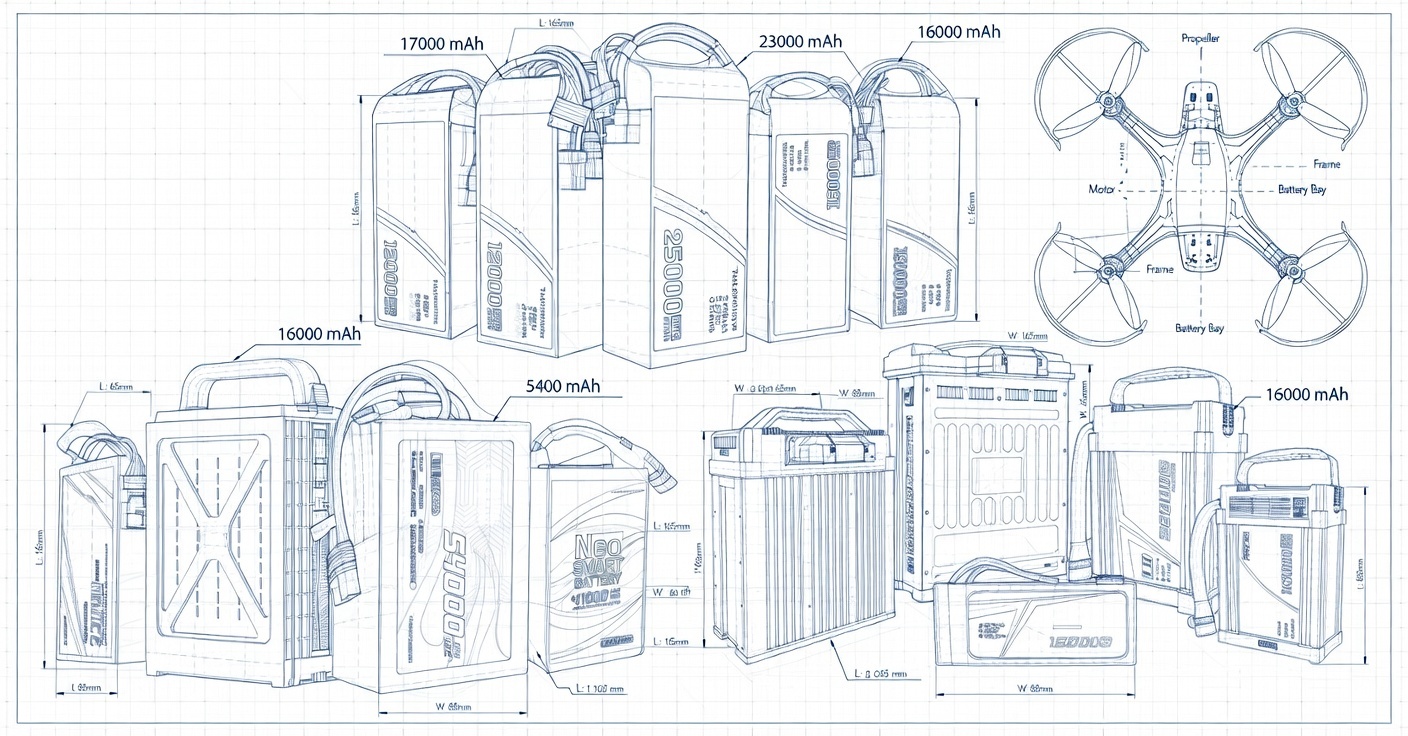
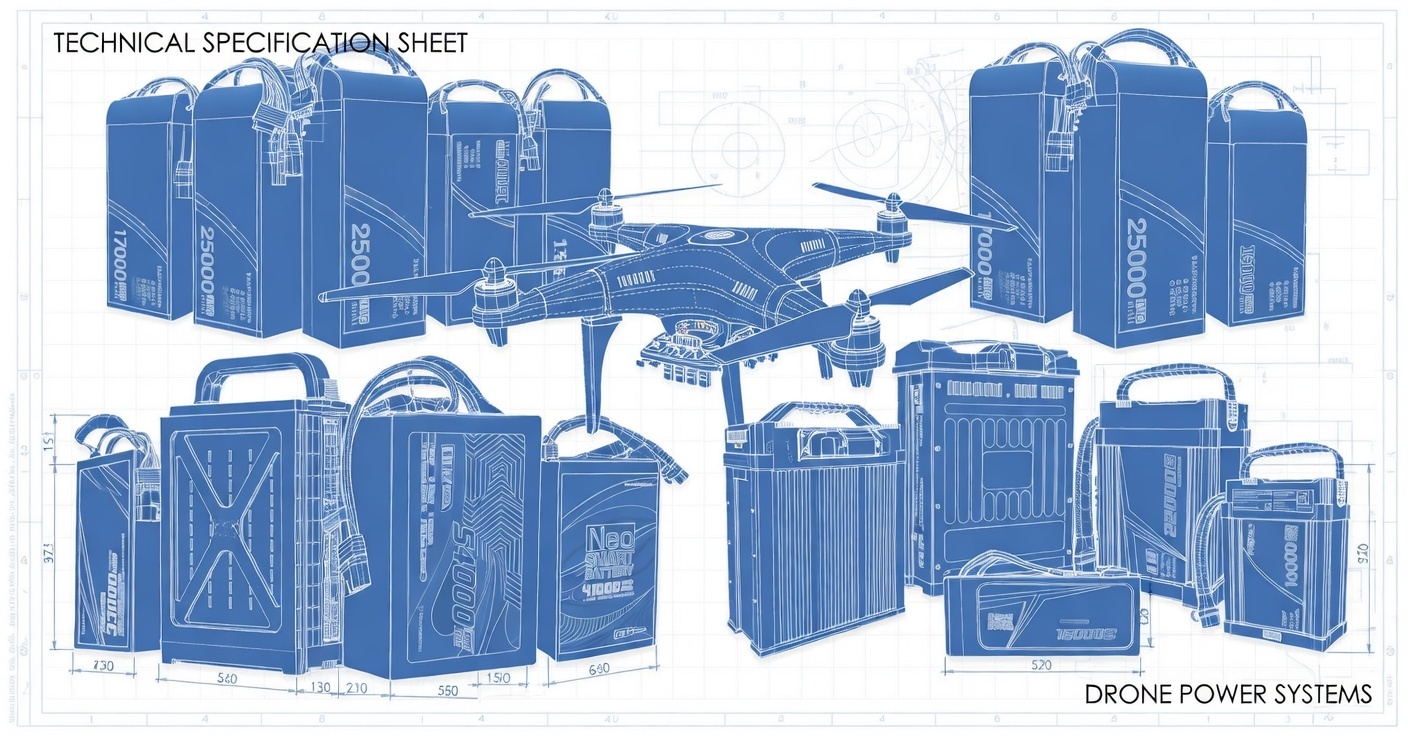
- Form Factor: Drones come in all shapes. Our OEM/ODM process allows for customizable shapes. We can design the battery to fit your airframe, not force your airframe to fit our battery.
- Connectors: We support a vast array of industry-standard connectors (XT60, XT90, AS150U, QS Series) to ensure plug-and-play compatibility with your existing infrastructure.
The Future is Solid: A Call to Innovation
The era of being tethered to the ground by battery limitations is over. The transition to Solid State and Semi-Solid State technology is not just an incremental upgrade; it is a quantum leap in how we interact with our environment from the air.
If you are tired of the “battery dance”—swapping packs every 15 minutes, worrying about the rain, or watching your budget evaporate on replacements—it is time to engineer a change.
Ready to calculate your savings?
Stop letting standard batteries limit your scientific reach. Explore how our engineering team can design a Custom Drone Battery solution that fits your specific environmental monitoring rig. Whether you need a 380 Wh/kg monster for polar expeditions or a ruggedized pack for agricultural spraying, we have the expertise.
Explore our Industrial Drone Battery Specifications
Learn more about our technical capabilities and product range
Connect with our experts today to start your customization journey.
Contact Us for a Free Technical Assessment
Further Reading: