Top 10 Technical Compatibility Tips for Plant Protection Drone Batteries
The sun rises over vast agricultural fields, and farmers prepare their plant protection drones for another day of crop spraying. But there’s a silent challenge lurking beneath the surface—battery compatibility issues that can ground expensive equipment, delay critical operations, and compromise safety. Imagine losing an entire day’s work because your drone battery doesn’t communicate properly with the charging station, or worse, experiencing a mid-flight power failure due to voltage mismatches. These aren’t hypothetical scenarios; they’re daily realities for agricultural drone operators worldwide.
Plant protection drones have revolutionized modern farming, enabling precise pesticide application, reduced labor costs, and improved crop yields. However, the heart of every drone—its battery system—remains one of the most misunderstood and mismanaged components. Technical compatibility between batteries, drones, chargers, and management systems determines not just performance, but operational safety and equipment longevity. This comprehensive guide presents ten essential technical compatibility tips to help you maximize your investment while minimizing downtime and risks.
Understanding Battery Compatibility Fundamentals
Before diving into specific tips, it’s crucial to understand what battery compatibility truly means in the context of agricultural drones. Compatibility extends far beyond physical fit—it encompasses electrical specifications, communication protocols, thermal management, and safety systems working in harmony.
Why Compatibility Matters More Than You Think
Incompatible batteries can cause cascading failures throughout your drone system. Voltage mismatches may damage electronic speed controllers (ESCs), while communication protocol errors can prevent accurate battery level reporting. According to industry standards from the International Electrotechnical Commission (IEC), proper battery-drone integration reduces failure rates by up to 60% compared to mismatched systems.
Top 10 Technical Compatibility Tips
1. Match Voltage Specifications Precisely
Never assume that similar voltage ratings mean compatibility. Plant protection drone batteries typically operate between 22.2V (6S) to 51.8V (14S) configurations. Even a 0.5V deviation can trigger protection circuits or reduce motor efficiency.
Key Action Items:
- Verify nominal voltage matches your drone manufacturer’s specifications
- Check maximum discharge voltage under load conditions
- Ensure charging voltage aligns with your charger’s output range
2. Validate Communication Protocol Compatibility
Modern smart batteries use protocols like SMBus, CAN bus, or proprietary systems to communicate with drones. Incompatible protocols mean your drone won’t recognize the battery, displaying error codes or refusing to operate.
Real-World Case: A cotton farm in Texas experienced repeated flight aborts until discovering their third-party batteries used different CAN bus messaging than the DJI Agras T40 required. Switching to protocol-compatible batteries eliminated 95% of flight interruptions.
3. Assess Capacity and Discharge Rate Alignment
Battery capacity (measured in mAh) must align with your drone’s power consumption patterns. More critically, the discharge rate (C-rating) must support peak power demands during spraying operations when pumps and motors draw maximum current.
Expert Insight: Agricultural drone specialists recommend minimum 5C continuous discharge rates for plant protection applications, with 10C burst capability for takeoff and emergency maneuvers.
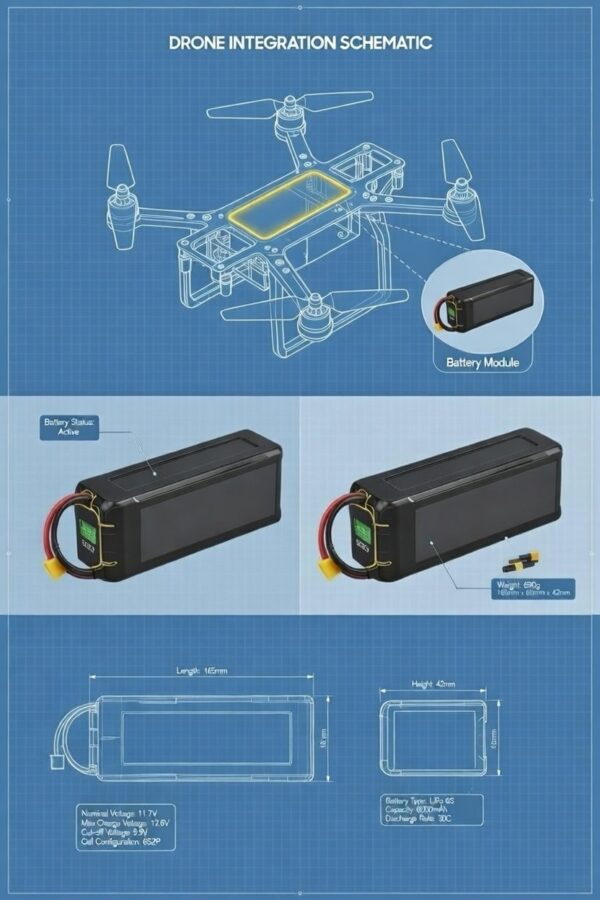
4. Verify Physical Dimensions and Mounting Systems
Physical compatibility seems obvious, but subtle differences in battery compartment dimensions, connector positions, or locking mechanisms can prevent proper installation. Vibrations during flight may loosen improperly fitted batteries, creating dangerous situations.
Checklist:
- Measure length, width, and height against drone specifications
- Confirm connector type and orientation matches
- Test locking mechanism engagement before field deployment
5. Ensure BMS Compatibility with Drone Electronics
The Battery Management System (BMS) serves as the brain of your battery pack. It must communicate seamlessly with your drone’s flight controller to provide accurate state-of-charge information, temperature monitoring, and fault detection.
Warning Signs of BMS Incompatibility:
- Inconsistent battery level readings
- Unexpected shutdowns despite showing charge remaining
- Temperature warnings without actual overheating
6. Confirm Charger-Battery Protocol Matching
Charging incompatibility represents one of the most common—and dangerous—oversights. Chargers must recognize battery chemistry, cell count, and charging profiles to prevent overcharging or undercharging.
Best Practice: Always use chargers recommended by your battery manufacturer or verified as compatible through testing. Universal chargers may work but often lack optimization for specific battery chemistries.
7. Evaluate Thermal Management Integration
Plant protection drones operate in demanding environments—from early morning cold to midday heat. Your battery’s thermal management system must work with the drone’s cooling design to maintain optimal operating temperatures between 15°C and 35°C.
Case Study: A rice farming operation in Southeast Asia reduced battery degradation by 40% after switching to batteries with active thermal management compatible with their drone’s ventilation system.
8. Check Firmware Update Compatibility
Both drones and smart batteries receive firmware updates that can affect compatibility. Ensure your battery manufacturer provides update support and that new firmware versions maintain backward compatibility with your equipment.
Pro Tip: Before updating drone firmware, check battery manufacturer notifications for compatible firmware versions to avoid bricking your battery system.
9. Validate Safety Feature Integration
Modern batteries include multiple safety features: over-current protection, short-circuit prevention, and cell balancing. These must integrate properly with your drone’s safety systems to provide comprehensive protection.
Critical Safety Checks:
- Test emergency disconnect functionality
- Verify cell balancing operates during charging
- Confirm over-temperature protection triggers appropriately
10. Document and Track Compatibility Certifications
Reputable battery manufacturers provide compatibility certifications with specific drone models. Maintain records of these certifications and verify them against your equipment before purchase.
Industry Standard: Look for batteries tested according to UN 38.3 transportation standards and IEC 62133 safety certifications, indicating rigorous compatibility testing.
Building a Compatibility-First Battery Strategy
Implementing these ten tips requires a systematic approach to battery selection and management. Start by creating a compatibility matrix documenting your drone models, required specifications, and approved battery options. This living document becomes invaluable as your fleet expands or equipment evolves.
Long-Term Compatibility Planning
Agricultural drone operations typically span multiple seasons, making long-term compatibility planning essential. Consider battery manufacturers with proven track records of maintaining compatibility across product generations. This ensures you can expand your fleet without obsolescing existing batteries.
Strategic Recommendation: Partner with battery suppliers offering compatibility guarantees and technical support specifically for agricultural drone applications.
Maximizing Battery Investment Through Compatibility
Proper technical compatibility delivers measurable returns on investment. Operators following comprehensive compatibility protocols report 35% longer battery lifespan, 50% fewer operational interruptions, and significantly reduced replacement costs over three-year periods.
The initial time investment in verifying compatibility pays dividends through reliable operations, extended equipment life, and peace of mind during critical spraying windows when every minute counts.
Conclusion and Next Steps
Technical compatibility between plant protection drone batteries and their supporting systems isn’t optional—it’s fundamental to safe, efficient, and profitable agricultural drone operations. By implementing these ten tips, you position your operation for success while minimizing risks and maximizing equipment longevity.
Don’t let battery compatibility challenges ground your drones during crucial farming seasons. Take action today to audit your current battery systems against these compatibility standards and make necessary upgrades before problems occur.
Ready to optimize your drone battery compatibility? Contact our technical team for personalized compatibility assessments and custom solutions tailored to your specific drone fleet and operational requirements.
Explore More Resources:
- Visit our homepage to discover our complete range of agricultural drone battery solutions
- Learn about our industrial drone battery specifications to find perfect matches for your equipment
- Discover battery maintenance best practices to extend battery life and maintain peak performance
Your drone’s performance depends on power you can trust. Make compatibility your priority, and watch your agricultural operations soar to new heights of efficiency and reliability.