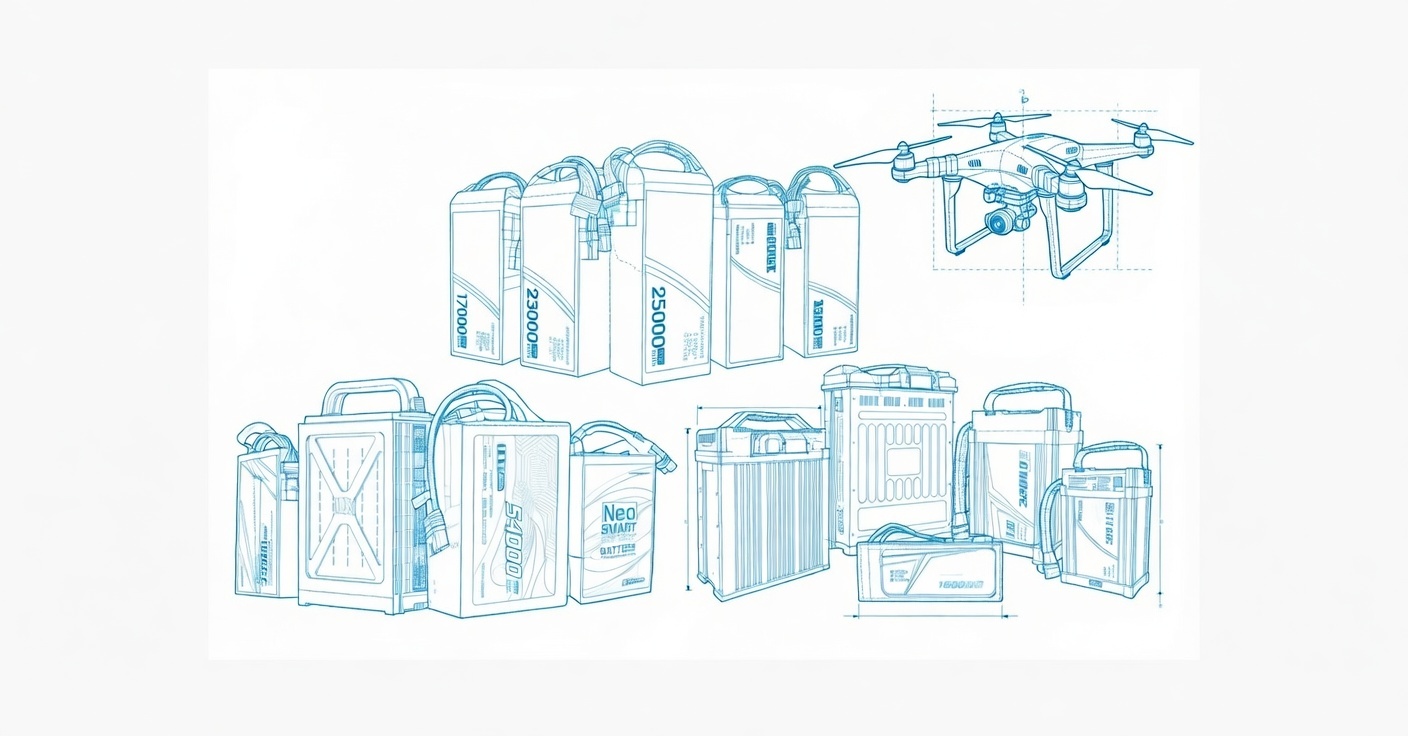
In the rapidly evolving world of industrial inspection, pipeline monitoring drones have become indispensable tools for maintaining critical infrastructure. These aerial workhorses traverse vast distances, capturing high-resolution data while navigating challenging terrains. However, their effectiveness hinges on one crucial component: battery performance. Understanding how to optimize fast charging for pipeline monitoring drone batteries can dramatically enhance operational efficiency, reduce downtime, and extend equipment lifespan.
Why Fast Charging Matters for Pipeline Operations
Pipeline inspection demands continuous operation across remote locations. When a drone battery dies mid-mission, the consequences extend beyond simple inconvenience. Inspection schedules slip, safety risks increase, and operational costs skyrocket. Fast charging technology addresses these challenges by minimizing ground time between flights. Modern lithium polymer batteries designed for industrial drones can now achieve 80% capacity in under 30 minutes when properly managed.
The advantages multiply when considering large-scale pipeline networks spanning hundreds of miles. Teams equipped with fast-charging capabilities can complete three to four times more inspection cycles per day compared to traditional charging methods. This efficiency translates directly into cost savings and improved data collection continuity.
Understanding Your Drone Battery Chemistry
Before diving into charging optimization, operators must understand their battery’s fundamental characteristics. Most pipeline monitoring drones utilize lithium polymer (LiPo) or lithium-ion (Li-ion) battery packs. These chemistries offer excellent energy density but require precise charging protocols to maintain safety and longevity.
LiPo batteries typically operate within a voltage range of 3.0V to 4.2V per cell. Exceeding these parameters risks permanent damage or thermal events. Smart chargers with balance charging capabilities monitor individual cell voltages, ensuring uniform charging across the entire pack. This balance proves critical for maintaining consistent flight performance throughout the battery’s lifecycle.
Top 10 Fast Charging Tips
1. Invest in High-Quality Smart Chargers
Not all chargers deliver equal performance. Professional-grade smart chargers communicate directly with battery management systems, adjusting charging rates based on temperature, cell balance, and current state of charge. These intelligent devices prevent overcharging while maximizing charging speed within safe parameters.
Example: A 6S LiPo battery pack rated at 22,000mAh benefits from a charger offering 5A to 10A output with balance charging functionality. This configuration achieves full charge in approximately 2-3 hours while maintaining cell health.
2. Maintain Optimal Battery Temperature
Battery temperature significantly impacts charging efficiency and safety. Ideal charging occurs between 15°C and 25°C (59°F to 77°F). Cold batteries charge slower and risk lithium plating, while hot batteries face increased degradation and safety concerns.
Step-by-Step Guide:
- Allow batteries to rest for 15-20 minutes after flight before charging
- Store batteries in temperature-controlled environments
- Use battery warmers in cold weather conditions
- Never charge batteries immediately after intensive flight sessions
3. Implement Proper Storage Voltage
When batteries remain unused between missions, storage voltage becomes critical. Maintaining cells at 3.8V to 3.85V per cell prevents degradation during idle periods. This practice ensures batteries remain ready for fast charging when needed.
Long-term storage at full charge accelerates capacity loss, while deep discharge risks permanent damage. Smart storage solutions automatically maintain optimal voltage levels, extending battery lifespan by 30% or more.
4. Utilize Parallel Charging Systems
For operations requiring multiple drones, parallel charging boards enable simultaneous charging of several battery packs. This approach maximizes charger efficiency while reducing overall charging time per battery.
Important Safety Note: Only parallel charge batteries with matching cell counts, similar voltage levels (within 0.1V per cell), and comparable capacity ratings. Mismatched batteries create dangerous imbalances.
5. Monitor Charge Cycles and Battery Health
Tracking charge cycles helps predict battery replacement needs before failures occur. Most industrial drone batteries maintain optimal performance through 300-500 complete charge cycles. Beyond this threshold, capacity gradually diminishes.
Modern battery management software provides real-time health metrics including internal resistance, capacity retention, and cell balance. Regular monitoring identifies deteriorating batteries before they compromise mission safety.
6. Avoid Deep Discharge During Operations
Allowing batteries to discharge below 20% capacity stresses cells and reduces overall lifespan. Pipeline inspection missions should include buffer capacity for unexpected delays or extended flight requirements.
Best Practice: Plan missions with 30% reserve capacity. This buffer accommodates wind resistance, extended hover time for detailed inspections, and safe return margins.
7. Use Manufacturer-Recommended Charging Rates
While faster charging seems appealing, exceeding manufacturer specifications risks permanent damage. Charging at 1C (one times capacity) represents the standard safe rate. Some advanced batteries support 2C or higher rates, but only when explicitly rated for such performance.
Example Calculation: A 22,000mAh battery charged at 1C requires 22A current. At 2C, this increases to 44A, halving charging time but potentially reducing cycle life.
8. Implement Rotation Systems for Battery Fleets
Operations utilizing multiple batteries benefit from systematic rotation. This approach ensures even wear across all packs while maintaining consistent availability. Label batteries with cycle counts and retirement dates for effective fleet management.
Rotation Strategy:
- Number all batteries sequentially
- Track individual cycle counts
- Retire batteries reaching end-of-life thresholds simultaneously
- Maintain 20% spare capacity for unexpected demands
9. Protect Against Environmental Contaminants
Pipeline inspection often occurs in harsh environments containing moisture, dust, and chemical exposure. These contaminants compromise charging connections and battery integrity. Regular cleaning and protective storage prevent corrosion and connection failures.
Use dielectric grease on charging contacts, store batteries in sealed containers, and inspect connectors before each charging session. These simple precautions prevent costly failures and safety incidents.
10. Establish Standardized Charging Protocols
Consistency drives safety and performance. Documented charging protocols ensure all team members follow identical procedures regardless of shift or location. These standards should cover charging location requirements, safety equipment, emergency procedures, and quality checkpoints.
Protocol Elements:
- Designated charging areas with fire suppression
- Mandatory safety equipment including fire extinguishers
- Pre-charging inspection checklists
- Post-charging verification procedures
- Emergency response protocols
Real-World Application: Pipeline Inspection Case Study
Consider a natural gas pipeline inspection project covering 200 miles across varied terrain. The operation utilizes three drones with six battery packs each. Implementing the fast charging tips above transformed operational efficiency:
Before Optimization:
- Average charging time: 90 minutes per battery
- Daily flight cycles: 8-10
- Mission completion: 14 days
After Optimization:
- Average charging time: 45 minutes per battery
- Daily flight cycles: 18-22
- Mission completion: 7 days
This 50% reduction in project timeline demonstrates the tangible impact of proper battery management on operational success.
Future-Proofing Your Battery Investment
Battery technology continues advancing rapidly. Solid-state batteries promise higher energy density and faster charging capabilities within the next few years. However, current lithium polymer technology remains the industry standard for pipeline monitoring drones.
Investing in quality batteries and charging infrastructure today provides immediate benefits while preparing operations for future upgrades. Modular charging systems accommodate new battery technologies without complete infrastructure replacement.
Conclusion
Mastering fast charging for pipeline monitoring drone batteries requires knowledge, discipline, and proper equipment. The ten tips outlined above provide a comprehensive framework for optimizing battery performance while maintaining safety standards. Operations implementing these practices experience reduced downtime, extended equipment life, and improved mission success rates.
Remember that battery management represents an ongoing commitment rather than a one-time setup. Regular training, protocol updates, and technology assessments ensure charging practices remain aligned with evolving industry standards and manufacturer recommendations.
For professional guidance on drone battery selection, charging solutions, and customized fleet management strategies, reach out to our expert team. Visit our contact page at https://cnsbattery.com/drone-battery-home/drone-battery-contact to discuss your specific pipeline monitoring requirements and discover how optimized battery management can transform your operational efficiency.
The investment in proper battery charging practices pays dividends through every successful mission, every completed inspection, and every mile of pipeline protected through proactive monitoring. Your drones represent significant capital investment—maximize their potential through intelligent battery management today.