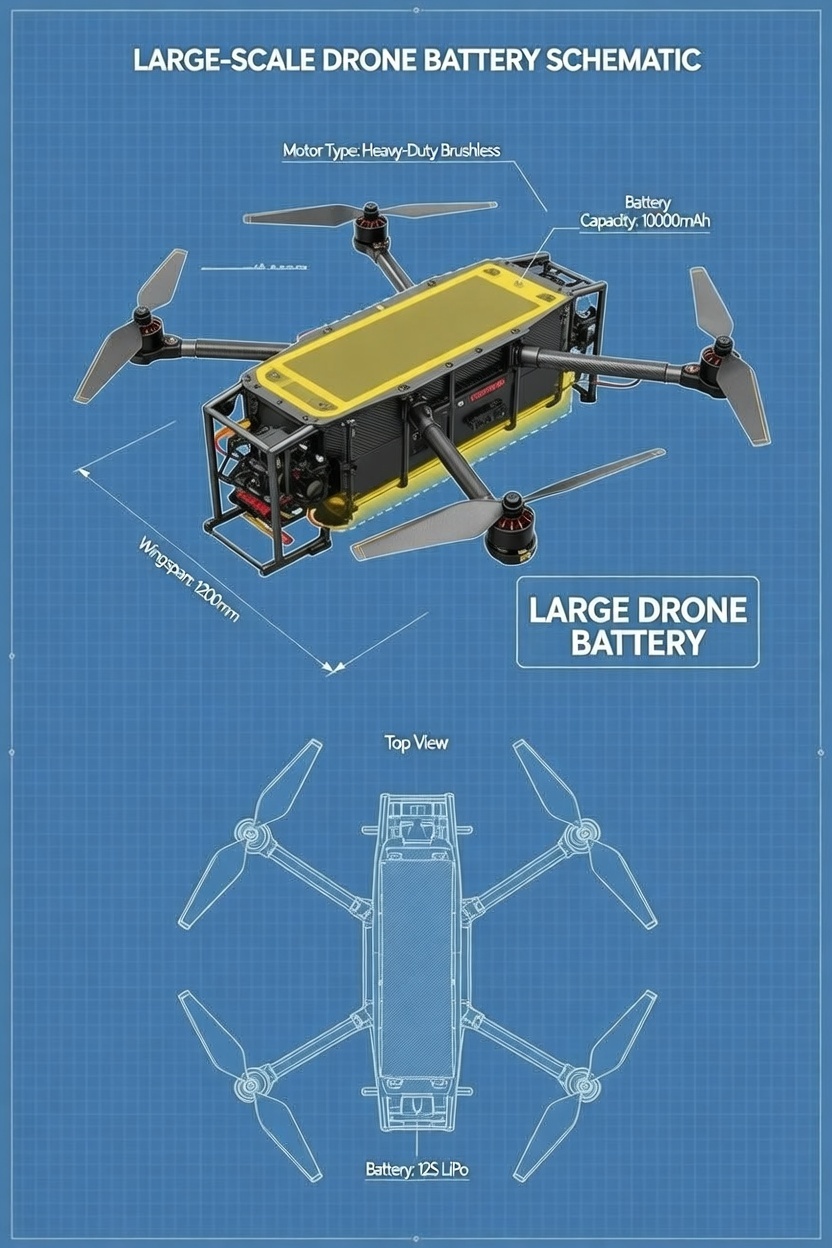
The Ultimate Buyer’s Guide to High-Voltage Drone Batteries for Businesses
In the fast-paced world of commercial drone operations, the margin between success and stagnation often boils down to one critical factor: power efficiency. For businesses operating in logistics, surveying, or inspection, standard voltage batteries frequently present a bottleneck, limiting flight times and payload capacity. This guide cuts through the technical noise to deliver a strategic roadmap for upgrading your fleet with high-voltage (HV) drone batteries.
We will dissect the specific advantages of HV technology, from the enhanced energy density of Lithium High Voltage (LiHV) cells to the robust performance of Semi-Solid State solutions. You will learn how to evaluate Total Cost of Ownership (TCO), navigate safety certifications, and select a partner capable of true customization. By the end of this article, you will possess the framework necessary to make an informed decision that extends your operational range and maximizes your Return on Investment (ROI).
Why Standard Voltage is Holding Your Business Back
For many B2B drone operators, the frustration is palpable. You purchase a high-end drone, only to find that the standard 3.7V/4.2V Lithium Polymer (LiPo) batteries deplete faster than your data collection schedule allows. This forces teams into a cycle of constant landings, battery swaps, and recharges, drastically reducing the number of missions completed in a single day.
The physics are unforgiving: standard voltage systems require higher current to deliver the same power as a high-voltage system. This higher current generates more heat, leading to energy loss and placing stress on the Electronic Speed Controllers (ESCs). For a business, this translates directly into increased operational costs and slower data acquisition.
The Strategic Advantage of High-Voltage Technology
Moving beyond the standard involves understanding the distinct categories of high-voltage solutions available. The market generally offers two primary paths: Lithium High Voltage (LiHV) and Ultra-High Voltage Semi-Solid State batteries.
Lithium High Voltage (LiHV) Batteries
These represent the first step up from standard LiPo. While a standard cell peaks at 4.2V, an HV cell can reach 4.35V, and an Ultra-High Voltage cell can push to 4.45V. This seemingly small increase has a massive impact on energy density.
Semi-Solid State Batteries
For operations demanding the absolute maximum endurance, Semi-Solid State technology is the frontier. These batteries utilize NMC 811 chemistry (80% Nickel, 10% Manganese, 10% Cobalt) combined with a semi-solid electrolyte. The result is an energy density that can soar up to 380Wh/kg, effectively increasing flight endurance by approximately 30% compared to standard packs.
Performance Metrics: HV vs. Standard
To visualize the impact of this technology, consider the following comparison of key performance indicators.
| Feature | Standard LiPo (3.7V) | High Voltage LiHV (3.8V+) | Semi-Solid State (4.45V) |
|---|---|---|---|
| Energy Density | ~210 Wh/kg | ~240-290 Wh/kg | Up to 380 Wh/kg |
| Flight Time Gain | Baseline | +15% to 20% | +30% or more |
| Heat Generation | High (Energy Loss) | Moderate | Low (High Efficiency) |
| Best For | Casual Aerial Photography | Industrial Inspection, Mapping | Long-Range Logistics, Heavy Lift |
Calculating Your Total Cost of Ownership (TCO)
Purchasing a drone battery is not a transaction; it is an investment in operational efficiency. Many buyers fall into the “cheap battery trap,” opting for the lowest upfront cost only to face frequent replacements and downtime. To avoid this, you must calculate the Total Cost of Ownership.
1. The Hidden Cost of Downtime
If a standard battery lasts 20 minutes and an HV battery lasts 26 minutes, you need 30% fewer take-offs and landings to cover the same area. Fewer take-offs mean less wear on the drone’s motors and frame, and crucially, less labor time spent swapping batteries.
2. Cycle Life and Longevity
A high-quality HV battery, such as those utilizing strict cell matching processes and premium Korean/Japanese raw materials, can achieve over 600 cycles. Compare this to a generic battery that might degrade significantly after 150 cycles. Over the lifespan of your fleet, the high-voltage option becomes the significantly cheaper alternative, despite a higher initial sticker price.
Safety and Reliability: Non-Negotiables for Enterprise
When you are managing a fleet of drones worth tens of thousands of dollars, safety is not a feature—it is the foundation. High-voltage systems operate at different electrical thresholds, making the Battery Management System (BMS) even more critical.
Key Safety Protocols to Look For:
- Cell Matching: Ensure the manufacturer utilizes “the most strict single cell capacity, voltage, resistance, discharge curve matching process.” Mismatched cells in a high-voltage pack are a recipe for fire.
- Certifications: Verify that the batteries comply with CE, FCC, and RoHS standards. For international shipping, they must conform to UN38.3 lithium battery shipping standards.
- BMS Features: Look for systems that offer overvoltage protection, short-circuit protection, and temperature sensors. In a high-voltage scenario, the BMS must be intelligent enough to handle the increased energy flow safely.
Customization: The Key to Fleet Integration
One size does not fit all in the B2B drone sector. You might have a unique drone frame designed for agricultural spraying that requires a battery with a specific width to fit. Or perhaps you need a specific connector type, like an AS150U or XT90, to integrate seamlessly with your existing hardware.
A strategic supplier should offer comprehensive customization services. This includes not just the electrical specifications (voltage, capacity), but also the physical form factor. The ability to adjust the size, weight, and even add features like high-temperature resistance allows you to tailor the battery to your specific mission parameters rather than adapting your mission to a generic battery.
The CNS Advantage: Engineering for the Extreme
In the competitive landscape of drone power solutions, CNS Drone Battery distinguishes itself through a commitment to B2B excellence. As a leading global developer and manufacturer, CNS specializes in providing high-performance, customized battery solutions that go beyond off-the-shelf limitations.
Why Enterprises Choose CNS:
- Advanced Technology: CNS offers a wide spectrum of solutions, from standard LiPo and LiHV to cutting-edge Semi-Solid State batteries, ensuring you have access to the highest energy densities available (up to 380Wh/kg).
- Rigorous Quality Control: Operating under the ISO 9001 quality management system, CNS batteries undergo 100% testing before leaving the factory. They utilize superior Lithium Polymer raw materials and stable automatic stacking technology to ensure consistency.
- Global Supply Chain: With a headquarters in Shenzhen and a manufacturing base in Zhengzhou, CNS leverages a global supply chain network to ensure reliability and efficiency.
Making the Switch: A Step-by-Step Action Plan
Transitioning your fleet to high-voltage power requires a methodical approach to ensure compatibility and maximize the benefits.
Step 1: Audit Your Current Operations
Track your current flight times, payload weights, and the number of batteries required per mission. Identify the bottlenecks.
Step 2: Define Your Voltage Strategy
Decide if you need a moderate upgrade (LiHV 3.8V/4.35V) or a radical overhaul (Semi-Solid State 4.45V). Consider your budget and the lifespan of your current drone hardware.
Step 3: Consult the Experts
Do not guess. Utilize a manufacturer’s engineering team to assess your specific requirements. A professional consultation can save thousands in wasted inventory.
Step 4: Test and Validate
Before a full fleet rollout, order a sample. Test it rigorously in your actual operating environment—check for heat generation, connection stability, and actual flight time gains.
Step 5: Scale with Confidence
Once validated, scale your order. Ensure you have the necessary charging infrastructure (smart chargers that recognize HV profiles) to support your new fleet.
Conclusion: Powering the Future of Your Missions
Adopting high-voltage drone batteries is a strategic decision that transforms how your business operates. It is about moving from reactive data collection to proactive, efficient, and expansive operations. By understanding the nuances of energy density, prioritizing safety certifications, and calculating the true Total Cost of Ownership, you position your enterprise to stay airborne longer and achieve more.
The technology is available now. Whether you require a standard upgrade or a custom semi-solid state solution, the path to enhanced endurance is clear. Do not let power limitations restrict your vision.
Take the First Step Today
Are you ready to extend your range and improve safety? Contact us today to speak with our experts. Apply for a 1-on-1 technical support session and receive a personalized assessment report to determine the perfect high-voltage solution for your business needs.