The Science of Passive vs. Active Cooling in Nissan Leaf Upgrades
Is your Nissan Leaf struggling with summer heat or winter range anxiety? If you are looking to upgrade your battery, understanding the cooling system is arguably the most critical technical decision you will make. As a Leaf owner, you know that thermal management is the guardian of battery health. But when browsing aftermarket options, you often face a choice: Passive Air Cooling or Active Liquid Cooling.
At CNS BATTERY, we understand that this isn’t just about engineering specs; it’s about protecting your investment. For Nissan Leaf owners (ZE0, AZE0, and ZE1 models), choosing the right thermal strategy can mean the difference between a battery that lasts 5 years and one that lasts 10+ years. Let’s dive into the science.
Why Thermal Management is the “Heart” of Your EV Battery
Before we compare the two systems, let’s establish a fundamental truth: Lithium-ion batteries hate extremes.
- High Temperatures (>35°C): Accelerate chemical degradation, leading to permanent capacity loss.
- Low Temperatures (<0°C): Reduce ion mobility, causing slow charging and reduced power output.
- Temperature Gradients: If some cells are hot and others are cold, it creates imbalance, leading to “weak links” in the battery pack.
A Battery Management System (BMS) without proper cooling is like a brain without a nervous system. It can detect problems but cannot fix them.
Passive Air Cooling: The “Original” Design
Most first and second-generation Nissan Leafs (specifically the 24kWh, 30kWh, and 40kWh models) rely on Passive Air Cooling.
How it Works:
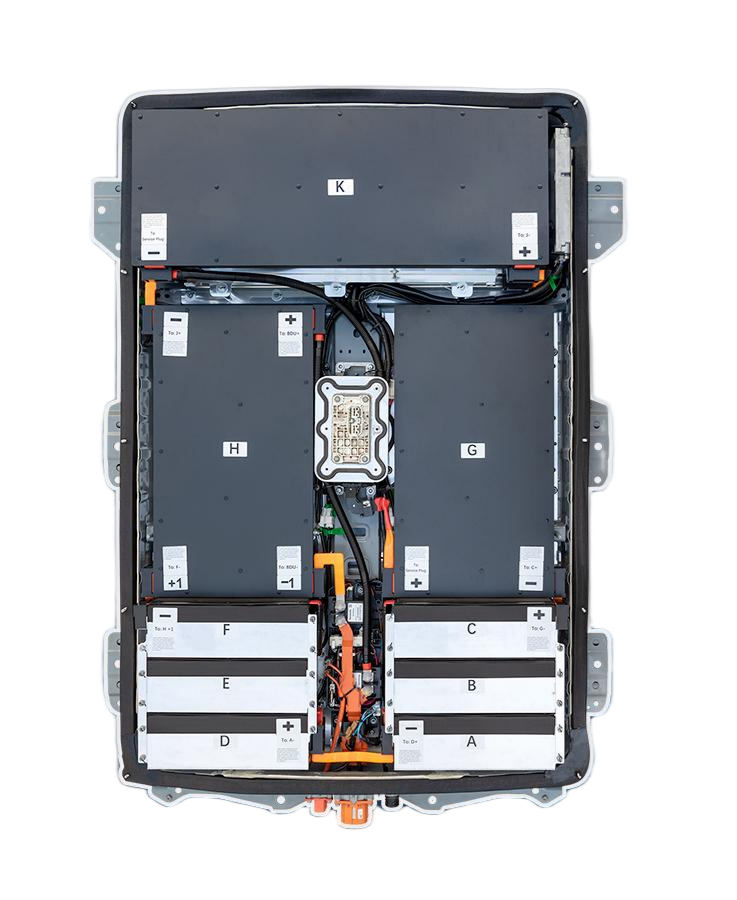
This system relies on ambient airflow and the metal casing of the battery to dissipate heat. There are no coolant pumps or liquid circuits. Heat is transferred from the cells to the busbars and then to the aluminum casing, which radiates it into the air.
The Pros:
- Simplicity: Fewer moving parts mean fewer things to break (no pumps, no leaks).
- Cost: Generally cheaper to manufacture and maintain.
- Weight: Lighter than liquid-cooled packs.
The Cons (The Real Issue for Upgrades):
- Slow Heat Transfer: Air is a poor conductor of heat. If your cells heat up quickly during fast charging or hard driving, passive cooling cannot keep up.
- Hot Spots: It is difficult to maintain uniform temperature across all 192 cells. Edge cells often run hotter than center cells.
- Climate Vulnerability: In hot climates (like summers in the southern US or Mediterranean regions), passive cooling often fails to prevent thermal runaway stress.
Expert Insight: If you live in a temperate climate and drive gently, passive cooling can work. However, if you plan to upgrade your Nissan Leaf battery to a higher capacity (like 62kWh or 68kWh), the increased energy density generates more heat. Relying on passive cooling for a high-capacity upgrade is often a recipe for premature aging.
Active Liquid Cooling: The “Performance” Standard
Active Liquid Cooling is the gold standard for modern electric vehicles (including the Tesla Model 3, BMW i3, and Nissan Ariya). This is the technology we utilize in our premium BMW i3 and Nissan Leaf 62kWh+ upgrade kits.
How it Works:
A liquid coolant (usually a glycol-water mixture) circulates through metal plates or pipes embedded directly within the battery module stack. A pump pushes this liquid to a radiator (often using the car’s existing AC system or a separate chiller) to remove heat.
The Pros:
- High Efficiency: Liquid transfers heat 3,000 times faster than air. This allows for rapid cooling during fast charging.
- Uniformity: The coolant channels can be designed to ensure every single cell is maintained within a 1-2°C temperature range.
- Heating Capability: In winter, the system can reverse to heat the battery, ensuring fast charging even in freezing conditions.
- Higher Performance: Enables higher discharge rates (faster acceleration) and faster DC charging speeds without thermal throttling.
The Cons:
- Complexity: More components (pump, radiator, hoses, seals) mean more potential failure points.
- Cost: More expensive to produce due to the complexity of the manifold and cooling plates.
The CNS BATTERY Advantage: Why We Choose Active Cooling
As a leading OEM compatible manufacturer, CNS BATTERY has made a strategic decision: For any battery upgrade exceeding 40kWh, Active Liquid Cooling is mandatory.
Here is why our engineering team prioritizes this for Nissan Leaf and BMW i3 owners:
- Future-Proofing: We design our packs (like the 62kWh and 68kWh modules) to handle the heat generated by modern fast-charging networks. Passive cooling simply cannot handle the kW loads of modern CCS or CHAdeMO fast chargers.
- Cell Preservation: We use brand-new CATL cells. These are premium components that deserve premium protection. Our active cooling system ensures the cells operate in the “sweet spot” (20°C – 25°C), maximizing their lifespan.
- Real-World Reliability: Our data shows that active-cooled packs in hot climates retain 90%+ capacity after 5 years, whereas passive-cooled packs in the same conditions often drop below 70%.
Making the Right Choice for Your Leaf
If you are considering a Nissan Leaf battery replacement or an EV battery upgrade, here is the decision matrix:
- Choose Passive Air Cooling If:
- You are replacing a 24kWh or 30kWh pack with an identical spec.
- You live in a very cold climate (where overheating isn’t an issue, though charging speed will be slow).
- Budget is your absolute primary constraint.
- Choose Active Liquid Cooling (CNS Recommendation) If:
- You are upgrading to 45kWh, 50kWh, 62kWh, or 68kWh.
- You live in a hot climate (Arizona, Texas, Australia, Southern Europe).
- You use fast charging regularly.
- You plan to keep the car for more than 3 years.
Frequently Asked Questions (FAQ)
Q1: Can I convert my old Leaf (ZE0/AZE0) from passive cooling to active cooling?
Yes, this is a common upgrade path. However, it requires more than just a new battery pack. You will need to install a cooling manifold, a radiator, a pump, and potentially modify the BMS wiring. CNS BATTERY offers complete retrofit kits that include the liquid-cooled pack and the necessary hardware. We highly recommend professional installation for this conversion to ensure there are no leaks.
Q2: Does active cooling require maintenance?
Unlike an engine, there is very little maintenance required. However, the coolant fluid should be checked or replaced every 5-8 years, similar to a radiator in a conventional car. The pump is sealed and generally maintenance-free for the life of the vehicle.
Q3: Are liquid-cooled batteries heavier?
Yes, they are slightly heavier due to the coolant and metal cooling plates. However, the weight difference is usually offset by the higher energy density of the new CATL cells we use. In most cases, the handling difference is negligible, but the safety and longevity benefits are massive.
Q4: What is the warranty on CNS active cooling systems?
All CNS Automotive Batteries come with a minimum 2-year / 80,000 km warranty. This warranty covers defects in materials and workmanship, including the cooling system components (manifold, seals, and pump if applicable). We are confident in our build quality because we manufacture to Original Factory Standards.
Ready to Upgrade Your Nissan Leaf Battery?
Don’t let thermal management myths hold you back from extending your car’s life. Whether you drive a Leaf ZE0, AZE0, or ZE1, upgrading to a high-capacity, actively cooled battery is the smartest way to regain your range and ensure long-term reliability.
CNS BATTERY is here to help you every step of the way. We offer free compatibility checks and expert consultation to ensure you get the perfect solution for your vehicle.
Get a Free Custom Quote for Your Nissan Leaf or BMW i3 Battery Upgrade Today!