
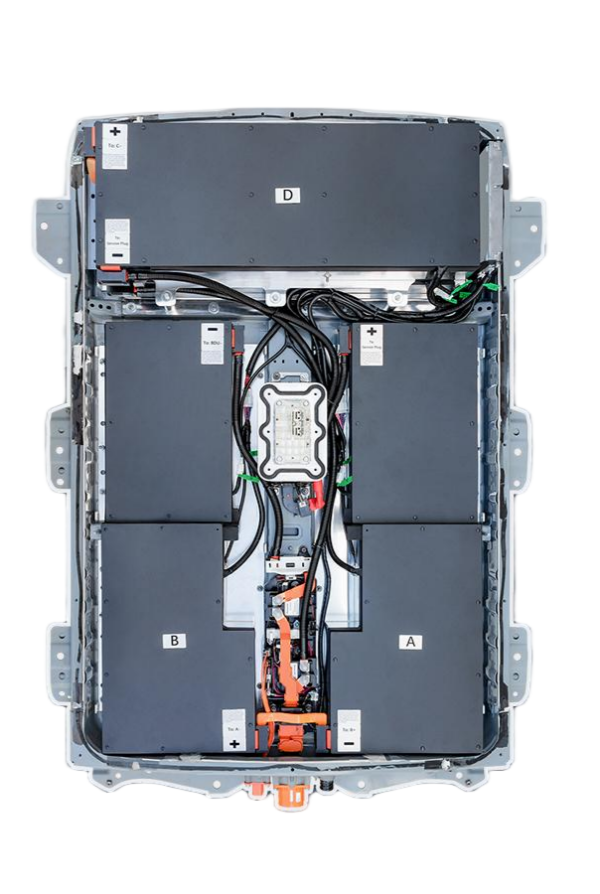
The Real Cost of Nissan Leaf Swollen Modules for Small Businesses
Owning a Nissan Leaf or e-NV200 for your small business is a smart move—until it isn’t. You rely on these vehicles for daily commutes, deliveries, or client meetings. But when the dreaded “Swollen Modules” appear, the math changes drastically.
Suddenly, you aren’t just looking at a battery repair; you’re facing a potential financial sinkhole that threatens your cash flow and operational efficiency. This article breaks down the real, total cost of swollen modules, going beyond the sticker price to show you how this issue impacts your bottom line.
📉 The Hidden Financial Avalanche
Most small business owners initially look at the cost of replacing a battery. However, the true cost of swollen modules is a sum of several factors that often catch owners off guard.
1. The “Refurbished” Trap
The most common advice online is to buy a “refurbished” or “used” battery. It sounds cheap—maybe $2,000 to $3,000 instead of $8,000. But here is the catch: refurbished batteries are often the source of the problem.
- The Core Issue: Many “refurbished” packs on the market are cobbled together from old, degraded cells. If the seller didn’t properly sort the cells by health (capacity and internal resistance), some modules will work harder than others.
- The Result: This imbalance causes heat spots and physical swelling. You aren’t fixing the problem; you are buying a ticking time bomb.
- The Real Cost: You pay $3,000 now, but in 6 months, it swells again. You pay another $3,000. Now you have paid $6,000 for a car that is still broken. Plus, you have lost 6 months of downtime.
2. Operational Downtime
For a small business, time is money. If your Leaf or e-NV200 is your primary vehicle, every day it sits in a garage is a day you aren’t making deliveries, seeing clients, or earning revenue.
- The Estimation: If your vehicle generates $200 per day in revenue, just two weeks of downtime costs you $2,800.
- The Domino Effect: Downtime doesn’t just cost you money; it damages your reputation with clients who expect reliability.
3. Secondary Damage
Swollen modules don’t just look bad; they can destroy your car.
- Physical Damage: As the modules expand, they can crack the battery casing, damage the Battery Management System (BMS), and even warp the chassis rails.
- Safety Hazards: Swelling indicates thermal runaway or chemical imbalance. This creates a fire risk, which could lead to insurance claims, lawsuits, or total vehicle loss.
🆚 New vs. Refurbished: A Cost-Benefit Analysis
To truly understand the cost, let’s compare the two paths you can take. We have built this table based on real-world data from thousands of business owners we have helped.
| Feature | Refurbished/Used Battery | CNS BATTERY (New Cells) |
|---|---|---|
| Core Component | Recycled/Old Cells (High risk of swelling) | Brand New CATL/LG Cells (Zero swelling risk) |
| Initial Cost | Low ($2k – $4k) | Higher ($7k – $9k) |
| Lifespan | 6 Months – 2 Years | 5+ Years (Typical EV lifespan) |
| Warranty | Often None, or 6 Months | 2 Years / 80,000 km |
| Hidden Costs | Frequent replacements, Towing fees | None (Plug and Play, No Hassle) |
| Business Risk | High (Vehicle breaks down mid-route) | Low (Reliable daily driver) |
Key Insight: While a refurbished battery seems like a “cheap fix,” the Total Cost of Ownership (TCO) is often 2-3 times higher than investing in a new solution upfront.
💡 The Strategic Solution for Business Owners
As a business owner, your goal isn’t just to fix the car; it is to maximize uptime and minimize long-term expenses. This is where upgrading to a New Lithium-Ion Pack becomes the only logical financial decision.
Why New Cells Solve the “Swelling” Problem
Swelling is caused by gas buildup inside the cells, usually due to:
- Overcharging/Over-discharging: Old cells have weak chemistry.
- Manufacturing Defects: Poor quality control in the original pack (common in early Nissan Leafs).
By switching to a brand new pack built with new A-Grade cells from manufacturers like CATL, you eliminate the root cause. New cells have stable electrolytes and rigid casings that do not swell under normal operating conditions.
The Upgrade Opportunity
Here is the good news: when you replace the battery, you aren’t just fixing it—you can upgrade it.
- Increased Range: Many businesses upgrade from a 40kWh or 62kWh pack to a 68kWh or 75kWh pack.
- Business Impact: More range means fewer charging stops during the day. You can take longer delivery routes or drive to more client sites without worrying about the battery dying.
🛠️ What to Do If You Already Have Swollen Modules
If you are reading this because your battery is already swollen, stop using the vehicle immediately. Continuing to drive it risks a thermal event.
- Do Not Charge: Charging a swollen battery increases internal pressure.
- Do Not Drive: The structural integrity of the battery is compromised.
- Get a Professional Assessment: Contact a specialist who deals with new cell technology, not just used car parts.
At CNS, we specialize in providing OEM-compatible, brand-new battery solutions specifically for Nissan Leafs and e-NV200s. We understand that small businesses need reliability, not just a cheap patch.
Our packs are designed to be a drop-in replacement. You don’t need to modify your car. You simply remove the old (swollen) pack and install the new one. Most of our business clients report being back on the road and profitable within a week of receiving their new battery.
❓ Frequently Asked Questions (FAQ)
1. Can I repair the swollen modules instead of replacing the whole battery?
Technically, yes, but it is rarely advisable for a business. Replacing individual modules is expensive (often 50% of a new battery cost), and you are still left with old, degraded cells that will likely swell again. For a business, this is a “Band-Aid” solution that wastes time.
2. How long does it take to install a new battery?
For a professional mechanic, installation typically takes 1-2 hours. We provide detailed video guides and technical support to ensure a smooth process, minimizing your downtime.
3. Is a new battery from CNS compatible with my Nissan Leaf model?
Yes. We support all major Nissan Leaf models (ZE0, ZE1, AZE0) as well as the e-NV200. Our batteries are engineered to match OEM specifications for voltage, dimensions, and communication protocols.
4. What is the warranty on a new battery?
We offer a comprehensive 2-year / 80,000 km warranty. This covers defects in materials and workmanship, including performance degradation. This is significantly longer than the warranty offered on most refurbished batteries.
5. How much money will I save by switching to a new battery?
While the upfront cost is higher, you save money by avoiding:
- Towing fees (common with broken-down refurbished batteries).
- Repeat repairs (buying a battery every 6-12 months).
- Lost revenue from vehicle downtime.
Don’t let swollen modules cripple your small business. Invest in a reliable, long-term solution that gets you back on the road for good.
Contact our technical experts now for a free, no-obligation quote. We will help you calculate the exact cost to restore your Nissan Leaf or e-NV200 to full health.


