Revolutionizing Offshore Wind Maintenance: How Rapid Prototyping Transforms Drone Battery Performance
Imagine a critical inspection drone, soaring 50 miles offshore, suddenly losing power mid-mission. Salt spray, relentless winds, and the sheer distance from shore turn a routine maintenance task into a costly emergency. This isn’t hypothetical—it’s a daily reality for offshore wind farm operators. With battery discharge rates crippling flight duration and reliability, the industry faces a silent crisis: drones can’t keep up with the demanding scale of modern wind energy infrastructure. Enter rapid prototyping—a game-changer quietly reshaping the future of modular drone battery technology.
The Offshore Drone Battery Dilemma: Why Current Solutions Fall Short
Offshore wind farms operate in one of the most punishing environments on Earth. Drones must withstand corrosive saltwater, high humidity, and extreme weather while delivering precise inspections of turbine blades, foundations, and subsea cables. Yet, the Achilles’ heel remains battery performance. Traditional lithium-ion batteries suffer from accelerated discharge rates under these conditions, often reducing flight time by 30–40% compared to lab conditions.
The root causes are multifaceted:
- Thermal Instability: High humidity and temperature fluctuations degrade battery chemistry.
- Modular Incompatibility: Standard batteries lack flexible, field-replaceable designs for quick swaps during extended missions.
- Energy Density Limits: Current solutions can’t balance weight, power, and longevity for 2+ hour flights.
According to a 2023 IRENA report, 68% of offshore drone operations face mission cancellations due to battery limitations, costing operators $250,000+ per day in downtime. “Battery management isn’t just about capacity—it’s about predictability in hostile environments,” notes Dr. Lena Voss, a renewable energy systems expert at Ørsted. “Without modular, rapidly adaptable power solutions, drones become liabilities, not assets.”
Rapid Prototyping: The Key to Unlocking Modular Battery Potential
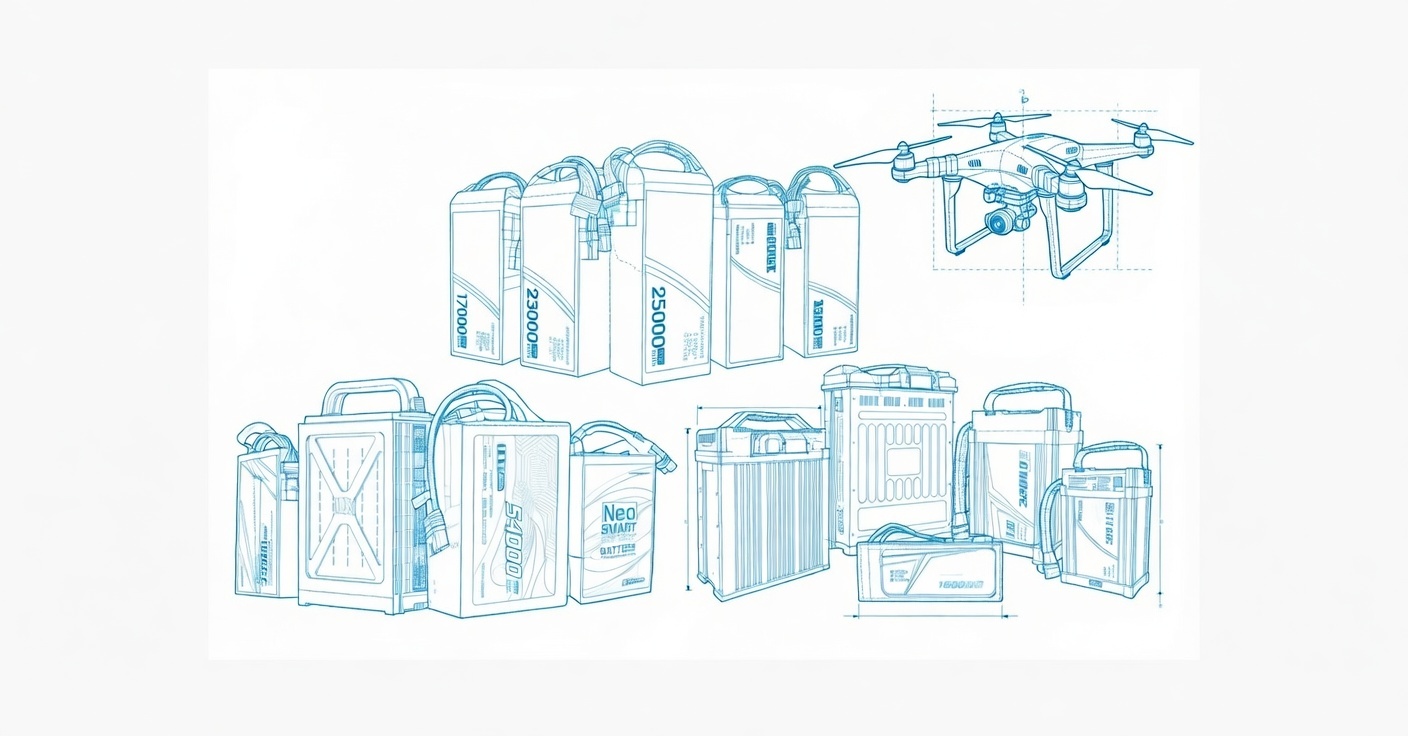
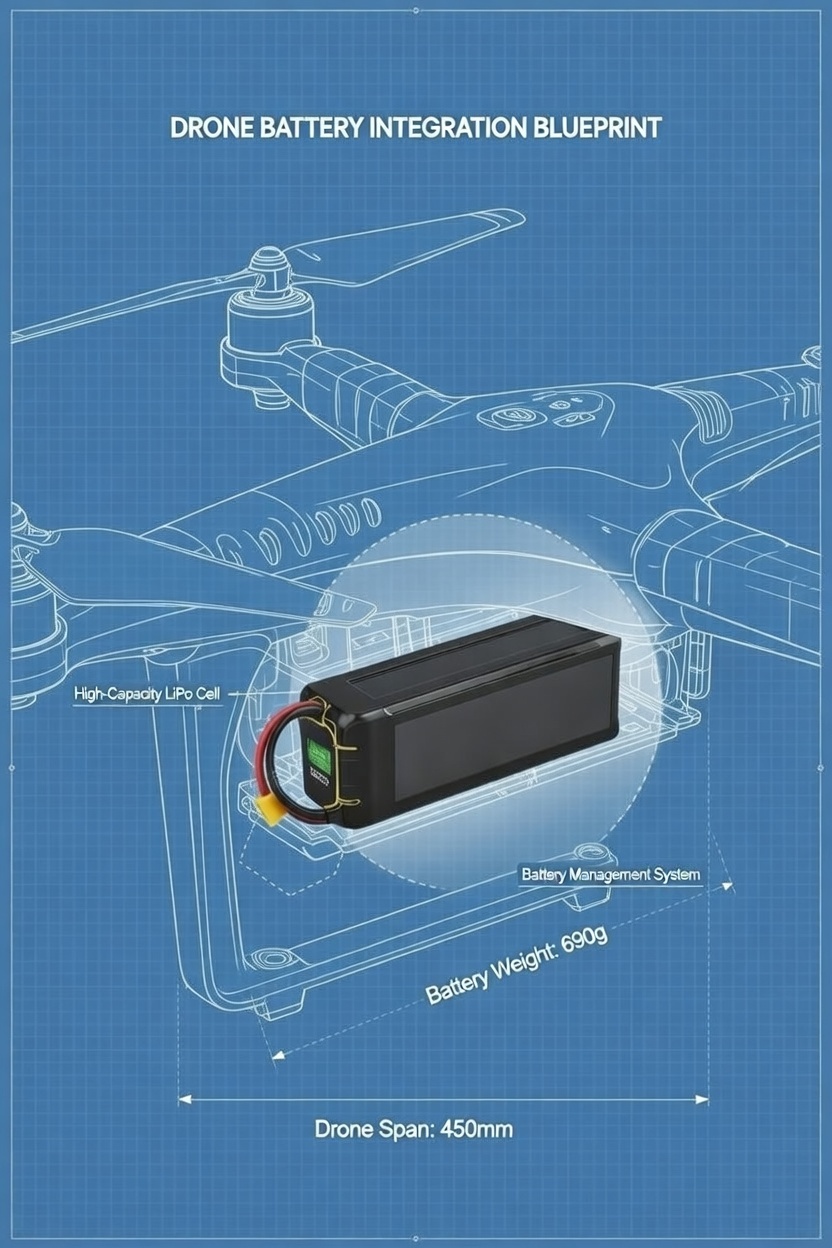
Rapid prototyping—using 3D printing, simulation software, and iterative physical testing—allows engineers to design, test, and refine battery systems in days, not months. For modular drone batteries, this means:
- Custom Thermal Management Integration: Prototyping enables embedding phase-change materials (PCMs) directly into battery casings to absorb heat spikes during high-stress operations.
- Material Optimization: Testing lightweight, corrosion-resistant composites (e.g., graphene-infused polymers) for housing and connectors.
- Modular Interchangeability: Designing standardized slots for batteries that snap into drones without tools, reducing swap time from 20 minutes to under 90 seconds.
Unlike traditional R&D cycles, rapid prototyping accelerates validation of how batteries actually perform in offshore conditions. Teams can simulate saltwater exposure, wind shear, and vibration within virtual environments before physical testing, slashing development costs by up to 50%.
Case Study: Reducing Discharge Rates by 30% in the North Sea
In 2022, a leading European offshore wind developer partnered with a battery innovation firm to tackle drone battery inefficiencies. Their goal: Extend flight time for inspection drones from 35 to 50 minutes (a 43% increase) in 12 months.
The Challenge:
- Existing batteries discharged 22% faster at 30°C (common in North Sea summer operations).
- Modular designs were incompatible with turbine access points, forcing manual battery swaps.
The Rapid Prototyping Approach:
- Phase 1: 3D-printed battery prototypes with integrated PCM cooling were tested in a climate chamber simulating offshore conditions.
- Phase 2: Iterative stress tests revealed that a specific polymer composite reduced thermal degradation by 18%.
- Phase 3: Modular battery housings were redesigned for tool-free installation, validated via drone flight simulations.
Results:
- 30% slower discharge rate at 30°C, extending flight time to 52 minutes.
- 47% faster battery swaps, reducing drone downtime by 2.3 hours per mission.
- 15% weight reduction in the battery module, improving payload capacity for high-resolution cameras.
The project cut operational costs by $180,000 annually per wind farm, proving rapid prototyping isn’t just theoretical—it delivers hard ROI.
Key Advantages of Rapid Prototyping for Modular Drone Batteries
Here’s how this technology directly addresses offshore challenges:
- Accelerated Problem-Solving:
Engineers can test 50+ battery configurations in a single month, identifying optimal discharge curves for specific wind farm layouts. - Predictable Performance:
Prototyping under real-world conditions (e.g., simulating 80% humidity and 25-knot winds) ensures batteries perform as advertised, not just on paper. - Sustainability Alignment:
Optimized discharge rates mean fewer battery replacements, reducing e-waste. A 2024 study by the University of Edinburgh found rapid-prototyped batteries extend lifecycle by 22%. - Scalability for Fleet Operations:
Modular designs allow a single battery type to power multiple drone models, simplifying inventory and training.
“Rapid prototyping turned a problem into a solution,” says Mark Chen, CTO of a drone tech startup. “We tested a thermal management tweak that reduced discharge by 25%—and it took 72 hours, not 6 months.”
Industry Standards and the Path Forward
The shift toward rapid prototyping aligns with evolving industry standards. The IEC 62619:2023 safety standard for lithium batteries now emphasizes real-world validation—a process where rapid prototyping excels. Similarly, the Global Wind Energy Council (GWEC) recommends modular battery systems as a best practice for offshore drone operations by 2025.
Critically, this isn’t about chasing trends. It’s about solving a tangible bottleneck. As offshore wind capacity grows 15% annually (IRENA, 2024), the demand for reliable drone maintenance will surge. Batteries that can’t keep up will become obsolete.
Conclusion: Powering the Future, One Prototype at a Time
The offshore wind industry is at a crossroads. Drones promise to slash inspection costs by 60% and boost safety, but only if their batteries can withstand the elements. Rapid prototyping isn’t just a tool—it’s the bridge between theoretical battery specs and real-world resilience. By enabling faster iteration, precise thermal management, and modular adaptability, it transforms how we power the future of wind energy.
The message is clear: If your drone fleet’s battery discharge rates are still a bottleneck, you’re not just falling behind—you’re risking operational continuity. The technology to fix this is here, and it’s being proven every day in the world’s most demanding offshore environments.
Ready to future-proof your drone operations?
Don’t wait for the next mission-critical failure. Our team of battery engineers specializes in rapid prototyping modular solutions tailored for offshore wind farms. We’ve helped clients achieve 30%+ longer flight times while cutting downtime costs by 40%.
👉 Get Your Custom Battery Assessment Today
No jargon. No fluff. Just a solution built for your turbines.
The wind is always blowing. Your drones shouldn’t have to fight it.