The Hidden Killer of Nissan Leaf Fast Charging: Internal Resistance
As a Nissan Leaf owner, you know the frustration. You pull into a rapid charging station expecting a quick top-up, only to watch the charging speed plummet after the first 20% of the battery. You’re left waiting, wondering why your “quick charge” is taking an eternity.
While many factors affect charging speed, one of the most critical—and often misunderstood—elements is Battery Internal Resistance (IR). At CNS BATTERY, we see this daily. We help Leaf owners reclaim the fast-charging experience they originally loved.
This guide explains exactly how internal resistance impacts your Nissan Leaf’s rapid charging capability and what you can do to fix it permanently.
⚡ What is Battery Internal Resistance?
In simple terms, internal resistance is the opposition to the flow of electric current within the battery cell itself. Think of it like water flowing through a pipe. Low resistance is like a wide, clean pipe—water (electricity) flows freely. High resistance is like a narrow, clogged pipe—water struggles to get through.
In a lithium-ion battery, this resistance is measured in milliohms (mΩ). When your Nissan Leaf was new, the cells had very low internal resistance, allowing high currents to flow during DC fast charging.
However, as the battery ages, this resistance increases. This is the primary reason why your Leaf takes longer to charge now than it did when it was new.
The Science Behind the Slowdown
During DC fast charging, electricity flows into the battery at high amperage. According to Joule’s Law, the heat generated inside the battery is calculated as: Heat = Current² × Resistance (I²R).
- Low IR: High current flows, generating manageable heat. The charger stays in “rapid” mode.
- High IR: Even a small amount of current generates significant heat. The Battery Management System (BMS) detects this heat and forces the charger to slow down to protect the battery.
📉 How Internal Resistance Destroys Your Charging Curve
To visualize this, imagine the standard charging curve of a Nissan Leaf.
When the battery is new and healthy (low IR), the car can accept the maximum power from the charger for a long time, usually tapering off slowly after reaching about 80% state of charge.
As internal resistance rises due to degradation:
- The Taper Starts Earlier: Instead of tapering at 80%, your car might start slowing down at 40%.
- The Slope is Steeper: The charging speed drops off rapidly, meaning you spend hours waiting to get the last 20% of charge.
- Heat Buildup: You might notice the battery temperature warning light or feel excessive heat under the hood or floor.
The Result: A car that is nearly unusable for long-distance travel because you can’t charge it quickly.
🛠️ Can You Reduce Internal Resistance?
This is the most common question we get at our Zhengzhou facility: “Can I fix the high resistance in my old Leaf battery?”
The short answer is no. Internal resistance is a chemical property of the cell. It increases due to the formation of the Solid Electrolyte Interphase (SEI) layer on the anode and the degradation of the electrolyte. You cannot “reset” this chemistry through software updates or “battery reconditioning” gimmicks.
The only effective solution is to replace the high-resistance cells with brand new ones.
🆕 Why New Cells Mean Rapid Charging Returns
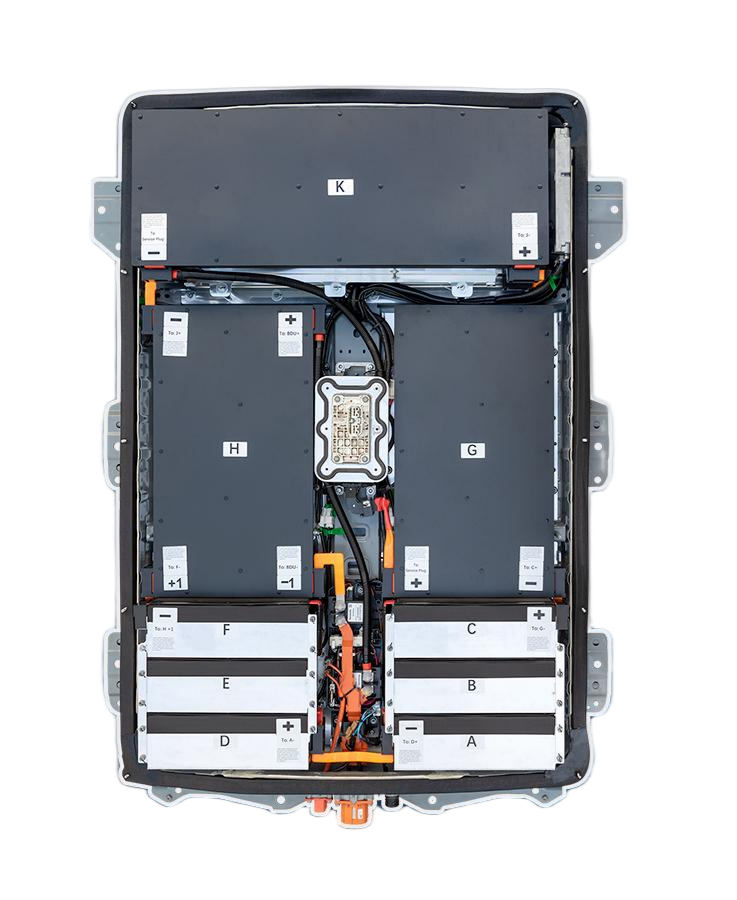
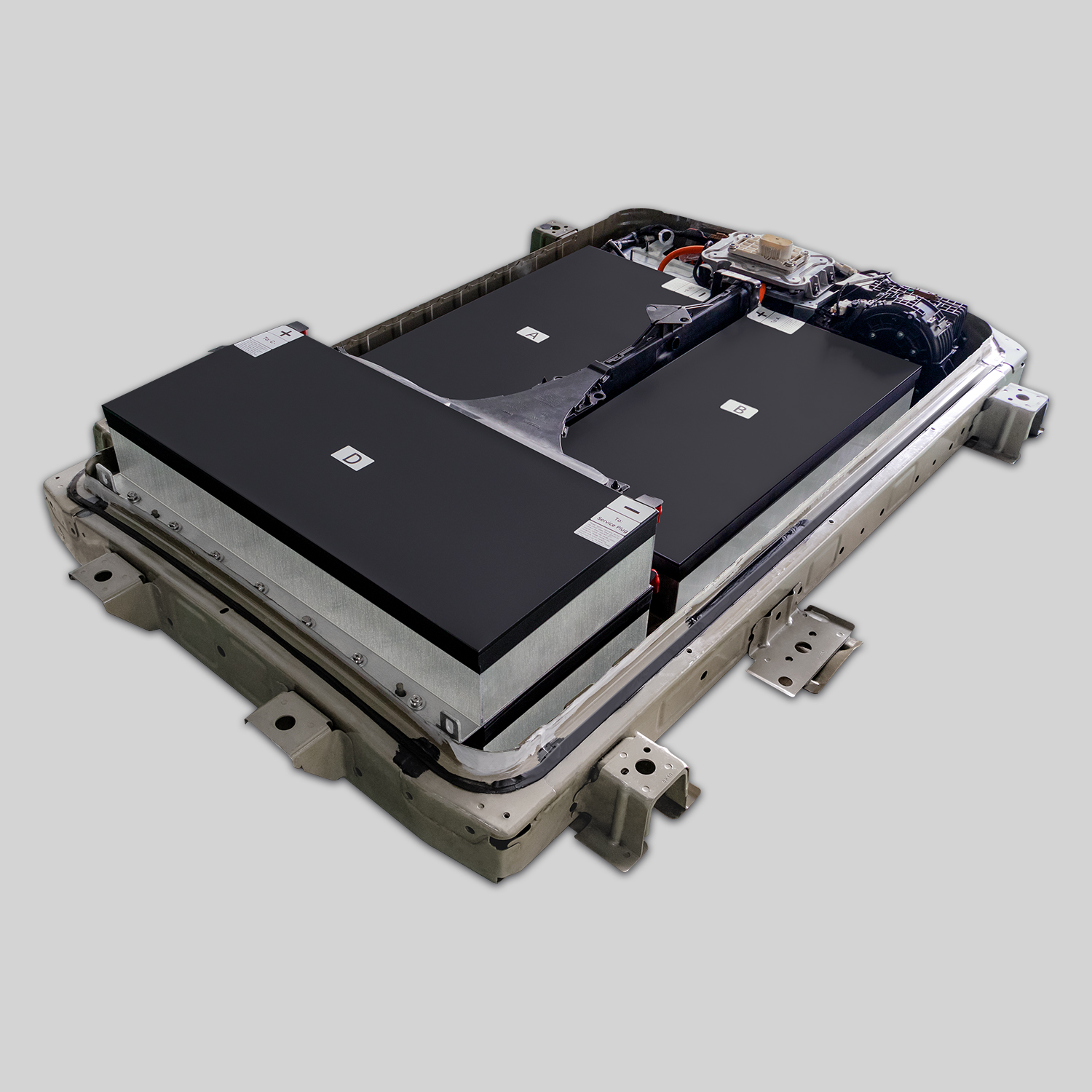
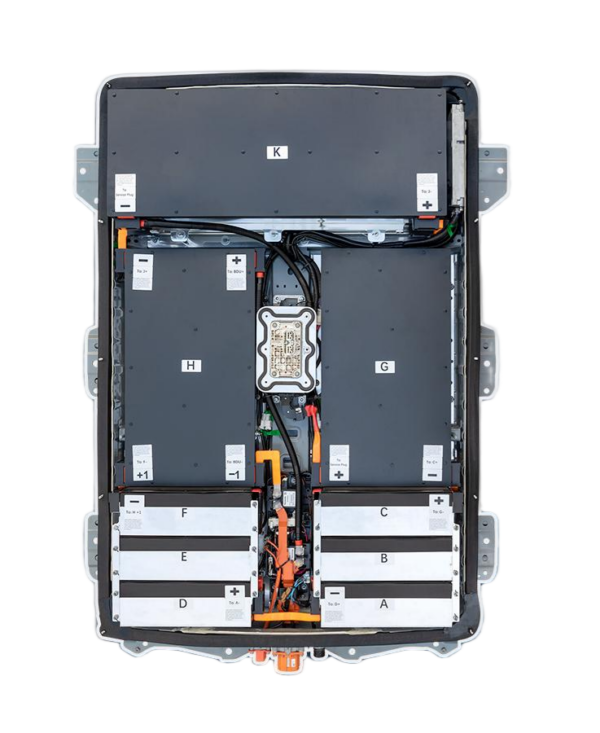
At CNS BATTERY, we specialize in manufacturing complete replacement battery packs for the Nissan Leaf (ZE0, AZE0, ZE1) and e-NV200 using brand new CATL (Contemporary Amperex Technology Co. Limited) cells.
Here is why our packs restore your rapid charging performance:
1. Factory-Fresh Low IR
Brand new CATL cells have internal resistance values that match the original specifications of a brand new Leaf. This allows the battery to accept the maximum amperage from the DC charger without overheating.
2. Superior Thermal Management
Our packs are engineered with precision cooling channels. Because new cells have lower IR and generate less heat, the cooling system can manage the temperature effectively, preventing the BMS from forcing a charge cutback.
3. BMS Compatibility
Our engineering team meticulously programs the Battery Management System to communicate seamlessly with the Nissan Leaf’s onboard charger. We don’t just drop cells in a box; we engineer a complete powertrain solution.
📊 Comparison: Old Battery vs. CNS New Battery
This table illustrates the difference a low internal resistance pack makes for a Nissan Leaf owner.
| Feature | Old/Refurbished Battery (High IR) | CNS BATTERY New Pack (Low IR) |
|---|---|---|
| Internal Resistance | High (Degraded Cells) | Low (Brand New CATL Cells) |
| Rapid Charging | Slow taper; stops early | Full speed until 80%+ |
| Heat Generation | Significant (Risk of thermal throttling) | Minimal (Efficient cooling) |
| Long Term Health | Rapid degradation continues | Stable performance for years |
🚗 Restoring Your Range and Peace of Mind
It isn’t just about speed; it is about usability. With a CNS BATTERY replacement, you aren’t just fixing the charging speed—you are restoring the range.
Many of our customers upgrade from a 40kWh or 62kWh pack to a higher capacity option. Because our packs use new cells with low internal resistance, they can handle the increased energy density without the heat issues that plagued the old chemistry.
The CNS BATTERY Advantage
- No More “Taper Tantrums”: Charge from 20% to 80% in roughly 45 minutes, just like a new car.
- Zero Welding/Modification: Our packs are OEM-compatible. They plug directly into your Leaf without cutting wires or modifying the chassis.
- Expert Support: Our technical team provides video call support during installation to ensure everything goes smoothly.
📝 Conclusion: Reclaim Your Charging Speed
Don’t let high internal resistance ruin your electric driving experience. If your Nissan Leaf is slow to charge, the problem is the chemistry of the cells, not the charger.
By replacing your high-resistance pack with a CNS BATTERY containing brand new, low-resistance cells, you restore the car’s original performance. You get the rapid charging speed back, the range back, and the confidence to drive anywhere.
Ready to end the charging frustration? Get a free quote for your Nissan Leaf or e-NV200 battery replacement today.
Get Your Free Custom Quote Now
❓ Frequently Asked Questions (FAQ)
Q1: How do I know if high internal resistance is the cause of my slow charging?
If your car charges relatively quickly when the battery is very low (below 20%) but slows down dramatically as soon as it hits 30-40%, high internal resistance is the likely culprit. This is often accompanied by a rise in battery temperature during the charge.
Q2: Can a software update fix my slow charging?
No. Software updates can optimize the BMS logic slightly, but they cannot change the physical chemistry of the cells. If the resistance is high, the heat will be generated regardless of the software.
Q3: Is it safe to use a “battery reconditioner” to lower resistance?
These devices are generally ineffective and can be dangerous. They cannot reverse the chemical degradation (SEI layer growth) inside the cell that causes high resistance. The only safe solution is replacing the cells.
Q4: How long does it take to install a new CNS BATTERY pack?
Most professional technicians can complete the installation in 1 to 2 hours. We provide detailed video tutorials and step-by-step manuals to ensure a smooth swap.