
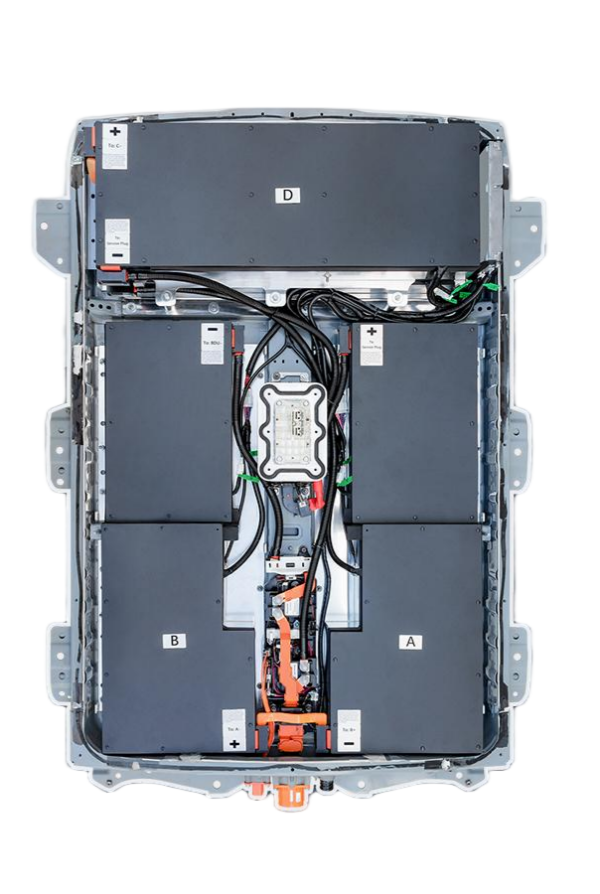
The Ultimate Guide: The Best Maintenance Routine for Your New Lithium Battery Pack
Congratulations on your new CNS Battery pack! Whether you drive a Nissan Leaf or a BMW i3, you’ve just invested in a high-performance, long-range solution designed to get you back on the road with confidence. At CNS, we don’t just sell batteries; we are committed to your long-term satisfaction. We understand that to maximize your investment, you need a maintenance routine that preserves the health of your brand-new CATL lithium cells.
Unlike degraded or refurbished packs, a brand-new CNS battery offers “zero-cycle” performance. However, even the best batteries require proper care to achieve their full lifespan potential. In this guide, we’ll walk you through the best maintenance routine to ensure your battery lasts for years, maintaining maximum range and safety.
🛠️ Phase 1: The First 1,000 Kilometers (The “Break-In” Period)
Many drivers don’t realize that lithium-ion batteries benefit from a gentle “break-in” period, similar to a new car engine. This initial phase helps the Battery Management System (BMS) calibrate accurately and allows the electrolyte to stabilize within the brand-new CATL cells.
Do’s:
- Avoid 100% Charging: For the first 5-10 charges, try to keep the state of charge (SoC) between 20% and 80%. This prevents stress on the fresh electrodes.
- Moderate Driving: Avoid full-throttle acceleration and heavy braking during the first few hundred kilometers.
- Slow Charging: Whenever possible, use Level 1 or Level 2 (AC) charging during this period to allow the cells to balance gently.
Don’ts:
- Avoid DC Fast Charging: Refrain from using DC fast chargers for the first 1,000 km. Fast charging generates heat, and a new pack needs time to settle thermally.
- Avoid Deep Discharges: Never let the battery drop below 10% in the beginning.
Pro Tip: After installing your new CNS pack, take a moment to check your vehicle settings. For Nissan Leafs, ensure the “Charging Limit” is set correctly so the BMS communicates properly with your new hardware.
🌡️ Phase 2: Mastering Temperature Management
Temperature is the single biggest factor affecting lithium battery longevity. Our CNS batteries are engineered with advanced thermal management systems, but your driving habits play a crucial role.
1. Managing Heat (Summer Driving):
High temperatures accelerate chemical degradation. If you live in a hot climate or are driving in summer:
- Pre-Cooling: If your vehicle (like the BMW i3 or Nissan Leaf) has a pre-conditioning feature, use it while the car is still plugged in. This cools the battery using grid power rather than depleting the pack.
- Timing is Everything: Try to charge during the cooler hours of the morning or evening. Avoid charging immediately after a high-speed drive; let the battery cool down for 15-20 minutes first.
2. Battling the Cold (Winter Driving):
Cold weather doesn’t damage batteries as much as heat, but it drastically reduces range and can prevent charging.
- Pre-Heat: Just like cooling, use pre-heating while plugged in during winter.
- Storage: If you plan to store your vehicle for weeks in freezing temperatures, store it with a charge level around 50-60%. A fully charged battery in freezing conditions can suffer from lithium plating, which permanently damages capacity.
🔋 Phase 3: Smart Charging Strategies
Your charging habits are the core of your maintenance routine. While our CNS Battery packs are built to handle full charges, daily “topping off” is better for longevity than constant 0-100 cycles.
The 20%-80% Sweet Spot:
For daily commuting, try to keep your battery within the 20% to 80% range. Lithium batteries experience the most stress at the extreme ends of their charge curve.
The Weekly Full Charge:
While you shouldn’t charge to 100% every day, you should do a full charge once a week. This allows the BMS to perform a “balancing” cycle, ensuring all the cells in the pack are at the same voltage. This keeps your range reading accurate.
Avoiding “Vampire Drain”:
If your car sits for long periods, ensure it is stored with a moderate charge. Completely dead batteries can go into deep sleep mode, and in extreme cases, the BMS may not be able to wake them up without specialized equipment.
📅 Phase 4: Monthly & Seasonal Checkups
Maintenance isn’t just about how you drive; it’s about physical care too.
1. Physical Inspection:
Every month, take a look under the hood (or under the car if accessible). Check for any signs of:
- Corrosion: Look at the terminals and connectors. If you see any white/green powdery substance, clean it gently with a baking soda solution.
- Loose Connections: Ensure all high-voltage connectors are seated firmly. A loose connection can cause arcing and heat damage.
2. Software Updates:
For BMW i3 and Nissan Leaf owners, keep your vehicle’s software up to date. Manufacturers often release updates that optimize battery charging algorithms and thermal management strategies.
3. Professional Health Check:
We recommend visiting a trusted mechanic (or your local CNS distributor) once a year for a “Battery Health Check.” They can plug in and read the live data from the BMS to ensure there are no weak cells or communication errors.
🏆 Why CNS Batteries Need Less Maintenance
You might be wondering why you need a maintenance routine at all if you bought from CNS. The truth is, while our batteries require less maintenance than refurbished options, they still benefit from care.
- Brand New CATL Cells: Unlike “repacks” that use mixed or degraded second-life cells, we use brand new, Grade A cells from the factory. This means no cell matching issues and no “weak links” dragging down the pack.
- OEM Compatibility: Our packs are engineered to fit Nissan and BMW models perfectly, meaning the original thermal sensors and cooling systems work exactly as intended.
- Unbeatable Warranty: We back our confidence with a 2-year / 80,000 km warranty. If you ever encounter an issue that isn’t related to maintenance (like a manufacturing defect), we are here to support you.
📝 Summary: Your Maintenance Checklist
To make it easy, here is a quick-reference checklist for your new Lithium Battery Pack:
| Phase | Action | Frequency | Reason |
|---|---|---|---|
| Daily | Keep charge between 20%-80% | Every day | Reduces chemical stress on cells |
| Weekly | Charge to 100% | Once a week | Allows BMS to balance cells for accurate range |
| Monthly | Inspect terminals | Once a month | Prevents corrosion and loose connections |
| Seasonal | Adjust for weather | Summer/Winter | Prevents overheating or freezing damage |
| Long Term | Software Updates | As available | Ensures optimal charging algorithms |
❓ Frequently Asked Questions (FAQ)
Q: Can I use DC Fast Charging with my new CNS Battery?
A: Yes, you can. However, we recommend waiting until you have driven the vehicle for at least 1,000 kilometers first. After the break-in period, DC fast charging is perfectly safe, but for daily use, AC charging is gentler on the battery and helps extend its overall lifespan.
Q: What should I do if my car will be parked for a long time (e.g., 2 months)?
A: If you plan to store your vehicle, we recommend storing it with a charge level of approximately 50%. This is the “sweet spot” for long-term storage as it prevents the battery from going into deep sleep (if it dies completely) and avoids the high stress of a full charge. If possible, store the vehicle in a temperature-controlled environment or a garage.
Q: Do I need to buy special tools for maintenance?
A: No special tools are required for basic maintenance. For physical inspections, a simple visual check is sufficient. However, if you are a DIY enthusiast, we recommend having insulated gloves and basic wrenches on hand if you ever need to access the terminals. Most importantly, you have access to our free installation guides and video tutorials for any maintenance tasks.
Q: How do I know if my maintenance routine is working?
A: The best indicator is your driving range. If you notice a sudden or significant drop in range (more than 10-15% within a short period), it might indicate a maintenance issue or a problem with the pack. You can also check the battery health status in your vehicle’s diagnostics menu (available on most Nissan Leafs and BMW i3s). If you have concerns, our technical experts are always available to help.
Ready to experience the peace of mind that comes with a brand-new, perfectly maintained battery?
Get a Free Custom Quote for your Nissan or BMW today, and let CNS Battery put your mind at ease.
Contact Our Technical Experts Now


