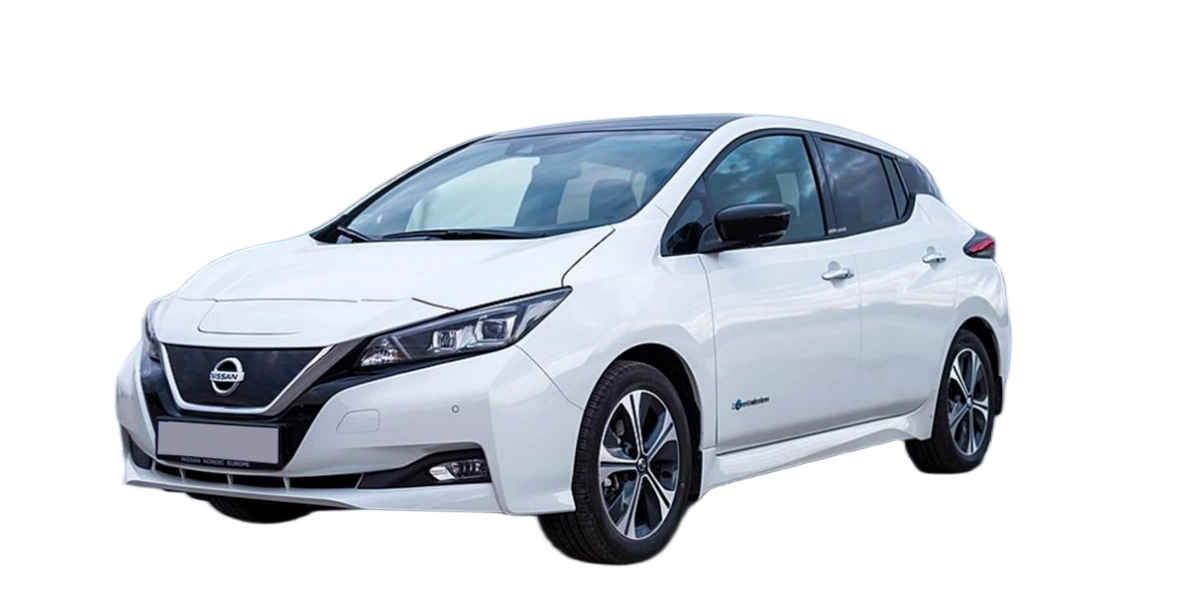
Upgrade Your Nissan Leaf ZE0: 30kWh to 68kWh Conversion Guide
If you own a Nissan Leaf ZE0 with the original 30kWh battery pack, you are likely familiar with the limitations of early electric vehicle technology. The “range anxiety” associated with a battery that offers roughly 110-130km (70-80 miles) on a full charge can make daily commutes stressful and long trips nearly impossible. However, the rapid advancement of lithium-ion technology has created a unique opportunity for EV owners: battery repowering.
This comprehensive guide details the step-by-step process of upgrading your Leaf ZE0 from a 30kWh unit to a modern 68kWh lithium-ion battery pack. We will explore the technical specifications, the conversion process, and the dramatic improvement in driving range and performance.
Why Upgrade from 30kWh to 68kWh?
The Nissan Leaf ZE0, produced between 2011 and 2013, was a pioneer in the mass-market EV segment. However, the technology of that era is now outdated. Most 30kWh packs have suffered significant degradation, holding only a fraction of their original capacity.
By upgrading to a 68kWh battery, you are essentially giving your car a “second life” with performance metrics that rival newer models:
- Range Increase: Jump from approximately 110km to over 470km of real-world range.
- Performance: Benefit from modern Battery Management Systems (BMS) that offer faster charging capabilities and better thermal management.
- Cost Efficiency: This upgrade typically costs less than 50% of purchasing a brand-new Nissan Leaf, making it one of the most economical ways to drive a long-range EV.
Technical Compatibility: ZE0 Chassis & 68kWh Packs
Before beginning the physical replacement, it is crucial to understand the engineering behind the compatibility.
The Leaf ZE0 chassis is physically capable of housing larger battery packs due to its modular design. However, the conversion from a 30kWh to a 68kWh unit is not a simple “plug-and-play” operation in terms of electronics. The 68kWh packs are derived from later Leaf models (specifically the Plus variants), which means they have different voltage profiles and communication protocols.
Key Technical Considerations:
- Voltage Matching: The 30kWh pack operates at a lower nominal voltage than the 68kWh. A successful conversion requires either modifying the vehicle’s software (VCU calibration) or using a compatible adapter harness.
- Physical Dimensions: While the chassis can fit the larger pack, the rear cross-member or suspension components might require slight modification or repositioning to accommodate the different shape of the 68kWh module.
- Battery Management System (BMS): The new 68kWh pack comes with a state-of-the-art BMS. This system must communicate correctly with the Leaf’s Vehicle Control Unit (VCU) to report State of Charge (SOC) accurately.
Expert Tip: For the most reliable results, it is highly recommended to use a complete conversion kit or a professionally assembled battery pack designed specifically for the ZE0 retrofit. Generic packs may lack the necessary CAN-bus communication protocols.
Step-by-Step Replacement Procedure
This section outlines the physical process of removing the old 30kWh battery and installing the new 68kWh unit. Please note: High-voltage battery work is dangerous. Only qualified technicians should perform these steps.
Step 1: Preparation and Safety
- Park the vehicle on a level surface and engage the parking brake.
- Disconnect the 12V Battery: This is the most critical safety step to cut power to the vehicle’s systems.
- Gather necessary tools: Torque wrench, insulation resistance tester, EV-safe gloves and suit, and a suitable lifting apparatus (engine crane or transmission jack).
Step 2: Removing the 30kWh Battery
- Drain Coolant: If your ZE0 has the optional battery heater/cooling system, drain the coolant first.
- Disconnect High Voltage: Locate the main service disconnect (MSD) or the orange high-voltage connector and disconnect it.
- Remove Undertray: Remove the plastic undertray to access the battery bolts.
- Unbolt the Pack: There are approximately 32 bolts securing the battery to the chassis. Remove these systematically.
- Lower the Pack: Carefully lower the 30kWh pack using a lifting sling. Note the weight: The old pack is heavy, but the new 68kWh pack will be significantly heavier due to higher energy density.
Step 3: Preparing the 68kWh Pack
- Before installation, verify the BMS firmware version.
- If required, install any necessary adapter plates or spacers to align the 68kWh pack mounting points with the ZE0 chassis.
- Perform a continuity test to ensure there are no short circuits in the new pack.
Step 4: Installing the 68kWh Battery
- Lift the new pack into place. Due to the size difference, you may need to feed the connector ends in first.
- Reinstall the chassis bolts. Torque them to the manufacturer’s specification (usually around 40-50 Nm).
- Reconnect the high-voltage cables. Ensure the orange connector is fully seated and locked.
- Reconnect the 12V battery.
Step 5: Initialization and Calibration
- Turn on the ignition. The dashboard may display error codes initially.
- The new BMS needs to “learn” the vehicle. This often requires a short drive cycle (usually 2-5 km) to allow the VCU and BMS to handshake.
- Use a Nissan Consult scanner to reset any remaining fault codes and verify the State of Health (SOH) is showing 100%.
The CNS BATTERY Advantage for Nissan Leaf Upgrades
When sourcing a 68kWh lithium battery pack for your Nissan Leaf ZE0 conversion, quality and compatibility are paramount. At CNS BATTERY, we specialize in OEM-compatible powertrains designed specifically for Nissan and BMW platforms.
Unlike recycled or refurbished cells, our packs utilize brand-new, top-tier CATL (Contemporary Amperex Technology Co. Limited) cells. This ensures maximum energy density, thermal stability, and a long cycle life.
We understand the complexities of retrofitting a modern battery into a classic EV chassis. Our engineering team provides the necessary technical support to ensure the 68kWh pack integrates seamlessly with your ZE0’s electronics. Furthermore, we offer a comprehensive 24-month / 80,000km warranty, providing peace of mind that your investment is protected.
Frequently Asked Questions (FAQ)
Q1: Is the 30kWh to 68kWh upgrade legal and safe? Yes, the upgrade is mechanically and electrically feasible. However, it is classified as a “major modification.” It is safe when performed by a professional using high-quality components like new CATL cells. Always check local regulations regarding EV modifications, as you may need to update your vehicle registration documents to reflect the new battery specifications.
Q2: How much does a 68kWh conversion cost? The cost varies depending on whether you source a used pack or a new professional kit. A complete conversion using a high-quality new pack typically ranges between $7,000 and $9,000. While this is a significant investment, it is substantially cheaper than buying a new long-range EV.
Q3: Will my charging speed increase with the 68kWh pack? The charging speed (kW) is determined by the On-Board Charger (OBC) capacity of your ZE0. The original ZE0 usually has a 3.3kW or 6.6kW OBC. While the 68kWh pack can technically accept faster charging, your car will still charge at the speed of your existing OBC unless you also upgrade the OBC unit.
Q4: Do I need to modify the car’s software? Yes. The car’s computer (VCU) needs to recognize the new battery’s capacity and voltage. This usually involves uploading new calibration files or using a “piggyback” module that tricks the VCU into accepting the larger pack. Professional suppliers like CNS BATTERY provide the necessary software solutions with the hardware.
Q5: How long does the installation take? For a professional technician, the physical swap usually takes 3 to 5 hours. However, the calibration, software flashing, and testing phase can add another 1-2 hours, making the total project time approximately one day.
If you are ready to transform your Nissan Leaf ZE0 into a modern long-range electric vehicle, contact our technical experts today for a customized quote and compatibility check.