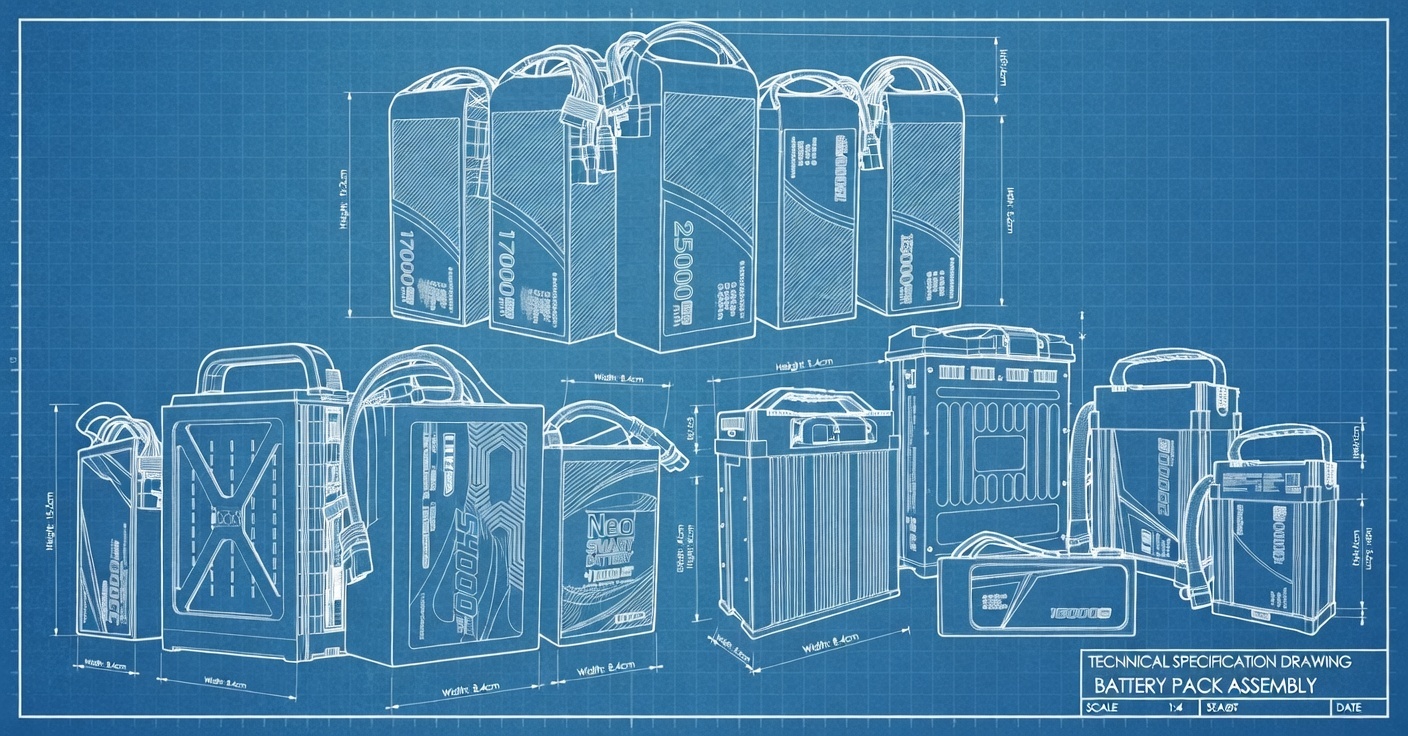
Resolving Cycle Life in Eco-Friendly Drone Batteries
The drone industry is soaring, but its rapid ascent brings a heavy shadow: environmental sustainability. As a B2B operator, you face a critical paradox. You need high-performance batteries to keep your fleet airborne, yet the lithium industry generates significant waste. The heart of this dilemma lies in cycle life.
If a battery only lasts 100 cycles, you must replace it constantly, creating a mountain of hazardous waste. This isn’t just an environmental disaster; it destroys your Total Cost of Ownership (TCO). This article dives deep into how to resolve this cycle life crisis, transforming your drone operations into a model of efficiency and green innovation.
The Hidden Cost of Short Cycle Life
When evaluating a drone battery, the sticker price is deceptive. The real cost is calculated over time.
The Math of Waste:
- Low Cycle Life (100-200 cycles): Frequent replacement is needed. This leads to high procurement costs and massive disposal fees.
- High Cycle Life (500+ cycles): The initial investment is higher, but the cost per flight drops dramatically. Less waste is generated.
According to industry standards, a standard Lithium Polymer (LiPo) battery typically degrades after 150-300 charge cycles. For a heavy-duty operation like agricultural spraying or logistics, this means replacing your entire fleet’s batteries every few months. The logistical nightmare and the environmental footprint of this churn are unsustainable.
The Science of Longevity: Beyond Standard Chemistry
To resolve the cycle life issue, we must look beyond the standard chemistries found in consumer gadgets. The solution lies in material science and thermal management.
1. The Semi-Solid State Revolution
The future of eco-friendly drone batteries rests on Semi-Solid State technology. Unlike traditional liquid electrolytes, which evaporate or degrade, semi-solid electrolytes offer superior stability.
- Material Composition: NMC 811 (Nickel, Manganese, Cobalt in an 80:10:10 ratio) is the gold standard.
- The Result: These batteries can achieve over 500 cycles while retaining 90% of their initial capacity. This effectively doubles or triples the lifespan compared to standard packs.
2. The Heat Factor
Heat is the enemy of lithium cells. Every 10°C increase in operating temperature can halve the battery’s lifespan.
- Thermal Runaway: Standard packs often swell or fail due to internal heat during high-discharge scenarios.
- The Fix: Advanced thermal interface materials and optimized heat dissipation designs are mandatory for extending cycle life in industrial applications.
Performance vs. Longevity: Finding the Balance
Many operators assume that “high performance” means “short life.” This is a myth that needs debunking. Modern engineering allows for both.
| Feature | Standard LiPo | Advanced Semi-Solid State |
|---|---|---|
| Energy Density | ~200 Wh/kg | Up to 380 Wh/kg |
| Cycle Life | 150 – 300 | 500+ (90% Retention) |
| Discharge Rate | 20C – 45C | 1C – 3C (Optimized) |
| Eco-Impact | High Waste Generation | Low Waste, Recyclable Core |
As shown in the table above, the Semi-Solid State solution provides a massive energy density boost without sacrificing longevity. You aren’t just buying a battery; you are investing in a long-term power solution that reduces your carbon footprint per flight hour.
Strategies to Maximize Your Battery’s Lifespan
Even the best battery will fail early if mismanaged. Implementing the right operational protocols is just as important as the hardware you purchase.
1. Smart Charging Protocols
Never leave batteries on a standard charger for days. Overcharging is the fastest way to kill cycle life.
- Storage Mode: Always use chargers with a “Storage” function to maintain the voltage at 3.8V per cell when not in use.
- Temperature Control: Charge batteries at room temperature (20°C-25°C). Never charge a battery immediately after a high-heat mission; allow it to cool first.
2. The Role of the BMS (Battery Management System)
A robust BMS is non-negotiable for drone fleet operators.
- Cell Balancing: Ensures all cells discharge evenly, preventing weak cells from dragging down the entire pack.
- Real-Time Monitoring: Track the State of Health (SOH) to predict when a battery is nearing the end of its life, allowing for planned recycling rather than emergency disposal.
The Business Case: ROI and Sustainability
Switching to high-cycle-life batteries isn’t just “greenwashing”; it is a sound financial strategy.
- Reduced Procurement Costs: Buying batteries every 6 months versus every 2 years creates a massive variance in your capital expenditure.
- Labor Efficiency: Fewer battery swaps mean less downtime for your technicians.
- Regulatory Compliance: As governments crack down on lithium waste, having a documented recycling compliance strategy protects your business from future fines.
By choosing a battery with a 500+ cycle life, you effectively cut your power costs per flight hour by 60%.
Conclusion: Taking the Next Step
The challenge of cycle life in the drone industry is real, but it is solvable. By moving away from disposable, low-cycle-count batteries and investing in advanced Semi-Solid State technology, you protect both the environment and your bottom line.
Don’t let outdated battery technology hold your business back. It is time to demand better performance and longer life from your power source.
Ready to resolve your cycle life challenges?
Explore our range of high-cycle-life drone batteries today.
If you have specific requirements for your fleet, our engineers are standing by to help you design a customized solution that meets your exact energy and longevity needs.