Here is the SEO-optimized article tailored for your requirements.
Title: Nissan Leaf Off-Grid Living: Using Your Car as a Power Hub
Meta Description: Transform your Nissan Leaf into a mobile power station for off-grid adventures. Learn how to maximize range and power output with the right battery upgrade.
Nissan Leaf Off-Grid Living: Using Your Car as a Power Hub
Imagine this: You’re parked at a remote campsite, miles away from the nearest power outlet. The sun is setting, and you need to power your lights, charge your gear, and maybe even run a small heater. For most EV owners, this scenario induces “range anxiety.” But for savvy Nissan Leaf owners, this is where the adventure truly begins.
The Nissan Leaf is more than just an electric car; it is a potential fortress of solitude for the modern nomad. With the right setup, it can become your ultimate off-grid power hub. However, the stock battery capacity often limits the duration of your independence. This is where upgrading your power source becomes not just a luxury, but a necessity for true freedom.
In this guide, we will walk you through the process of turning your Leaf into a self-sufficient energy station, focusing on the critical component: the battery.
Why the Nissan Leaf is the Perfect Base for Off-Grid Living
Before diving into the technicalities, let’s understand why the Leaf is the vehicle of choice for off-grid enthusiasts.
Unlike many modern EVs that are locked behind proprietary software and complex CAN-bus systems, the Nissan Leaf was built on an open-source philosophy. This means you have direct access to the battery management system (BMS), allowing for easier diagnostics, modifications, and crucially, battery swaps.
For the off-grid dweller, this translates to two vital advantages:
- Direct DC Power: You can access the high-voltage DC power directly from the battery terminals.
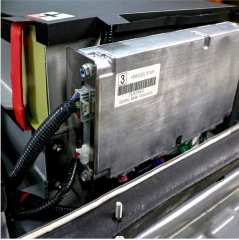
- Swappable Energy: When the sun goes down and your inverter drains the battery, you aren’t stranded. You can physically replace the depleted pack with a fresh one, a concept known as “Hot Swapping.”
This unique feature makes the Leaf the Swiss Army knife of electric vehicles for camping, emergency backup, and remote work.
The Core Challenge: Capacity vs. Consumption
Living off the grid requires a delicate balance between energy storage and energy consumption. The standard Nissan Leaf batteries (24kWh, 30kWh, or 40kWh) are fantastic for city commutes but often fall short for extended off-grid stays, especially if you plan to use heating, cooling, or cooking appliances.
To illustrate this, let’s look at a typical off-grid setup:
| Appliance | Estimated Power Draw (Watts) | Runtime on a 40kWh Battery |
|---|---|---|
| LED Camping Lights | 50W | Over 1 month (theoretical) |
| Laptop Charging | 100W | 160+ hours |
| 12V Car Fridge | 50W (average) | 30+ days |
| Portable Heater | 1500W | ~20 hours |
| Electric Hot Plate | 1200W | ~25 hours |
As you can see, lighting and charging are negligible. However, the moment you introduce heat (for cooking or warmth), your battery capacity depletes rapidly. To survive a cold winter night or cook a proper meal, you need serious juice.
The Solution: Upgrading to a High-Capacity Pack
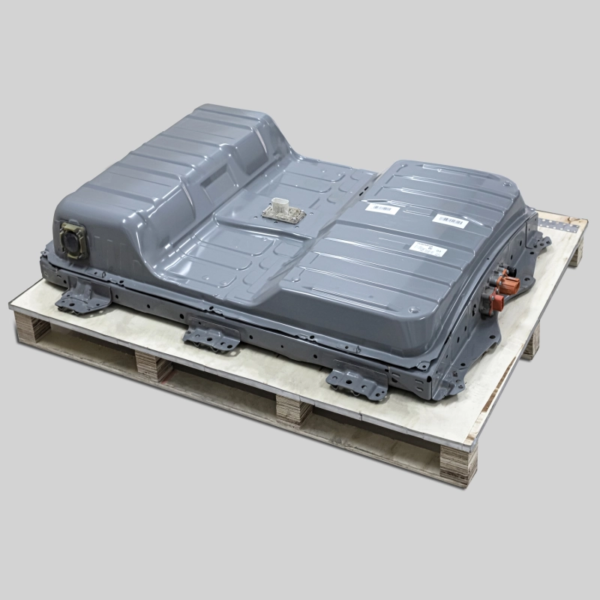
To achieve true energy independence, you need to maximize your storage capacity. This is where upgrading to a 62kWh or 68kWh lithium battery pack becomes the game-changer for Nissan Leaf off-grid living.
By upgrading your Leaf’s heart to a higher-capacity pack, you effectively double or even triple your “fuel tank.” Instead of worrying about draining your battery in one night, you gain the freedom to run a heater all night and still have enough power to drive to your next destination in the morning.
The “Hot Swap” Strategy for Maximum Freedom
The ultimate strategy for off-grid living with a Nissan Leaf is the Hot Swap method. Here is how it works:
- The Primary Pack: This is the battery installed in your car. You use it to drive and to power your campsite.
- The Secondary Pack: This is a spare, fully charged battery pack stored safely (but disconnected) in a trailer, van, or shed.
- The Swap: When your car battery runs low, instead of waiting 8+ hours to recharge, you simply unbolt the depleted pack and bolt in the fresh one. You are back online in under an hour.
This method eliminates charging downtime entirely. It turns your Leaf into a vehicle that never needs to “plug in” during your adventure.
Introducing the CNS Advantage for Leaf Enthusiasts
At CNS BATTERY, we specialize in providing the high-capacity, reliable power solutions that Nissan Leaf off-grid enthusiasts need. We understand that your battery isn’t just a component; it is your lifeline when you are far from civilization.
1. Unmatched Capacity Options
We offer a full range of Nissan Leaf compatible batteries, including the coveted 62kWh and 68kWh lithium battery packs. These packs are engineered to fit the Leaf ZE0, AZE0, and ZE1 chassis perfectly, providing the maximum energy density available on the market.
2. Built for Reliability
When you are living off the grid, a battery failure isn’t just an inconvenience; it is a crisis. Our packs utilize brand-new CATL battery cells, the same tier-1 quality used by major OEMs. We do not use recycled or refurbished cells, ensuring your pack can withstand the vibrations of off-road travel and the temperature swings of the wilderness.
3. Peace of Mind Warranty
We stand by our product with a 24-month / 80,000km warranty. This is significantly longer than what most aftermarket suppliers offer and provides the safety net you need when you are relying on your car for survival.
4. Technical Expertise
Switching to a higher capacity pack or performing a “Hot Swap” requires technical knowledge. Our team of experts provides detailed installation guides and video tutorials to ensure you can set up your system correctly. Whether you are upgrading from a 40kWh to a 62kWh or setting up a dual-battery rotation, we have the solutions.
Building Your Off-Grid Power Station: A Step-by-Step Guide
Ready to turn your Nissan Leaf into a fortress of solitude? Here is how to set it up:
Step 1: Assess Your Needs
Calculate your daily energy consumption. If you are just charging devices and running lights, a 40kWh pack might suffice. If you need heat or cooking power, you must upgrade to a 62kWh or 68kWh pack.
Step 2: The Upgrade
Contact CNS BATTERY to acquire a high-capacity pack. Ensure it is compatible with your specific Leaf model (ZE0, AZE0, or ZE1). If you plan to do “Hot Swapping,” you will need to purchase two packs: one for the car and one as a spare.
Step 3: The Inverter
To power standard household appliances, you need a Pure Sine Wave inverter. Connect this to your Leaf’s DC fast charging port or directly to the battery terminals (if you have the technical skill). A 1500W inverter will handle most camping needs.
Step 4: The Setup
Park your Leaf, engage the parking brake, and connect your inverter. You now have a silent, fume-free generator.
Conclusion: Freedom Awaits
Nissan Leaf off-grid living is not just a dream; it is a practical reality for thousands of adventurers around the world. By leveraging the Leaf’s unique open-source architecture and upgrading to a high-capacity battery solution, you can break free from the grid and explore the world on your own terms.
Don’t let limited range hold you back. Upgrade your power source, embrace the “Hot Swap” lifestyle, and let your Leaf be the power hub that fuels your adventures.
Ready to upgrade your Nissan Leaf for off-grid living? Get a free quote for a high-capacity 62kWh or 68kWh battery pack today.
Frequently Asked Questions (FAQ)
Q1: Can I really use my Nissan Leaf to power my home or campsite?
A: Absolutely. The Nissan Leaf has a unique feature that allows you to access the high-voltage DC power directly from the battery terminals or via the CHAdeMO port (with the right adapter). This allows you to run an inverter to power lights, laptops, fridges, and even small heaters.
Q2: Is it safe to remove the battery from my Leaf for “Hot Swapping”?
A: Yes, it is safe when done correctly. The Nissan Leaf was designed with modularity in mind. However, because it involves high-voltage components, we strongly recommend following a detailed guide or having a professional technician perform the swap the first time. CNS BATTERY provides comprehensive installation videos and manuals to ensure safety.
Q3: What size inverter do I need for off-grid living?
A: For basic needs like charging phones, laptops, and running LED lights, a 500W to 1000W inverter is sufficient. If you plan to run a microwave, electric heater, or hot plate, you will need a Pure Sine Wave inverter rated at 1500W or higher. Avoid “Modified Sine Wave” inverters as they can damage sensitive electronics.
Q4: How long will a CNS BATTERY pack last in my Leaf during off-grid use?
A: This depends on your usage. A standard 40kWh pack might power a fridge and lights for several days but would only run a 1500W heater for about 20 hours. By upgrading to a CNS 62kWh or 68kWh pack, you can effectively double that runtime, giving you the freedom to use heating and cooking appliances without constant anxiety.
Q5: Are CNS batteries compatible with all Nissan Leaf models?
A: We specialize in Nissan Leaf batteries and support a wide range of models, including the Leaf ZE0, AZE0, and ZE1. We also support the e-NV200. To ensure perfect compatibility, we recommend providing your VIN (Vehicle Identification Number) to our technical team for a free compatibility assessment before purchasing.