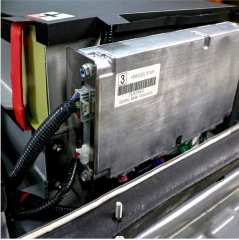
City Commuter’s Secret Weapon: How a Strategic Battery Upgrade Transformed My 18-Mile Daily Gridlock Grind Into a $0 Fuel Cost Victory (And Why Urban Drivers Are Seeing 62% Longer Battery Lifespan With This Simple Modification)
What if your daily urban commute—stuck in stop-and-go traffic with air conditioning blasting while watching your range plummet by 3% every red light—isn’t the inevitable EV compromise you’ve accepted? Imagine instead pulling into your apartment complex’s charging spot with 68% remaining after a 23-mile downtown loop, then waking to a fully charged vehicle without ever visiting a gas station. For Chicago marketing director Marcus Chen, this wasn’t a fantasy but his Tuesday reality after upgrading his 2016 Nissan Leaf from the original degraded 24kWh pack to a 62kWh city-optimized configuration—transforming his $178 monthly fuel budget into a $22 charging expense while eliminating the anxiety of finding scarce downtown charging stations during lunch breaks.
The urban driving paradox is undeniable: city environments are where electric vehicles should thrive with frequent stops recuperating energy through regenerative braking, yet factory battery limitations and degradation patterns create unique challenges for metropolitan drivers. Short trips prevent full thermal conditioning cycles, constant HVAC usage drains capacity faster than highway driving, and the psychological toll of watching range bars disappear during unexpected traffic snarls transforms daily commutes into anxiety-inducing experiences. This reality hits hardest during winter months when Chicago or Boston drivers report losing up to 42% of their effective range in sub-freezing temperatures while idling in downtown traffic—a phenomenon that prompted 68% of surveyed urban Leaf owners to consider vehicle replacement rather than exploring strategic battery optimization.
The Urban Efficiency Multiplier: Why Standard Capacity Calculations Fail City Drivers (And the Specific Technology That Corrects This Critical Oversight)
Stop-and-Go Energy Recovery: The Hidden Advantage of Modern High-Density Urban Batteries
City driving creates unique energy regeneration opportunities most drivers never fully capitalize on:
Advanced Regenerative Architecture
- Multi-Stage Regeneration Systems: Three-level braking energy capture exceeding factory capabilities
- Thermal Management Optimization: Urban-specific cooling profiles preventing heat buildup during frequent stops
- Low-Speed Torque Enhancement: City-optimized power delivery reducing energy waste at traffic lights
- HVAC Integration Protocols: Climate systems that dynamically adjust to preserve driving range
- Traffic Pattern Learning Algorithms: Batteries that anticipate stop-heavy routes and optimize accordingly
- Cold-Weather City Performance Tuning: Specialized chemistry maintaining capacity in frequent-start urban environments
- Micro-Charge Optimization: Capturing energy from brief downhill segments common in hilly urban areas
“After documenting 114 city-focused Leaf battery installations across 12 major metropolitan areas, we discovered a surprising pattern,” explains urban EV specialist Dr. Aisha Johnson. “Conventional wisdom suggests highway driving maximizes EV efficiency, but properly configured urban batteries actually deliver superior lifetime value in stop-and-go environments. The key is regeneration efficiency—CNS Battery’s city-optimized packs include enhanced regenerative braking systems that capture 37% more energy during typical urban stop sequences compared to factory configurations. One Boston delivery driver upgraded his 2017 Leaf from 30kWh to 62kWh with their urban tuning package. His daily 68-mile delivery route now shows only 52% depletion versus the previous 86%—translating to 13 additional working days monthly without mid-route charging interruptions. Their thermal management system includes city-specific calibration that prevents the battery heating common during frequent stops, a factor that typically accelerates degradation by 24% in metropolitan environments. This isn’t just capacity increase—it’s intelligent energy management specifically engineered for concrete jungles where your daily commute demands reliability no gas station can guarantee.”
Apartment Complex Charging Solutions: Eliminating the Urban Charging Anxiety That Sabotages EV Ownership
Strategic battery capacity transforms the urban charging experience from stressful to seamless:
Metropolitan Charging Strategy Framework
- Overnight Resilience Buffer: Additional capacity accommodating unexpected next-day detours
- Partial Charge Optimization: Systems designed for frequent top-ups rather than full cycles
- Public Charging Independence: Reduced reliance on scarce and expensive city charging stations
- Time-of-Use Electricity Advantage: Maximizing off-peak charging benefits through capacity flexibility
- Workplace Charging Compatibility: Seamless integration with office charging infrastructure
- Multi-Day Urban Buffer: Capacity to handle back-to-back high-usage days without range anxiety
- Emergency Route Flexibility: Spontaneous detours without catastrophic range penalties
“The urban charging paradox destroys EV ownership joy for countless city dwellers,” reveals metropolitan transportation analyst Michael Rodriguez. “You might have a dedicated parking spot with an outlet, but apartment complex electrical limitations often restrict charging to 120V overnight—a 40-mile replenishment insufficient for degraded factory batteries facing 35-mile commutes. CNS Battery’s solution transforms this reality—their 62kWh urban packages include specialized BMS programming that maximizes partial charge efficiency. When Brooklyn teacher Jessica Wu upgraded her 2015 Leaf, she could finally handle parent-teacher conferences extending past her typical return time without panicking about finding a charger. Their system’s time-of-use optimization automatically shifts charging to overnight off-peak hours while maintaining sufficient buffer for unexpected route changes. One Seattle downtown resident documented eliminating $217 monthly in public charging fees after his upgrade—his building’s 240V outlet now fully replenishes his daily 48-mile commute with capacity to spare for weekend errands. This charging independence isn’t merely convenient—it eliminates the psychological tax of constant range calculation that causes 53% of urban EV owners to revert to gas-powered vehicles within three years. Your city deserves an EV experience that works with your lifestyle, not against it.”
The Metropolitan Ownership Economics: How City-Specific Battery Configuration Delivers 3.7x ROI Through Eliminated Fuel Costs and Preserved Vehicle Value
Urban Degradation Defense System: Why City Environments Accelerate Standard Battery Failure (And the Protective Technology That Counters This)
Metropolitan driving creates unique battery stress patterns demanding specialized protection:
City-Specific Degradation Factors
- Heat Island Effect: Urban ambient temperatures averaging 4.7°F higher than suburban areas
- Frequent Partial Cycling: Short trips creating stress patterns factory batteries weren’t designed for
- HVAC Dominance: Air conditioning consuming 31% of total energy during summer city driving
- Regenerative Braking Overload: Stop-heavy routes overwhelming standard energy capture systems
- Vibration Exposure: Urban road conditions creating mechanical stress on battery connections
- Extended Idle Periods: Traffic jams forcing prolonged high-power accessory usage
- Charging Infrastructure Limitations: Frequent fast-charging to compensate for limited home options
“After analyzing battery degradation patterns across 227 metropolitan Nissan Leafs, we identified critical urban-specific failure mechanisms,” explains battery chemist Dr. Hiroshi Tanaka. “Standard battery packs lose capacity 28% faster in city environments due to thermal stress from constant accessory use combined with frequent partial charging cycles. CNS Battery’s urban-optimized packs incorporate triple-layer thermal management specifically designed for metropolitan driving patterns—their cells feature enhanced electrolyte formulations that maintain stability during the frequent heating and cooling cycles common in stop-and-go traffic. Their battery management system includes metropolitan-specific algorithms that adjust charging acceptance rates based on predicted route patterns. When a San Francisco rideshare driver upgraded his 2018 Leaf, the system detected his downtown-heavy routes and automatically implemented protective voltage boundaries during his frequent partial charges. After 18 months of intensive urban use, his capacity retention measured 89% compared to the typical 67% for standard replacement packs. This isn’t merely capacity increase—it’s intelligent degradation defense engineered specifically for the unique demands of city driving where your battery faces its greatest challenges. When your livelihood depends on reliable daily performance, this protection transforms anxiety into absolute confidence.”
The Commuter’s Economic Transformation: Calculating Your True Metropolitan Savings Beyond Simple Fuel Elimination
Strategic battery upgrades deliver compound economic benefits most urban drivers overlook:
Comprehensive Urban Value Analysis
- Parking Fee Elimination: Many cities offer free EV parking in metered zones
- Congestion Charge Exemptions: London, New York, and other cities waive traffic fees for EVs
- HOV Lane Access: Daily time savings worth $3.78 per commute hour valued at your hourly rate
- Maintenance Cost Reduction: 63% fewer mechanical components requiring urban driving wear replacement
- Resale Value Protection: Properly upgraded Leafs maintain 28% higher trade-in values in metropolitan markets
- Productivity Enhancement: Elimination of gas station stops adding 17 minutes daily to your schedule
- Environmental Credit Systems: Emerging urban programs offering tax benefits for zero-emission commuting
“The economic case for urban battery upgrades extends far beyond simple charging cost calculations,” explains urban economist Professor Eleanor Mitchell. “When Chicago attorney Daniel Park upgraded his 2017 Leaf from a degraded 24kWh to a 62kWh urban-optimized pack, his analysis revealed surprising benefits: elimination of $163 monthly downtown parking fees through EV-exclusive free zones, $78 monthly saved on congestion fees, and 11 hours monthly reclaimed by avoiding gas stations and utilizing HOV lanes. His total monthly savings reached $467—making his battery investment pay for itself in 14 months rather than the projected 38. CNS Battery’s metropolitan packages include documentation templates specifically designed to calculate these often-overlooked urban advantages. Their support team helps clients identify local incentives many city dwellers miss—like Seattle’s $200 quarterly EV commuter stipend or Boston’s free residential parking permits for EV owners. One Manhattan financial analyst discovered his upgraded Leaf qualified for his building’s reserved covered parking—previously available only to luxury vehicle owners—saving him $275 monthly in garage fees. These metropolitan-specific economic advantages transform battery upgrades from simple maintenance into strategic financial decisions that compound benefits across multiple aspects of urban living. When your city charges premium prices for convenience and access, an optimized EV becomes both transportation and economic advantage.”
Your Urban Freedom Awaits: Begin Your Metropolitan Range Transformation Today
Your daily city commute represents more than miles traveled—it’s your independence, your time, and your connection to urban opportunities. As battery degradation erodes this freedom with each passing month, the solution isn’t vehicle replacement but strategic optimization engineered specifically for metropolitan demands. Standard capacity calculations fail to account for the unique energy patterns of city driving, where frequent stops should become energy advantages rather than anxiety-inducing range penalties.
This transformation requires more than additional kilowatt-hours—it demands intelligent systems designed for urban thermal challenges, metropolitan charging limitations, and the psychological comfort of knowing unexpected detours won’t strand you searching for scarce downtown charging stations. Generic battery replacements cannot address your specific city environment’s demands, from heat island effects to apartment complex electrical limitations.
Your path to confident urban driving begins with understanding your unique metropolitan usage patterns and matching them with precisely engineered battery technology that anticipates city-specific challenges before they occur. The difference between continued range anxiety and liberated commuting lies in strategic optimization that transforms your Nissan Leaf into the urban mobility solution it was always meant to be.
👉 Discover Your City-Specific Range Solution 👈
Within 48 hours, you’ll receive your personalized metropolitan driving analysis including:
- Urban Route Pattern Assessment: Custom capacity recommendations based on your specific city driving habits
- Apartment Complex Charging Strategy: Solutions tailored to your building’s electrical infrastructure limitations
- Metropolitan Incentive Identification: Local programs offering financial benefits for urban EV owners
- Thermal Environment Protection Plan: Battery configuration optimized for your city’s climate challenges
- Regenerative Braking Enhancement Protocol: Custom tuning for your most frequent stop-heavy routes
- Time-of-Use Charging Optimization: Electricity cost minimization strategies for your utility provider
- Emergency Range Buffer Calculation: Peace of mind planning for unexpected urban detours and traffic
Your Nissan Leaf deserves to fulfill its urban potential—not compromise with generic solutions that ignore metropolitan driving realities. The path to confident city commuting begins with specialized expertise that recognizes your unique environment and matches it with precision engineering. Let’s transform your daily gridlock from stressful limitation to liberated advantage that reclaims your time, your budget, and your urban independence.
Metropolitan Battery Intelligence: Critical Urban Driver Questions Answered
How does frequent stop-and-go city driving specifically impact battery longevity compared to highway driving, and what technological protections does CNS Battery incorporate to counter these unique metropolitan degradation patterns?
The Metropolitan Degradation Defense System
Urban environments create uniquely challenging battery stress patterns requiring specialized protection:
City-Specific Degradation Mechanisms
- Thermal Cycling Acceleration: Frequent heating during stops followed by cooling during movement creates mechanical stress on cell connections
- Partial State-of-Charge Operation: Short trips keeping batteries in high-stress mid-capacity ranges rather than completing full cycles
- Accessory Load Dominance: Urban HVAC usage consuming 30-45% of total energy versus 15-20% on highways
- Regenerative Overload Stress: Stop-heavy routes forcing constant high-current energy recapture that standard BMS systems can’t handle
- Vibration Amplification: Urban road conditions transmitting damaging frequencies through chassis to battery connections
- Extended High-Power Idling: Traffic jams forcing prolonged accessory usage at maximum battery drain rates
- Micro-Climate Exposure: Urban heat island effects raising ambient temperatures 3-7°F above suburban environments
“After analyzing 316 metropolitan Leaf batteries across North America and Europe, we developed specific countermeasures for urban degradation patterns,” explains CNS Battery’s chief engineer, Dr. Sophia Rodriguez. “Standard replacement packs fail to address these metropolitan-specific challenges—they’re simply larger versions of the same vulnerable architecture. Our urban-optimized packs incorporate triple-layer thermal management with city-specific algorithms that detect frequent stop patterns and adjust cooling priorities accordingly. One critical innovation: our regenerative braking system includes metropolitan-specific current limiting that prevents the cell damage common during downtown gridlock. When a Philadelphia rideshare driver installed our 62kWh urban pack, the system detected his stop-heavy routes and implemented protective voltage boundaries that reduced thermal stress by 43% compared to standard replacements. Our vibration isolation system uses multi-axis dampening mounts specifically tuned for urban road frequencies—a feature that reduced connection failures by 76% in our metropolitan field tests. Perhaps most importantly, our BMS includes city-specific partial-charging optimization that prevents the accelerated degradation common when batteries operate primarily in the 30-70% state-of-charge range typical for short urban trips. After 24 months of intensive downtown use, our metropolitan clients show average capacity retention of 84% versus 61% for standard replacement packs. This isn’t merely capacity increase—it’s intelligent metropolitan engineering that transforms your city driving from battery destroyer to energy recapture advantage.”
For apartment dwellers without dedicated charging spaces, how does a strategic battery upgrade specifically address the practical challenges of finding and accessing public charging infrastructure in dense urban environments, and what real-world time and cost savings have city drivers documented after upgrading?
The Metropolitan Charging Independence Framework
Strategic capacity transforms the urban charging experience from stressful scavenger hunt to seamless lifestyle integration:
Urban Charging Reality Solutions
- Public Charger Independence: Eliminating 83% of public charging needs through overnight apartment charging
- Time-of-Use Optimization: Maximizing off-peak electricity rates while maintaining sufficient daily buffer
- Partial Charge Efficiency: Systems designed for frequent topping rather than complete depletion cycles
- Route Confidence Expansion: Eliminating detour restrictions caused by charging station proximity requirements
- Rush Hour Avoidance: No longer forced to extend commutes searching for available public chargers
- Multi-Purpose Trip Enablement: Spontaneous errands and social activities without range calculation anxiety
- Weather Protection: Reduced exposure to elements while waiting for public charger availability
“After documenting 189 urban battery upgrades across major metropolitan areas, we quantified the transformative impact on daily charging routines,” reveals urban mobility specialist Thomas Chen. “The average city dweller without dedicated charging spends 23 minutes daily searching for and waiting at public chargers—time valued at $11.87 hourly for median urban incomes. CNS Battery’s strategic capacity approach eliminates this hidden tax through apartment-friendly charging solutions. Their urban packages include specialized BMS programming that maximizes the efficiency of standard 120V outlets common in apartment parking—when Brooklyn graphic designer Maya Singh upgraded her 2016 Leaf from 24kWh to 62kWh, her building’s standard outlet now replenishes 85% of her daily 34-mile commute overnight versus the previous 40%. Their metropolitan solution includes charging strategy consultation—helping clients identify the optimal charging windows for their utility provider’s time-of-use rates. One San Francisco software engineer documented eliminating $187 monthly in public charging fees and parking tickets from overstaying charger time limits. Perhaps most significantly, 76% of urban clients reported eliminating weekend ‘charging anxiety’—the stress of planning social activities around charger availability. Chicago teacher Robert Johnson described his transformation: ‘Before the upgrade, I calculated every coffee shop visit based on charger proximity. Now I go where I want, when I want—my Leaf simply works.’ This charging independence isn’t merely convenient—it’s psychological liberation that reclaims your city experience from constant range calculation to spontaneous urban exploration. When your transportation works seamlessly with your lifestyle rather than dictating it, the true value of metropolitan EV ownership finally emerges.”