
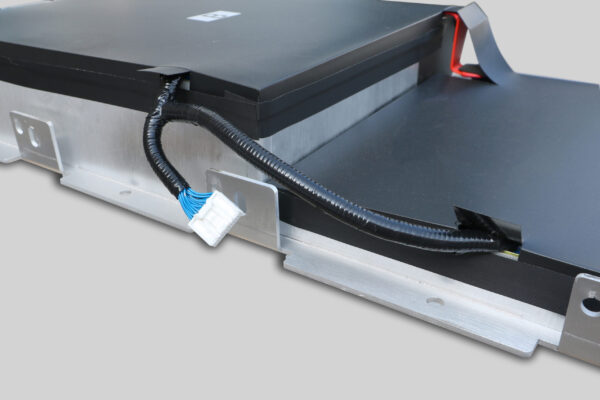
Maximizing Leaf ZE0 Downtime Reduction for Last-Mile Delivery Fleets
For last-mile delivery fleet managers, every minute a Nissan Leaf ZE0 sits idle is a direct hit to the bottom line. As the 2011-2017 Leaf models age, battery degradation has become the primary culprit for downtime. This guide explores how switching to a high-quality replacement battery can drastically reduce maintenance windows and keep your fleet moving efficiently.
The Cost of Battery Degradation in Legacy Fleets
The Nissan Leaf ZE0 was a pioneer in the EV market, but its early lithium-ion technology has a finite lifespan. Most commercial fleets operating these vehicles are now facing a harsh reality: batteries that once held 100% capacity have degraded to 50-60%, triggering “Turtle Mode” frequently.
- Range Anxiety is Real: A degraded ZE0 often struggles to complete a full shift without multiple charges.
- Extended Downtime: Waiting for slow charging or dealing with unexpected breakdowns disrupts delivery schedules.
- Hidden Costs: Beyond lost revenue, there are increased labor costs for towing and maintenance.
Why Standard Replacement Isn’t Enough
When a Leaf battery fails, fleet managers typically face two options: a costly OEM replacement or a risky used unit. However, neither solves the downtime issue effectively.
The OEM Trap: Official replacement batteries can cost upwards of $16,000 per unit. While they offer reliability, the astronomical price forces many fleets to delay the inevitable, prolonging the use of unreliable vehicles.
The Used Gamble: Purchasing a second-hand battery might save money upfront, but it introduces massive uncertainty. Used packs often have unknown health metrics and a high risk of immediate failure, leading to even more downtime.
The Strategic Solution: Upgrading to New CATL Cells
To truly maximize uptime, fleets need a battery that matches OEM standards without the prohibitive cost. This is where upgrading to a pack built with brand-new CATL (Contemporary Amperex Technology Co. Limited) cells becomes a game-changer.
Unlike refurbished or used batteries, a new CATL-based solution offers:
- Guaranteed Health: Starting at 100% State of Health (SOH), eliminating the guesswork.
- Extended Range: Upgrading from a degraded 24kWh or 30kWh equivalent to a modern 40kWh or 62kWh pack can double your daily operational range.
- Plug-and-Play Installation: Designed for OEM compatibility, these batteries minimize labor hours during the swap.
Reducing Downtime: The Installation Advantage
One of the most critical factors in fleet management is the speed of repair. A battery replacement shouldn’t take days. Modern replacement solutions are engineered for rapid deployment.
- 1-2 Hour Swap: A professional technician can typically complete the installation in under two hours. This includes disconnecting the old unit, installing the new battery, and running system diagnostics.
- No Modifications Required: The chassis and connectors are identical to the original factory specifications, meaning no cutting or rewiring is necessary.
- Video Support: For fleets managing their own maintenance, remote video guidance can assist technicians in real-time, ensuring a first-time fix.
Long-Term Reliability and Warranty
Downtime reduction isn’t just about the initial swap; it’s about long-term reliability. A battery built with new cells doesn’t just offer a temporary fix—it provides a long-term solution.
By choosing a manufacturer that offers a comprehensive warranty, such as a 2-year / 80,000 km guarantee, fleet managers can operate with confidence. This warranty coverage, which often surpasses standard industry offerings, protects against defects and ensures that if an issue does arise, the resolution is swift and cost-free.
The Economic Impact on Your Fleet
Switching to a new battery solution isn’t just a maintenance cost; it’s a strategic investment in your fleet’s productivity.
- Cost Efficiency: Paying approximately 50% less than an OEM battery allows you to refresh your entire fleet’s powertrain at a fraction of the cost.
- Revived Asset Value: An upgraded Leaf ZE0 performs like a new EV, extending the usable life of the vehicle chassis by another 5-8 years.
- Operational Predictability: With a reliable range and fast charging, route planning becomes accurate and dependable.
Frequently Asked Questions (FAQ)
1. How long does the battery replacement process take for a Nissan Leaf ZE0?
The physical installation of a replacement battery typically takes a professional technician between 1 to 2 hours. This includes removing the old battery, installing the new unit, and running the necessary diagnostic tests to ensure the BMS (Battery Management System) is communicating correctly with the vehicle.
2. Are these replacement batteries compatible with my specific Leaf model?
Yes, but it is crucial to verify the specific variant. Replacement batteries are designed to be OEM-compatible with various Leaf generations, including the ZE0, ZE1, and AZE0 models. To ensure a perfect fit, you should provide your Vehicle Identification Number (VIN) to the supplier for a free compatibility assessment before purchasing.
3. What is the warranty coverage for these new replacement batteries?
Reputable suppliers offer a warranty that covers manufacturing defects and performance degradation. A standard industry-leading warranty is 2 years or 80,000 km (whichever comes first). This warranty typically includes free replacement or repair if the battery fails to hold a charge or drops below a certain capacity threshold (usually 70-80%) within that period.
4. Can I upgrade to a higher capacity (kWh) than my original battery?
Yes, upgrading capacity is a common strategy to maximize uptime. For example, you can often upgrade a ZE0 from its original 24kWh or 30kWh capacity to a 40kWh or even 62kWh pack. This requires a battery specifically designed for that upgrade path and may involve checking your vehicle’s VIN to ensure the BMS and charger are compatible with the higher voltage or software requirements.
5. What payment and shipping methods are available for fleet orders?
Most manufacturers support international sales and offer various payment methods, including bank transfers and secure online transactions. For shipping, they often handle customs compliance and provide DDP (Delivered Duty Paid) services, meaning the battery is delivered to your door with all duties and taxes prepaid. Lithium batteries are shipped as dangerous goods (UN 3480), so they utilize carriers like DHL, FedEx, or UPS depending on the destination and urgency.
Ready to eliminate downtime in your fleet? Get a Free Custom Quote Now and discover how new battery technology can revive your Nissan Leaf ZE0 operations.


