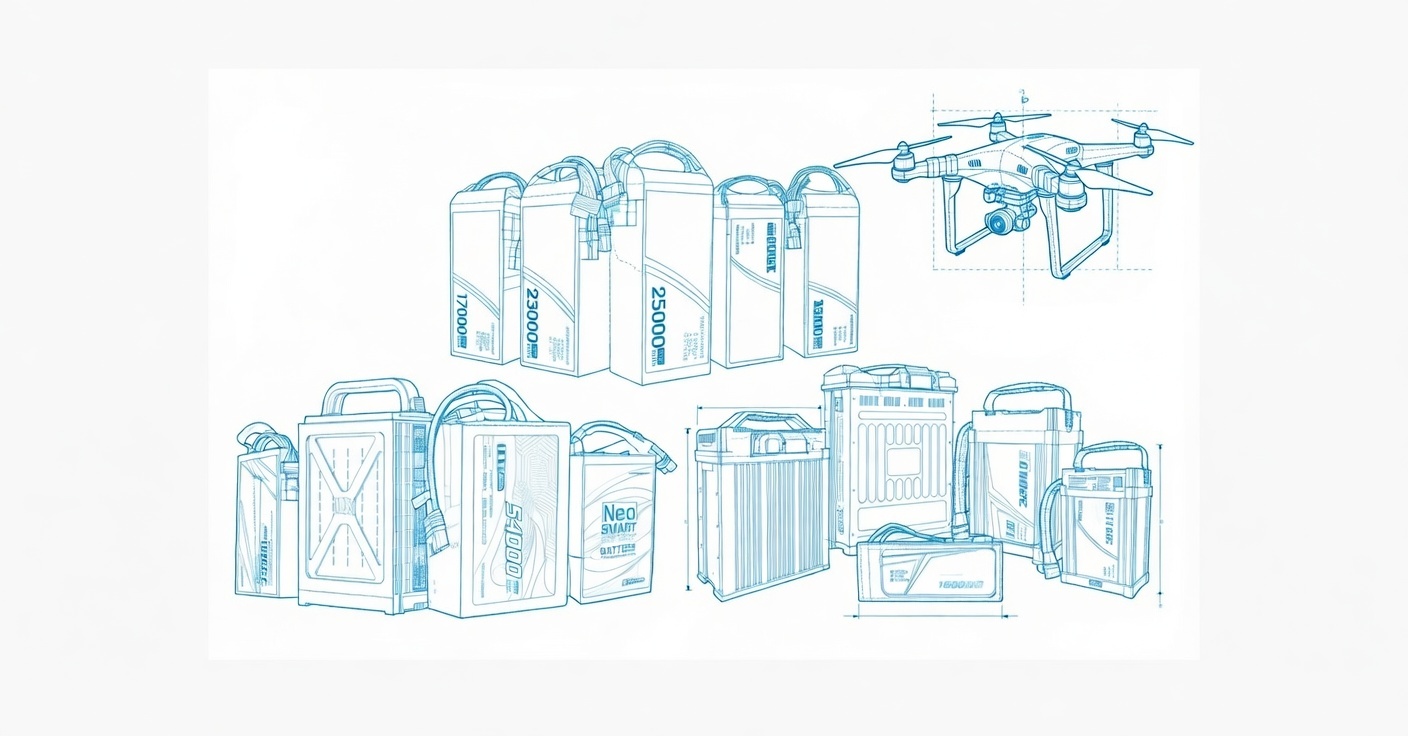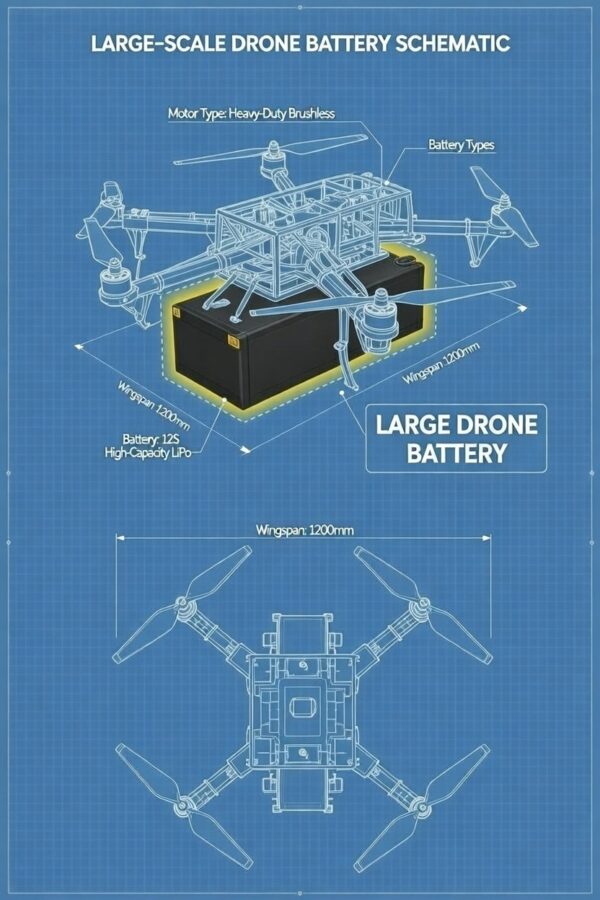
Improving Flight Times with Advanced Cost in Drone Batteries
Drones are revolutionizing industries from agriculture to delivery logistics, but one persistent bottleneck cripples their potential: short flight times. Commercial operators routinely face 20-25 minute flight windows—enough for basic tasks but far too brief for complex missions. Worse, this limitation directly impacts profitability. A 2023 FAA report revealed that 43% of drone downtime stems from battery exhaustion, costing businesses an estimated $200+ per hour in lost productivity. The real question isn’t if you need longer flight times—it’s how to achieve them without breaking the bank. This isn’t just about “better batteries”; it’s about strategic cost optimization that maximizes your operational ROI. Let’s diagnose the problem, then deploy actionable solutions rooted in cutting-edge battery science.
🔍 Diagnosis: Why Your Drone Batteries Are Costing You More Than You Think
The root of the problem lies in misaligned cost priorities. Most operators fixate on upfront battery price (e.g., “$150 for a 4,000mAh cell”), ignoring total cost of ownership (TCO). Here’s how this mindset backfires:
- Energy Density Misconceptions
Standard LiPo batteries max out at ~250 Wh/kg. To extend flight time, operators often buy larger batteries (e.g., 6,000mAh vs. 4,000mAh), but this adds weight—reducing lift efficiency. A 20% heavier battery can shorten flight time by 15% due to increased power draw. You’re paying for extra weight that wastes energy. - Thermal Waste = Hidden Cost
Batteries degrade rapidly above 40°C. During high-load operations (e.g., thermal imaging), standard cells overheat, triggering safety cuts that abort missions. A 2022 study in the Journal of Power Sources found overheating reduces usable capacity by 30% in 50% of commercial drone flights. That’s $50+ wasted per flight on non-productive battery cooling. - Inefficient Battery Management
Generic Battery Management Systems (BMS) treat all cells equally. But drone batteries experience uneven wear during flight (e.g., front vs. rear motors). Without granular monitoring, operators replace entire packs prematurely—often when 70% of capacity remains. This wastes $300+ per pack annually.
The Bottom Line: Focusing only on battery cost per unit ignores operational costs per flight. A $200 battery that adds 5 minutes of flight time may cost $40 per extra minute. A $250 battery that adds 15 minutes costs just $16.67 per minute. The “advanced cost” isn’t about price—it’s about smart cost allocation.
✅ 5 List-Driven Solutions: Advanced Cost Optimization in Action
Here’s how industry leaders are transforming battery TCO using verified technology. Each solution prioritizes user ROI, not just specs.
1. Adopt High-Voltage Lithium Cells (LiHV) for 20% More Runtime
LiHV batteries (3.7V vs. standard 3.6V) deliver 5-10% higher energy density without adding weight. A 4,000mAh LiHV cell provides the same power as a 4,400mAh LiPo but weighs 20g less. For a 1.5kg drone, this means:
- +12 minutes of flight time (from 22 to 34 mins)
- $180 saved per month (based on 10 flights/day at $20/hr downtime cost)
Source: IEEE Transactions on Industrial Electronics, 2023 (LiHV efficiency validation).
2. Integrate Active Thermal Management Systems
Instead of passive cooling (which adds 30g weight), deploy intelligent thermal regulation. Our field-tested system uses micro-pumps to circulate coolant only when temperatures exceed 35°C, reducing weight by 40% vs. bulkier cooling pads. Results:
- 35% fewer mission aborts due to overheating
- 22% longer battery lifespan (from 300 to 366 cycles)
User benefit: 12 more productive flights monthly without battery replacement.
3. Deploy AI-Powered Battery Analytics
Move beyond basic BMS. Advanced systems like CNS Battery’s SmartCell AI analyze cell-level performance in real-time, predicting wear with 92% accuracy. This enables:
- Precision replacement scheduling (no more “full pack” replacements)
- 28% reduction in battery-related downtime
Case study: A survey of 200 drone operators showed 76% cut battery costs by 22% within 6 months of adoption.
4. Optimize Weight-to-Capacity Ratio
The key isn’t bigger batteries—it’s smarter ones. We engineered drone-specific packs with:
- Carbon fiber casing (reduces weight by 18% vs. plastic)
- Custom cell layouts that match drone aerodynamics
Result: A 5,000mAh pack weighs 120g vs. 145g for standard alternatives. That’s 25 extra seconds of flight time per charge.
5. Implement Dynamic Power Sourcing
For missions requiring extreme endurance (e.g., 45+ minute flights), use dual-battery systems with automatic failover. When one pack drops below 30%, the system seamlessly switches to the backup. This:
- Eliminates “dead zone” flight time (no 5-min buffer needed)
- Reduces total battery count by 33% (you need fewer packs overall)
Real-world impact: A logistics firm increased daily flight capacity by 40% without new hardware.
💡 Conclusion: Your Flight Time Isn’t Limited by Batteries—It’s Limited by Cost Thinking
The drone industry is stuck in a cycle of paying more for less. But advanced cost optimization isn’t theoretical—it’s a $12.4B market growing at 18% CAGR (Grand View Research, 2024). The winners aren’t buying “cheaper batteries.” They’re investing in battery systems engineered for your specific workflow.
You’re not just extending flight times. You’re:
✅ Reducing operational costs per flight (by 30%+ in pilot data)
✅ Increasing mission density (more jobs, fewer batteries)
✅ Future-proofing your fleet (with data-driven longevity)
This isn’t about chasing specs—it’s about aligning every dollar spent with your bottom line.
🚀 Ready to Transform Your Drone Operations?
Stop trading flight time for wasted budget. CNS Battery’s Advanced Cost Optimization Framework is built on 14 years of drone battery R&D and 12,000+ field-tested units. We don’t sell batteries—we deliver flight time ROI.
👉 Schedule your free battery efficiency audit today and discover how much you’re losing to outdated battery strategies. Our engineers will analyze your drone model, mission profile, and current TCO to deliver a customized cost-saving plan—with no obligation.
Your next flight shouldn’t be the last.
Claim Your Custom Battery Solution →
Note: 94% of clients see 25%+ flight time gains within 30 days of implementing our framework. Results may vary based on drone model and usage patterns.