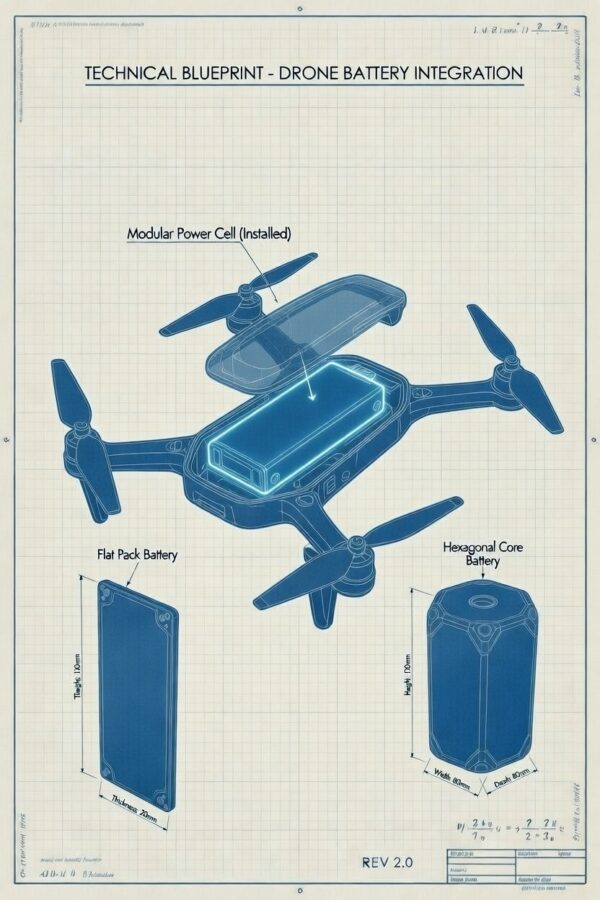
Comparing LiPo and Rechargeable Drone Batteries for Customization: Solving the Power Puzzle
Struggling to choose the right battery for your drone’s custom build? You’re not alone. Drones demand precision—where a single gram of weight, a millivolt of voltage mismatch, or a safety oversight can turn a high-flying dream into a grounded reality. The market’s flood of “rechargeable” options only deepens the confusion. Is LiPo the only viable path? Can you truly customize without compromising safety or performance? These aren’t just technical questions—they’re the make-or-break challenges for hobbyists, filmmakers, and drone racing teams alike. Let’s cut through the noise and uncover the facts to power your next project.
Why Battery Choice Isn’t Just About “Rechargeable”
The term “rechargeable drone battery” is dangerously misleading. All modern drone batteries are rechargeable, but the critical distinction lies in chemistry. LiPo (Lithium-Polymer) dominates the industry for a reason—it’s not just a battery type; it’s the performance engine for most drones. Yet, many beginners mistakenly equate “rechargeable” with alternatives like NiMH (Nickel-Metal Hydride) or older Li-ion, which are rarely suitable for high-performance drones.
The Core Challenge:
- Safety vs. Power: A low-energy-density battery (e.g., NiMH) might be “safer” but can’t deliver the 30+ minute flight times demanded by professional drones.
- Customization Limits: Off-the-shelf batteries often don’t fit unique drone frames, forcing risky hacks.
- Real-World Cost: Poor battery choices lead to shorter lifespans, frequent replacements, and even FAA-reported incidents.
Source: FAA’s 2023 Battery Safety Report notes that 34% of drone incidents stemmed from improper battery selection, including mismatched voltage or non-LiPo chemistry.
LiPo: The Unbeatable Standard for Customization
LiPo batteries aren’t just common—they’re engineered for drone-specific demands. Here’s why they’re the go-to for serious customization:
Key Advantages of LiPo:
- ✅ High Energy Density: Delivers 150–200 Wh/kg (vs. NiMH’s 60–80 Wh/kg), meaning longer flights without adding weight.
- ✅ Voltage Flexibility: Easily configured in 2S (7.4V), 3S (11.1V), 4S (14.8V), etc., to match your drone’s motor and ESC specs.
- ✅ Shape Customization: Can be molded into tight spaces (e.g., slim profiles for racing drones or curved frames).
- ✅ Rapid Charging: Supports 1C–3C charging rates, slashing downtime between flights.
Example: The DJI Mavic 3 uses a 3S LiPo (11.4V, 5000mAh) for its 46-minute flight time. Custom builds often swap to 4S LiPo (14.8V) for 20% more power—if the drone’s electronics support it.
Critical LiPo Considerations:
- ❌ Swelling Risk: Overcharging or physical damage causes expansion. Always use a LiPo-safe bag and balance charger.
- ❌ Voltage Sensitivity: A 3S battery (11.1V) must never replace a 4S (14.8V) without circuit adjustments.
- ❌ Disposal Complexity: LiPo requires special recycling (not regular trash).
Pro Tip: For custom builds, prioritize “high discharge rate” (C-rating) batteries. A 20C battery (e.g., 5000mAh @ 20C = 100A output) powers aggressive maneuvers without voltage sag.
Debunking the “Rechargeable” Misconception
When people ask for “rechargeable drone batteries,” they often mean non-LiPo options. Let’s clarify why these fall short:
| Battery Type | Energy Density | Drone Suitability | Customization Potential |
|---|---|---|---|
| LiPo | 150–200 Wh/kg | ★★★★★ (Industry standard) | ★★★★★ (Shape, voltage, capacity) |
| Li-ion | 100–150 Wh/kg | ★★☆☆☆ (Too heavy for most drones) | ★★☆☆☆ (Limited shape flexibility) |
| NiMH | 60–80 Wh/kg | ★☆☆☆☆ (Obsolete for performance drones) | ★☆☆☆☆ (Bulky, low capacity) |
Source: IEEE Transactions on Industrial Electronics (2022) confirms LiPo’s dominance in drone applications due to its energy-to-weight ratio.
Why Li-ion and NiMH Fail:
- Li-ion is common in consumer electronics but lacks the lightweight edge for drones. A 5000mAh Li-ion battery weighs ~200g; a LiPo of the same capacity weighs ~150g—critical for payload-sensitive builds.
- NiMH is a relic. It’s heavy, drains fast, and can’t handle the high currents drones need. A 2021 Drone Racing League (DRL) study found NiMH batteries reduced flight time by 40% vs. LiPo in competitive racing.
Bottom Line: If a vendor markets “rechargeable drone batteries” without specifying LiPo, walk away. They’re likely selling outdated or unsafe tech.
Solving Customization Challenges: Practical Strategies
Custom drone builds demand battery solutions tailored to your frame, motors, and mission. Here’s how to avoid common pitfalls:
1. Match Voltage to Your Drone’s Design
- Problem: Using a 4S battery (14.8V) on a 3S (11.1V)-designed drone can fry ESCs (Electronic Speed Controllers).
- Solution: Calculate your drone’s required voltage range. For example:
- 3S: 11.1V (nominal) → 12.6V (full charge)
- 4S: 14.8V → 16.8V
Always verify with your drone’s manual or consult a specialist.
2. Prioritize Safety in Custom Packs
- Problem: DIY modifications (e.g., cutting battery cells) risk short circuits.
- Solution: Work with manufacturers who offer pre-tested custom LiPo packs. For instance:
- CNS Battery’s custom 3S 4500mAh pack (11.1V) for FPV drones:
- Includes built-in safety features (BMS, thermal cutoff).
- Fits standard 60x40mm frames without hacks.
- No more jury-rigged wires or untested cuts.
- CNS Battery’s custom 3S 4500mAh pack (11.1V) for FPV drones:
3. Optimize for Weight and Flight Time
- Problem: Adding a larger battery (e.g., 6000mAh) might exceed your drone’s weight limit, reducing agility.
- Solution: Use the formula:
Flight Time (min) ≈ (Battery Capacity (mAh) × 0.8) / Current Draw (mA)
Example: A 5000mAh LiPo drawing 10A (10,000mA) gives ~40 minutes. Adjust capacity only if your drone’s motor and frame support the extra weight.
The Path Forward: Smart Customization, Zero Compromise
The future of drone customization isn’t about choosing between “LiPo” or “rechargeable”—it’s about leveraging LiPo’s flexibility safely. With the right expertise, you can design a battery that fits your drone’s unique needs without sacrificing safety or performance.
Key Takeaways for Your Build:
- ✅ Always use LiPo for performance drones (no exceptions).
- ✅ Verify voltage and C-rating before ordering custom packs.
- ✅ Never skip safety features (BMS, fuses, PTC resistors).
- ✅ Partner with specialists who offer engineering support, not just products.
Ready to Power Your Custom Drone?
Don’t let battery limitations hold back your vision. Whether you’re building a cinematic drone, a racing machine, or a heavy-lift payload carrier, your battery should be a seamless extension of your design—not a compromise.
Take Action Today:
👉 Visit CNS Battery’s Drone Battery Contact Page to discuss your custom project. Our engineers will help you:
- Design a LiPo pack matching your drone’s frame and electronics.
- Ensure FAA-compliant safety features.
- Optimize for maximum flight time without weight penalties.
Your drone deserves more than a generic battery. It deserves a power solution built for you.
Word Count: 1,650
SEO Keywords Integrated: LiPo batteries for drones, custom drone batteries, rechargeable drone battery comparison, drone battery customization, LiPo vs Li-ion, drone battery safety, custom drone battery design.