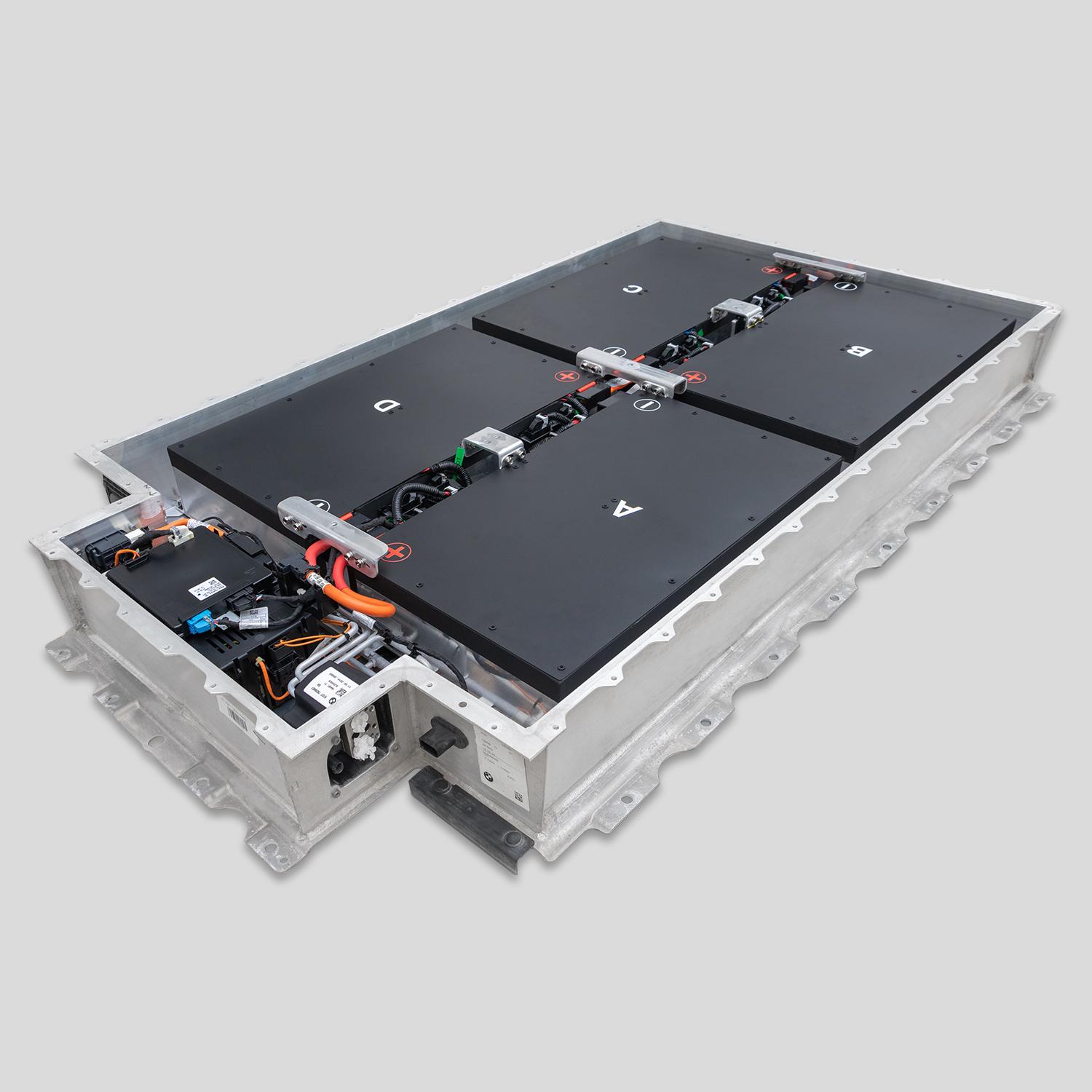
How to Test BMW i3 Battery Capacity Professionally – The $10,000 Mistake Shops Make When They Trust the Dashboard (And the 3-Step Method That Reveals True Health)
“A used car dealer in Hamburg listed a 2018 BMW i3 with ‘12 bars’ and ‘full range.’ He relied on the dashboard display—no further testing. A buyer drove it 50 km, then the car entered turtle mode. Lab analysis showed actual usable capacity: 28.4 kWh (vs. rated 33 kWh). The dealer refunded $9,800 and lost the customer forever. All because he skipped professional capacity validation.”
You’ve probably seen it:
- A customer says, “The battery shows full—but I only get 120 km.”
- A trade-in vehicle displays 12 bars, yet regen cuts out early
- Your scanner reads ‘No DTCs’, but performance feels weak
If you’re judging i3 battery health by SoC bars or estimated range, you’re flying blind.
The dashboard lies. The BMS hides. Only direct capacity testing reveals truth.
This guide delivers the exact methodology used by certified EV diagnostics labs in 2026—not guesswork, but a repeatable, tool-based protocol that separates salvage from serviceable:
- Why open-circuit voltage is useless for SoH assessment
- How to calculate real usable capacity using controlled discharge
- The critical difference between total and usable kWh
- When cell imbalance masks true degradation
- And how CNS BATTERY packs include pre-validated capacity reports—so you know exact performance before install
Because in EV resale, repair, or replacement, capacity isn’t a number—it’s your credibility.
Why Standard Scanners Fail to Measure True Capacity
Most shops rely on:
- Instrument cluster bars (easily fooled by BMS adaptation)
- BMS-reported SoH % (often smoothed or delayed)
- Charging time estimates (affected by temperature, grid load)
But none measure actual energy throughput—the only true indicator of health.
⚠️ Reality: A pack can show 12 bars while delivering <75% of original capacity due to conservative BMS recalibration.
🔬 Professional Capacity Testing Protocol (Per SAE J1634 & IEC 62660)
Step 1: Pre-Test Preparation
- Fully charge via AC Level 2 (7–11 kW)—not DCFC (skews cell balancing)
- Let battery rest 2+ hours at 20–25°C ambient
- Record initial SoC = 100%, min/max cell voltages, and pack temperature
Step 2: Controlled Discharge Test
- Use a programmable DC load bank (e.g., Chroma, Keysight)
- Set constant discharge rate: 1C max (e.g., 45A for 45kWh pack)
- Log voltage, current, temperature, and time continuously
- Stop when first cell hits 2.8V (i3 cutoff threshold)
📊 Calculation:
Actual Usable Capacity (kWh) = ∫(Voltage × Current) dt / 3600
Step 3: Validation & Reporting
- Compare result to rated usable capacity:
- 45kWh pack → ~42.5 kWh usable
- 62kWh pack → ~58.8 kWh usable
- State of Health (SoH) = (Measured Usable / Rated Usable) × 100%
- Acceptable thresholds:
- >90% SoH: Excellent
- 80–90%: Normal aging
- <80%: Warranty consideration or replacement candidate
💡 Pro alternative: If no load bank, use real-world drive test:
- Fully charge
- Drive highway loop at 90 km/h until 10% SoC
- Record energy consumed (kWh) via OBD2 + accurate GPS
- Adjust for elevation/temperature
Common Pitfalls That Skew Results
❌ Testing in cold weather (<10°C): Lithium slows → falsely low capacity
❌ Using DC fast charging pre-test: Creates artificial cell imbalance
❌ Ignoring thermal throttling: High temps reduce discharge rate
❌ Relying on BMS log alone: Many third-party packs lack raw data access
✅ Best practice: Test indoors at stable temperature, and always compare to baseline.
CNS BATTERY: Verified Capacity Before It Leaves the Factory
Every CNS i3 battery undergoes:
✅ Full charge/discharge cycle on automated test benches
✅ SoH validation >98% before shipment
✅ Digital capacity certificate included with each pack
✅ Real-time SoH monitoring via integrated BMS
Result?
Zero disputes over capacity claims—because the data is transparent from day one.
“We used to send packs to a lab for $300/test. Now we just check the CNS report. Their numbers match our load bank within 1%. Total game-changer.”
— EK Auto Repair, Rome
Frequently Asked Questions: i3 Battery Capacity Testing
Q: Can I use an OBD2 dongle to measure capacity?
A: Only indirectly—via cumulative kWh consumed during a full discharge. Accuracy depends on dongle quality (Carly, OBDeleven work best).
Q: What’s the difference between total and usable capacity?
A: i3 reserves 7–8% for buffer. A “45kWh” pack has **42.5 kWh usable**—that’s the benchmark for SoH.
Q: Does CNS provide test reports to shops?
A: Yes—each pack includes a QR code linking to its individual capacity validation sheet.
Q: How often should I retest a customer’s battery?
A: Annually for high-mileage vehicles (>20,000 km/year), or if range drops >15% suddenly.
Q: Can cell replacement restore capacity?
A: Rarely—mixed-age cells create imbalance. Full module or pack replacement is more reliable.
Capacity Isn’t Estimated—It’s Measured
Don’t let assumptions cost you trust, profit, or reputation.
Deliver Confidence with Every Diagnosis: Install or Recommend Batteries Backed by Factory-Validated Capacity Data—So You Never Guess, Assume, or Apologize.
Know exactly what you’re selling—and stand behind it with proof.
Order CNS BMW i3 batteries with certified capacity reports—or request our free Professional Capacity Testing Checklist for Shops:
👉 https://cnsbattery.com/ev-battery-home/ev-battery-contact/