Here is the SEO-optimized article tailored for your requirements.
How to Install Nissan EV Lithium Battery vs Original OEM
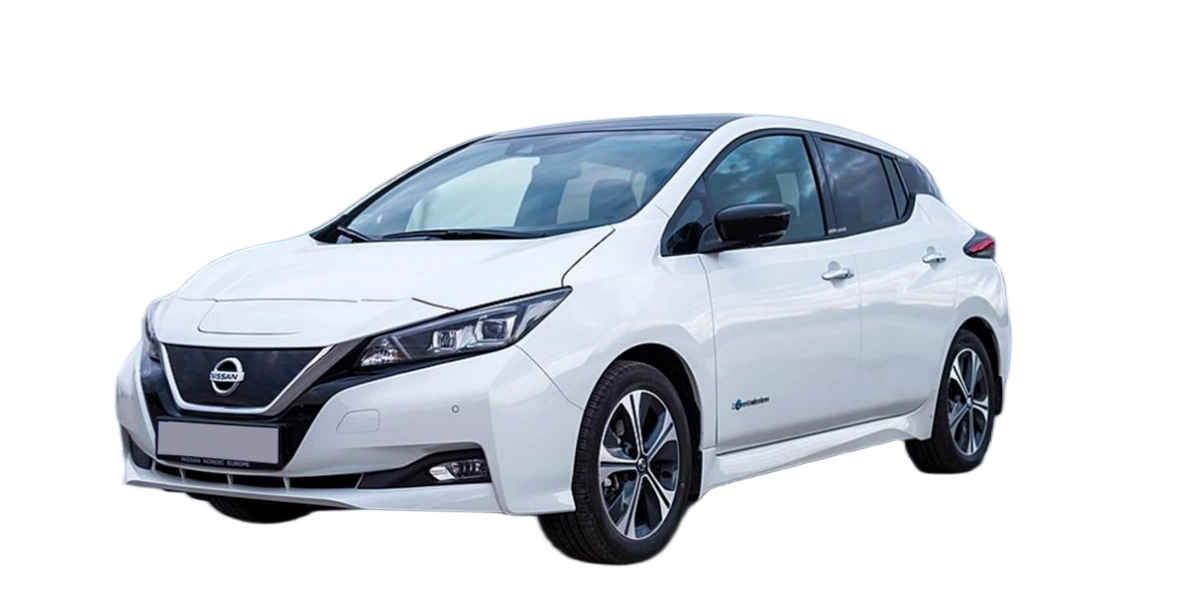
Is replacing your Nissan Leaf or e-NV200 battery a complex, expensive nightmare? If you own a Nissan Leaf (ZE0, AZE0, ZE1) or an e-NV200, you likely face a tough choice: pay the exorbitant price of a brand-new OEM battery or gamble on an unreliable refurbished unit.
At CNS BATTERY, we provide a third path: OEM-standard, brand-new lithium battery packs at half the cost of the original manufacturer. But how does the installation process compare? Is swapping to a CNS battery complicated, or can you restore your vehicle’s range quickly and safely?
This guide breaks down the installation process, compares the physical attributes, and shows you exactly how to upgrade your Nissan EV with confidence.
Why Compare? The “OEM vs. Aftermarket” Dilemma
Before diving into the “how,” let’s address the “why.” The original OEM batteries for the Nissan Leaf are known for their reliability but come with a massive price tag—often exceeding $15,000 to $16,000 for a replacement.
Many owners are forced to look at the secondary market, where they encounter refurbished or recycled batteries. These are risky; they often use degraded cells, lack proper casing integrity, and offer no warranty.
CNS BATTERY bridges this gap. Our packs are built to Original Equipment Manufacturer (OEM) specifications using brand-new CATL (Contemporary Amperex Technology Co. Limited) cells. This means you get the safety and precision of an OEM part, but the installation is designed to be straightforward, whether you are a professional mechanic or a skilled DIY enthusiast.
Physical Comparison: What Does the Hardware Look Like?
The first step in any installation is unboxing and visual inspection. You need to be sure the battery you receive is a perfect match for your Nissan chassis.
1. Dimensions and Form Factor
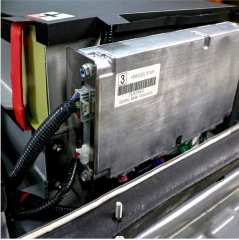
Our engineering team reverse-engineers every Nissan model (from the 2011 ZE0 to the latest ZE1) to ensure 100% dimensional compatibility. Whether you are ordering a 40kWh, 50kWh, 62kWh, or 68kWh pack, the outer shell, mounting points, and connector placements are identical to the factory original.
- No Modifications Required: You do not need to cut the chassis, modify brackets, or splice wires.
- Plug-and-Play Design: The harnesses and communication ports are mapped to match Nissan’s protocols exactly.
2. Build Quality and Materials
One of the main concerns when moving away from the OEM is build quality. We utilize high-strength, flame-retardant materials for the casing, mirroring the durability standards of the original factory. Unlike refurbished units that might use cracked or repaired plastic, CNS batteries arrive as a brand-new, sealed unit.
Step-by-Step Installation Guide: Nissan Leaf & e-NV200
Installing a Nissan EV battery is a significant mechanical task, but it is not rocket science. Whether you are doing it yourself or supervising a technician, here is the standard procedure for swapping an old unit with a CNS New Lithium Battery.
Safety Note: Always wear insulated gloves and safety glasses. Ensure the vehicle is powered down and the 12V battery is disconnected before starting.
Step 1: Vehicle Preparation
- Lift the Vehicle: Use a hydraulic lift or jack stands to raise the vehicle to a comfortable working height.
- Remove Undertrays: Take off the plastic underbody shields to access the battery bolts.
Step 2: Disconnecting the Old Battery
- Isolate Power: Disconnect the high-voltage (HV) interlock loop and the main contactor.
- Unbolt: Remove the approximately 16 bolts securing the battery to the chassis.
- Disconnect Wiring: Carefully unplug the main HV connector and the communication/sensor harnesses.
Step 3: Installing the CNS New Battery
This is where the “OEM vs. New Aftermarket” comparison is most evident. With a CNS battery, the process is identical to reinstalling an OEM unit.
- Positioning: Slide the new CNS battery into place. Thanks to our precision molds, it should fit snugly without force.
- Wiring: Connect the HV cables and signal wires. Our connectors are color-coded and keyed to prevent incorrect insertion.
- Torque Bolts: Reinstall the chassis bolts and torque them to Nissan specifications (typically 30-40 Nm).
- Reinstall Undertrays: Put the plastic shields back on.
Step 4: System Integration and BMS Programming
This is the most critical step. The Battery Management System (BMS) must communicate with the car’s ECU.
- Plug-and-Play BMS: CNS batteries come pre-programmed. In most Nissan models (especially ZE0 and ZE1), once connected, the car recognizes the battery immediately.
- Real-Time Guidance: If you encounter a communication error (rare, but possible), our technical support offers remote video guidance. We can connect via Zoom or WhatsApp to assist with re-flashing the BMS if your specific car model requires a minor software handshake.
The Verdict: Time, Cost, and Reliability
To help you visualize the difference between installing a brand-new OEM battery and a CNS battery, here is a direct comparison.
| Comparison Factor | Original OEM Battery | Refurbished/Recycled Battery | CNS New Lithium Battery |
|---|---|---|---|
| Installation Time | 1 – 2 Hours | 1 – 3 Hours (Risk of fitting issues) | 1 – 2 Hours |
| Physical Fit | Perfect | Often Loose or Misaligned | Perfect (OEM Standard) |
| Warranty | 8 Years / 100,000 Miles (Expensive) | None or 3-6 Months | 2 Years / 80,000 km |
| Price Point | $15,000+ | $3,000 – $5,000 (Unreliable) | ~50% Cheaper than OEM |
| Cell Quality | Brand New | Degraded/Used | Brand New CATL Cells |
Key Takeaway: The installation process is virtually identical to OEM, but the value proposition is vastly different. You save thousands of dollars without sacrificing the fitment quality.
Why Choose CNS for Your Nissan EV Upgrade?
When you choose CNS BATTERY for your Nissan Leaf or e-NV200 replacement, you are not just buying a box of cells. You are buying into a support ecosystem.
- Pre-Sale Compatibility Check: Before you buy, we ask for your VIN number. Our experts verify that the battery spec (voltage, kWh, connector type) matches your specific car model year. This eliminates the guesswork.
- Global Logistics: We handle the heavy lifting of international shipping, including DDP (Delivered Duty Paid) services for most countries.
- Post-Sale Support: We don’t disappear after the sale. Our 2-year warranty and technical hotline are there if you have questions about charging optimization or winter care.
Frequently Asked Questions (FAQ)
Q1: Is the installation process for a CNS battery truly “plug-and-play” like the OEM?
A: Yes, for the vast majority of Nissan Leaf models (ZE0, AZE0, ZE1), the installation is designed to be plug-and-play. The physical dimensions, bolt patterns, and connector placements are engineered to match OEM standards exactly. However, because Nissan occasionally updates its ECU software, we provide free remote video support to assist with BMS programming if your specific vehicle requires a software handshake.
Q2: How long does it take to install a new Nissan EV battery?
A: For a professional technician, the physical installation (removing the old unit and bolting in the new one) typically takes 1 to 2 hours. DIY enthusiasts with mechanical experience might take up to 3 hours, especially when dealing with tight chassis bolts. The process involves lifting the car, removing undertrays, disconnecting the old battery, and securing the new CNS unit.
Q3: What if my car doesn’t recognize the new battery after installation?
A: This is a rare occurrence, but we are prepared for it. If the dashboard shows an error or the car doesn’t recognize the State of Charge (SOC), our technical team offers real-time video call support. We will guide you through checking connections or performing a BMS reset. Our batteries come with a 2-year warranty, so if there is a manufacturing defect preventing recognition, we handle replacements or repairs immediately.
Q4: Are CNS batteries compatible with all Nissan EV models?
A: We specialize in the core Nissan EV lineup. Our batteries are compatible with the Nissan Leaf ZE0, AZE0, ZE1, and the Nissan e-NV200. We offer various capacities, including 40kWh, 50kWh, 62kWh, and 68kWh options. To be 100% certain, we recommend contacting our sales team with your VIN number for a free compatibility check before ordering.
Q5: Do I need special tools to install a CNS Nissan battery?
A: No, you do not need specialized automotive tools. The installation requires standard mechanic tools: a hydraulic jack or lift, socket wrench set (for the chassis bolts), and standard screwdrivers for the undertray plastic clips. We also provide a free installation toolkit with insulated gloves and terminal cleaner with every order to ensure safety during the high-voltage connection.
Ready to restore your Nissan EV’s range without breaking the bank?
Don’t let the fear of installation stop you from driving with a brand-new, high-performance battery. CNS BATTERY combines OEM precision with aftermarket affordability.
Get your free, personalized quote today and see how much you can save:
Contact Our Technical Experts Now