How to Fix BMW i3 Battery SOC Calibration Issues (Shop) – Why “Resetting” Never Works
The customer pulls into your bay, visibly frustrated. “My dashboard says I have 40 miles of range,” they explain, “but the car died after 15 miles. Then I plugged it in, and it jumped from 10% to 90% in ten minutes. Can’t you just recalibrate the software? My friend said a reset fixes this.”
As a professional EV technician in 2026, you recognize this classic symptom immediately: State of Charge (SOC) Calibration Failure. The dashboard is lying. The BMS (Battery Management System) has lost track of where “empty” and “full” actually are because the battery chemistry beneath it has fundamentally changed.
The temptation is to connect a scan tool, run a “battery reset” service function, clear the codes, and hope for the best. But here is the hard truth that separates amateur guessers from EV experts: You cannot software-calibrate a physically degraded battery. If the SOC is jumping wildly or the range estimate is wildly inaccurate, it is not a computer glitch; it is a scream for help from dying cells.
Why do standard calibration resets fail on aging BMW i3 packs?
What is the difference between a “drifted” BMS and a “chemically exhausted” pack?
And when diagnostics prove the cells are the problem, how do you pivot from a futile $200 reset to a high-margin, life-saving battery upgrade?
At CNS BATTERY, we specialize in solving the root causes of EV failures, not masking the symptoms. We know that true SOC accuracy comes from healthy, matched cells, not software tricks. This guide details the professional diagnostic workflow for SOC issues, exposes the myth of the “magic reset,” and reveals why replacing the entire system is the only ethical path to restoring driver confidence.
The Myth of the “Software Reset”
In the world of internal combustion engines, resetting an adaptive learning module often solves erratic behavior. In the world of Lithium-Ion batteries, SOC is a calculation based on physical reality.
The BMS calculates SOC using two main methods:
- Coulomb Counting: Tracking energy in vs. energy out.
- Open Circuit Voltage (OCV): Measuring the voltage of the cells when the car is resting.
The Problem: As cells age, their Internal Resistance (IR) increases and their Total Capacity (Ah) decreases. The voltage curve changes. The BMS is still using maps designed for a fresh 60 Ah or 94 Ah battery, but it is now managing a chemically altered pack with perhaps only 40 Ah of usable capacity.
When you perform a “reset,” you are telling the computer to relearn the curve. But if the curve itself is broken due to cell degradation, the BMS will simply relearn the wrong data. Within one drive cycle, the SOC will drift again, the range estimate will become useless, and the customer will be stranded.
Professional Diagnostic Protocol: Finding the Root Cause
Do not guess. Follow this rigorous workflow to determine if the issue is a simple sensor drift or catastrophic cell failure.
Step 1: Live Data Analysis (The Truth Teller)
Connect a bidirectional scan tool (BMW ISTA, Autel, Launch) and view live data.
- Check Individual Cell Voltages: Look at the deviation between the highest and lowest cell modules.
- The Red Flag: If deviation is >0.15V at rest or >0.30V under load, the pack is imbalanced. The BMS cannot calculate accurate SOC with such wild variance.
- Check Calculated vs. Actual Capacity: Some advanced tools show the “Learned Capacity” vs. “Rated Capacity.” If the learned capacity has dropped below 70% of rated, the pack is degraded.
Step 2: The Full Charge/Discharge Cycle Test
This is the gold standard for verifying SOC accuracy.
- Charge to 100%: Plug the car in and charge until the station stops naturally. Note the kWh added.
- The Math: If the car claims to have a 94 Ah pack (~33 kWh usable), but it only accepted 18 kWh to go from “empty” to “full,” the physical capacity is gone. No software reset can create those missing 15 kWh.
- Discharge Test: Drive the car until it limits power. Does the dashboard SOC drop linearly? Or does it stay at 40% and then suddenly plummet to 5%? A sudden drop indicates a weak cell hitting its minimum voltage limit while the average pack voltage still looks high.
Step 3: Internal Resistance (IR) Check
- Measure the IR of the modules. High IR causes voltage sag under load.
- The Effect: When the driver accelerates, high IR causes the voltage to crash. The BMS sees this crash and thinks the battery is empty, dropping the SOC display instantly. When they lift off the pedal, the voltage bounces back, and the SOC jumps up. This is the “jumping SOC” phenomenon.
The Hard Truth: Why Calibration Fails on Degraded Packs
If your diagnostics reveal high cell deviation, low total capacity, or high internal resistance, you must deliver the hard news: The battery pack is chemically compromised.
- Physics Over Software: You cannot code away lost capacity. If a cell group has physically degraded, it will always hit its voltage limits faster than the rest of the pack, confusing the BMS.
- The Vicious Cycle: Every time the BMS miscalculates SOC due to bad cells, it may overcharge or deep-discharge the weak cells, accelerating their death.
- Safety Risk: An inaccurate SOC display is dangerous. A customer might start a highway trip thinking they have 50 miles of range, only to lose power at 20 miles because the “real” empty was hidden by a software error.
The Verdict: If the cells are degraded, recalibration is impossible. The only fix is new cells.
The CNS BATTERY Solution: Perfect SOC Accuracy Guaranteed
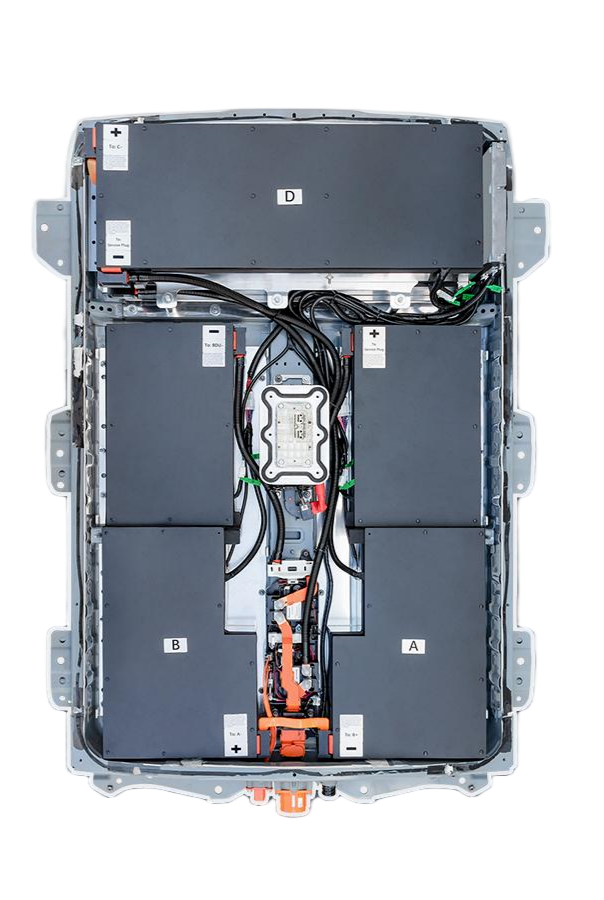
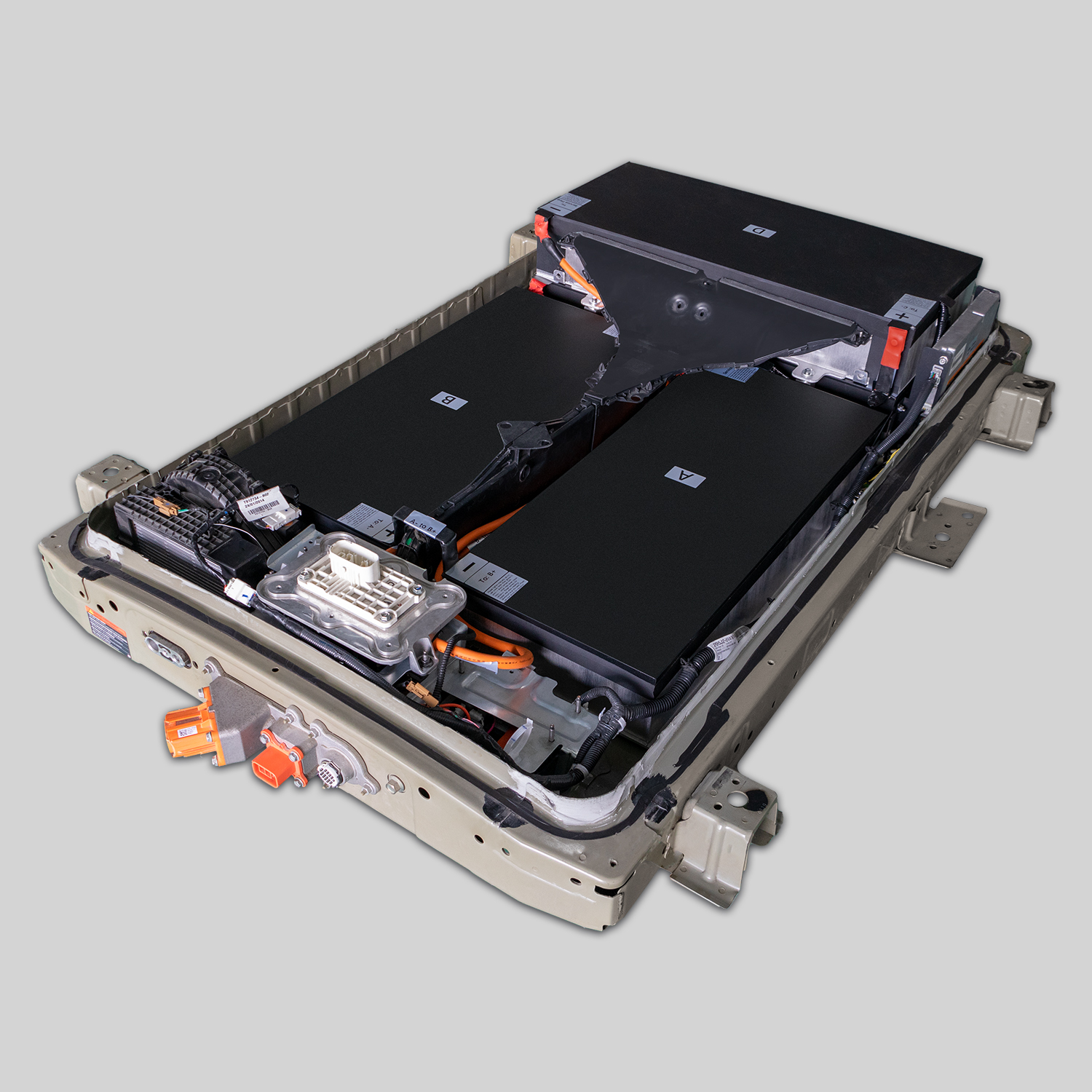
When you explain that the “glitch” is actually a dying battery, the customer will fear the dealer’s $20,000+ quote. This is your opportunity to offer the CNS BATTERY High-Capacity Upgrade—the only solution that guarantees perfect SOC accuracy.
Why Upgrading Is the Ultimate Fix
- Brand-New Chemistry: Our 120 Ah to 180 Ah upgrades use fresh Grade-A cells with known, stable voltage curves. The BMS can calculate SOC with 100% precision immediately.
- Perfect Matching: All cells are matched to within millivolts. No imbalance to confuse the algorithm. No sudden voltage drops.
- Instant Recognition: Upon installation, the BMS recognizes a healthy pack. The range estimate stabilizes within 1-2 charge cycles and remains accurate forever.
- No More “Guess-o-Meter”: Your customer gets a reliable dashboard that tells the truth. If it says 100 miles, they get 100 miles.
- Double the Range: While fixing the SOC error, you upgrade the customer from a failing pack to a system offering 130–200+ miles of real-world range.
- Cost Efficiency:
- Failed Calibration Attempts: $200–$400 (wasted labor) + Angry Customer.
- Dealership Replacement: $20,000+.
- CNS BATTERY Upgrade: $8,000 – $14,000 USD. You get a brand-new, accurate battery with double the range for half the dealer price.
Real Story: From “Range Anxiety” to “Trustworthy Tech”
“City EV Diagnostics” had a 2015 i3 come in with “jumping SOC.” The owner tried three different shops to “reset” the battery. Each time, it worked for a day, then failed again. The customer was afraid to drive more than 5 miles from home.
“Our load test showed the pack had only 45% of its original capacity,” says the lead tech. “We explained that no reset could fix dead cells. We installed a CNS BATTERY 150 Ah upgrade. The transformation was instant. The range estimator locked onto 170 miles and stayed there. The customer drove it for 200 miles on the first day, trusting the dashboard completely. We didn’t just fix a number; we gave them their freedom back.”
Stop Resetting, Start Solving
Fixing BMW i3 battery SOC calibration issues isn’t about pushing buttons on a scanner. It’s about restoring the physical integrity of the energy storage system. Don’t sell your customers false hope with temporary resets.
Be the shop that diagnoses the root cause. Be the shop that offers the permanent solution: a brand-new battery system that provides accurate data and reliable range.
Struggling with erratic SOC readings?
Stop guessing and start solving. Contact CNS BATTERY today for a professional diagnostic consultation. Discover how our BMW i3 Series Battery upgrades can eliminate calibration errors permanently, providing your customers with a trustworthy, accurate, and long-range driving experience.
👉 Get Your SOC Diagnostic & Upgrade Quote
Frequently Asked Questions (FAQ) for Shops
1. Can I fix jumping SOC by resetting the BMS?
No. Resetting the BMS clears the learned values, but if the underlying cells are degraded or imbalanced, the BMS will simply relearn incorrect data within one drive cycle. The root cause is physical cell degradation, not software error.
2. Why does my i3 show 40% battery and then suddenly die?
This indicates a weak cell module with high internal resistance. Under load, that specific module’s voltage crashes to the minimum limit, forcing the car to shut down, even though the average pack voltage (displayed as 40%) is still high. This is a sign of imminent battery failure.
3. How do I verify if the SOC sensor is broken or the battery is bad?
Perform a full charge/discharge capacity test. Measure exactly how many kWh the battery accepts. If the accepted energy is significantly lower than the rated capacity (e.g., <70%), the battery is degraded, and the SOC inaccuracy is due to chemistry, not a sensor.
4. Will a new battery fix the range estimation immediately?
Yes. With a CNS BATTERY upgrade, the new cells have stable voltage curves. The BMS will calculate accurate SOC almost immediately. It may take 1-2 full charge cycles for the dashboard “GOM” (Guess-O-Meter) to fully stabilize, but the accuracy will be spot-on.
5. Is it safe to drive with inaccurate SOC?
No. An inaccurate SOC poses a significant safety risk. The driver may believe they have enough range to reach a charger or destination, only to suffer a sudden loss of power, potentially stranding them in unsafe locations or traffic.
6. How much does it cost to fix SOC issues?
Diagnostic and reset attempts cost $200–$400 but rarely solve the problem permanently. A dealership replacement costs $20,000+. A CNS BATTERY upgrade costs $8,000–$14,000, providing a brand-new, perfectly calibrated battery with double the range.
7. Does CNS BATTERY guarantee accurate SOC?
Absolutely. Our upgrades use brand-new, matched cells that allow the BMS to function exactly as designed. You will never experience “jumping SOC” or phantom range with a CNS BATTERY upgrade.