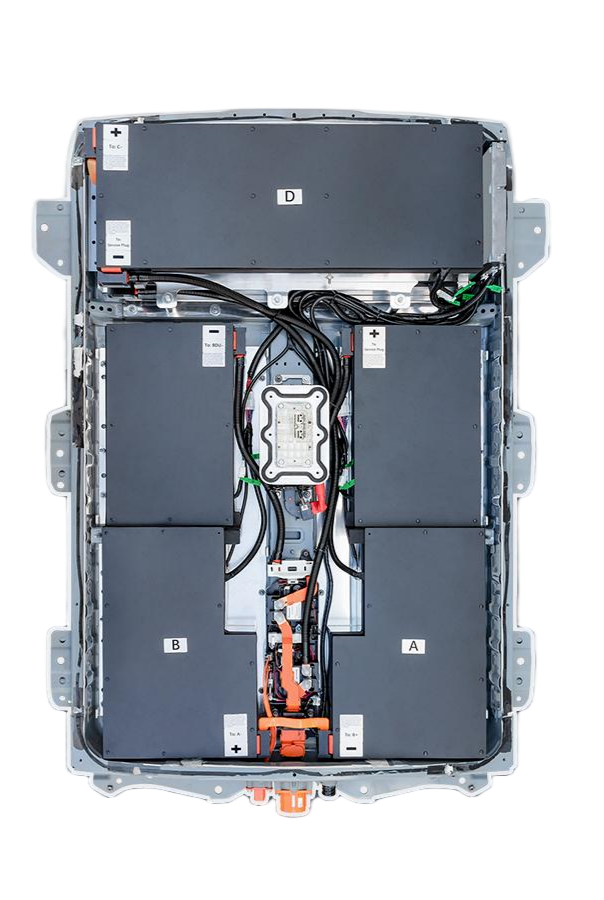
How to Extend Your e-NV200 Van Battery Life and Avoid Low SOH
As an electric van owner, there is nothing more stressful than watching your State of Health (SOH) drop and your range plummet. The Nissan e-NV200 is a reliable workhorse, but like all EVs, its battery requires specific care to maintain peak performance. As a battery expert, I have seen countless drivers make simple mistakes that accelerate battery degradation. In this guide, I will share professional maintenance strategies to help you maximize your e-NV200’s battery life and avoid the dreaded “low SOH” warning.
Understanding Battery Degradation in the e-NV200
Before we dive into the solutions, let us understand the enemy: degradation. The e-NV200 uses lithium-ion battery technology, which naturally loses capacity over time. However, this process is not linear. Factors like heat, deep discharges, and long-term storage at 100% charge can cause “calendar aging” and “cycle aging.”
Calendar Aging: This occurs simply due to the passage of time, regardless of use. Keeping your battery at high voltages (100% charge) for extended periods accelerates this chemical aging process.
Cycle Aging: This happens every time you discharge and recharge the battery. Deep discharges (draining to 0%) and fast charging put more stress on the cells than shallow, slow charges.
To visualize this, think of your battery like a sponge. Calendar aging is like the sponge drying out and becoming brittle if left unused. Cycle aging is like wringing the sponge out repeatedly; doing it gently preserves it, but doing it aggressively wears it out.
5 Proven Strategies to Extend Battery Life
1. Master the “80/20” Rule
While it is tempting to charge to 100% for maximum range, doing this daily is the fastest way to kill your battery. Lithium-ion cells experience the most stress in the top 20% and bottom 20% of their charge capacity.
- The Golden Rule: For daily driving, set your charge limit to 80-90%.
- Deep Discharge Avoidance: Try not to let your battery drop below 20%. If you are planning a long trip, charge to 100%, but discharge it back to 80% as soon as possible.
2. Tame the Thermal Beast
Heat is the number one killer of lithium-ion batteries. The e-NV200’s thermal management system is decent, but it cannot fight extreme external temperatures alone.
- Summer Strategy: Avoid parking in direct sunlight. If possible, park in a garage or use a sunshade. Do not charge immediately after a high-speed drive; let the battery cool down for 20-30 minutes first.
- Winter Strategy: Cold temperatures do not permanently damage the battery as much as heat, but they drastically reduce range. Pre-condition your battery while it is still plugged in (if your van has this feature) to warm it up before driving.
3. Optimize Your Driving Style
Aggressive driving is not just bad for your tires; it is terrible for your battery. Rapid acceleration draws high currents, generating heat and accelerating wear.
- Smooth is Fast: Accelerate gently and anticipate traffic flow to minimize hard braking.
- Use Regenerative Braking: The e-NV200 has excellent regenerative braking. Use it to slow down instead of the friction brakes. This puts energy back into the battery and reduces heat generation compared to resistive braking.
4. Smart Storage for Longevity
If you are not using your van for a week or more, how you store it matters immensely.
- The Ideal Storage Charge: Do not store the van at 100% or 0%. The sweet spot is 40-60%.
- Climate Control: If storing long-term, ensure the van is in a temperature-controlled environment if possible. Avoid leaving it plugged in for months, as this keeps the cells at a high voltage stress state.
5. Schedule Regular Health Checks
Do not wait for a warning light. Use an OBD2 scanner or a Nissan-specific diagnostic tool to check your battery’s SOH and individual module voltages regularly.
- Check Frequency: Every 6 months or 10,000 miles.
- What to Look For: Look for “voltage divergence” between modules. If one module is significantly lower than the others, it is a sign of an imbalance that needs addressing before it drags down the whole pack.
When Maintenance Is Not Enough: The Upgrade Solution
Even with perfect care, batteries eventually reach the end of their life. If you are reading this because your e-NV200’s range is now unusable, or your SOH has dropped below 70%, it might be time for a replacement.
This is where CNS BATTERY comes in. We are not just another battery supplier; we are specialists in Nissan and BMW powertrains. Our batteries are engineered to OEM standards but utilize the latest advancements in lithium-ion technology, primarily using brand-new CATL cells.
Why choose a CNS replacement?
- Brand New Cells: Unlike some refurbished “solutions,” we use brand-new, top-tier cells.
- Extended Warranty: We back our quality with a 2-year / 80,000 km warranty, covering performance degradation and manufacturing defects.
- Cost Efficiency: Save over 50% compared to the original manufacturer’s price without sacrificing safety or performance.
Pro Tip: If your current battery is struggling, upgrading to a CNS 50kWh or 62kWh pack can not only restore your van’s original range but potentially exceed it, making your e-NV200 a viable daily driver again.
The Bottom Line
Maintaining your e-NV200 battery is about respect. Respect the chemistry by avoiding extremes of temperature and charge. By following the 80/20 rule, driving smoothly, and storing your van correctly, you can easily extend your battery’s life by several years.
However, if degradation has already taken its toll, do not despair. A high-quality replacement from a trusted source like CNS BATTERY can give your van a second life. Do not let a low SOH stop your business or lifestyle.
Ready to restore your range? Contact our technical experts now for a free quote and compatibility check.
Frequently Asked Questions (FAQ)
Q1: What is a good SOH for an e-NV200?
A: A brand-new battery is typically 100%. Anything above 80% is considered very healthy for daily use. Below 70% is generally considered the “end of life” for practical driving, as the range becomes too limited.
Q2: Can I replace just one module in my e-NV200 battery?
A: Technically yes, but it is not recommended. Mixing old and new modules creates a “weakest link” scenario. The new module will degrade rapidly to match the old ones, and the voltage imbalance can cause errors. It is almost always better to replace the entire pack for longevity.
Q3: How long does a CNS Battery last?
A: Our batteries are designed for long-term durability. While individual results vary based on usage and climate, our 2-year / 80,000 km warranty ensures you are covered for a significant period. With proper care, you can expect many years of reliable service.
Q4: Is it safe to install the battery myself?
A: Yes, our batteries are designed for plug-and-play compatibility with OEM standards. However, we recommend having the installation done by a certified technician to ensure safety and to avoid voiding the warranty. We do provide detailed video guides and support for DIY enthusiasts.
Q5: Do CNS batteries work with the e-NV200’s thermal management system?
A: Absolutely. Our batteries are engineered to communicate seamlessly with your vehicle’s BMS (Battery Management System), including temperature sensors and cooling systems, ensuring optimal performance in all weather conditions.